Clear Sky Science · en
Development and characterization of an inducible Tensin1 deficient transgenic murine model
Why turning genes on and off in mice matters
Our bodies rely on countless proteins that help cells stick to their surroundings, sense physical forces, and respond to injury. One such protein, called Tensin1, has been linked to kidney disease, lung problems, and cancer, but scientists have lacked a precise way to study what it does in adult tissues without disrupting development. This paper describes a new type of laboratory mouse in which Tensin1 can be switched off on command, letting researchers see how adult organs and immune cells respond when this key structural protein goes missing.
A controllable switch for a sticky cell protein
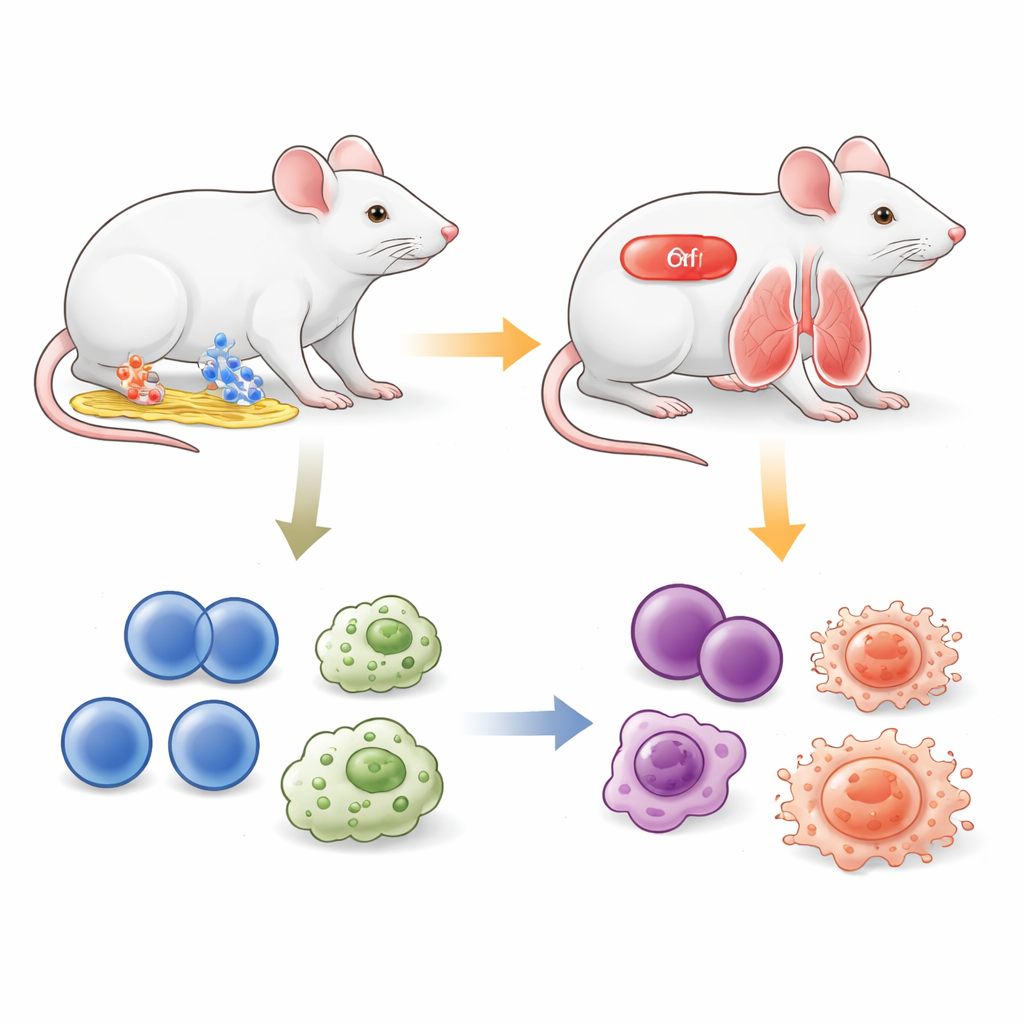
Tensin1 sits at the points where cells grab onto the surrounding support mesh, connecting internal fibers of the cell to molecules outside. To study its role more safely, the researchers engineered mice so that a crucial portion of the Tensin1 gene is flanked by special DNA sites that can be cut out when another protein, activated by the drug tamoxifen, is present. By breeding these components together, they created mice in which a short course of tamoxifen in adulthood cleanly removes Tensin1, while leaving other closely related proteins untouched. Tests of lung tissue showed about a 95 percent drop in Tensin1 gene activity and a dramatic loss of Tensin1 protein after treatment, confirming that the genetic switch works as intended.
Healthy appearance hides subtle internal changes
One might expect that removing a structural protein tied to serious kidney disease would quickly make animals sick. Surprisingly, these inducible Tensin1-deficient mice remained outwardly healthy. Before tamoxifen treatment, they bred normally and had litter sizes similar to standard lab strains. After Tensin1 was switched off in adults, the animals maintained normal body weight compared with treated controls. Detailed examination of major organs such as heart, liver, spleen, lungs, and kidneys over the course of a year revealed only mild, scattered changes that were seen in both normal and Tensin1-deficient mice. Many of these findings, including local inflammation in the abdomen and thickening of the uterus lining, were consistent with known side effects of tamoxifen itself rather than loss of Tensin1. Blood tests also showed no clear differences in cell counts or markers of liver and kidney function attributable to the gene knockout.
An unexpected signal from lung immune cells
Although the mice looked well, the researchers suspected more subtle shifts might be occurring at the molecular level, particularly in the lungs where Tensin1 is known to influence scar-forming cells. They measured gene activity across the entire lung and found 171 genes that were switched up or down after Tensin1 loss. Pathway analysis revealed that many of these genes were tied not to the structural support of the lung but to the immune system. Groups of genes involved in infection responses, immune cell development, and communication between immune cells were strongly affected. One large cluster of mostly reduced genes was associated with myeloid cells—immune cells such as monocytes and macrophages that patrol tissues and engulf debris or microbes. In contrast, a smaller cluster of increased genes carried the signature of B cells, the immune cells that make antibodies.
How Tensin1 shapes immune cell behavior
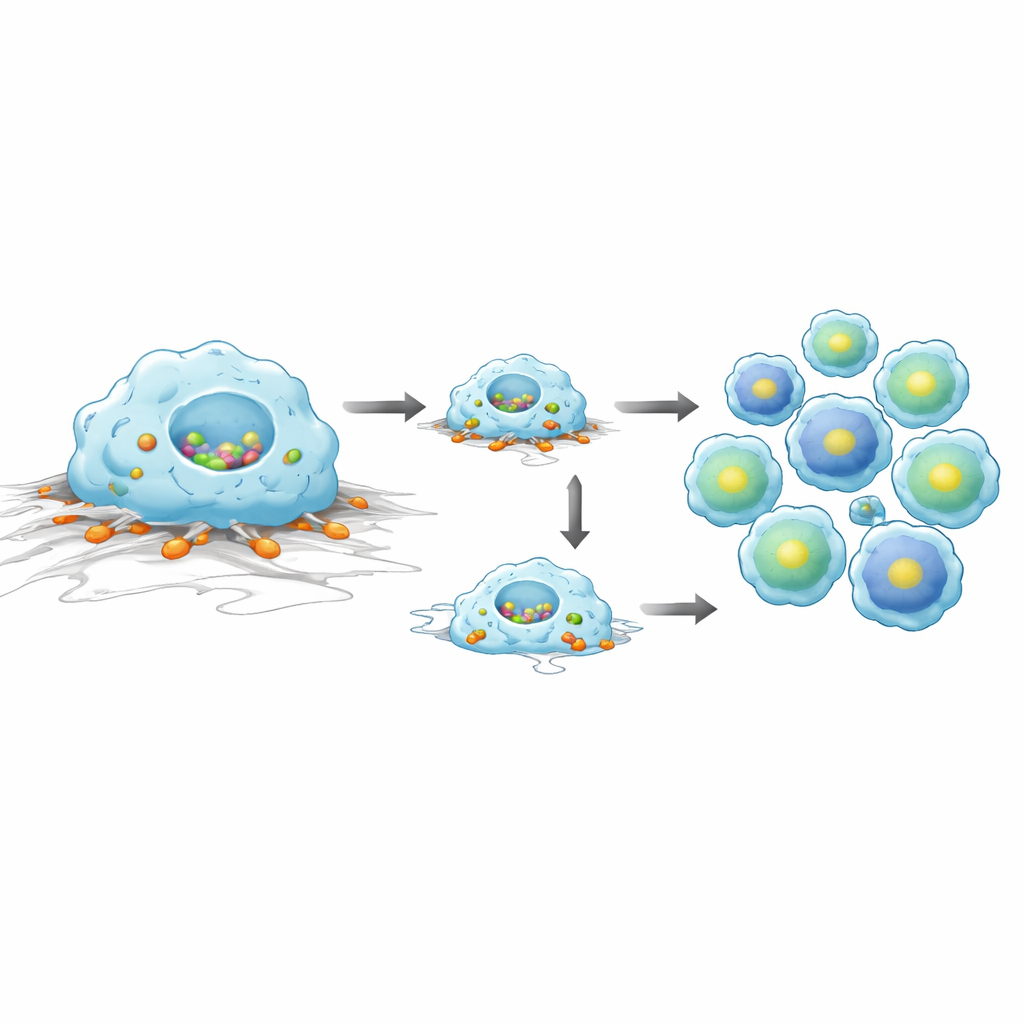
To dig deeper into what these signatures meant, the team turned to a human cell line that mimics monocytes and macrophages. When they used small RNA molecules to silence Tensin1 in these cells, the cells became smaller and spread less on surfaces coated with fibronectin, a major support protein. Live imaging showed that Tensin1-deficient cells moved shorter distances, suggesting impaired migration. In a phagocytosis test, where cells are asked to swallow glowing particles, cells lacking Tensin1 engulfed fewer particles than control cells. Together, these results indicate that Tensin1 helps myeloid cells maintain their shape, move effectively across tissue surfaces, and carry out their cleaning function. In the live mice, fluid washed from the airways shortly after Tensin1 knockout showed a tendency toward more lymphocytes, in line with the B-cell–related gene changes seen in lung tissue.
What this means for future disease research
In simple terms, this study shows that removing Tensin1 in adult mice does not dramatically damage vital organs, but it does quietly rewire immune activity in the lungs, weakening the signature of patrol cells that clear debris while boosting that of antibody-related cells. The new mouse model works like a dimmer switch that can turn Tensin1 off at chosen times and in chosen cell types, without the confounding developmental problems seen when the gene is missing from birth. This tool will allow researchers to explore how Tensin1 shapes responses to lung injury, infection, and scarring, and may ultimately clarify why genetic changes in Tensin1 are linked to human lung disease and cancer.
Citation: Bernau, K., Holbert, K., McDermott, I.S. et al. Development and characterization of an inducible Tensin1 deficient transgenic murine model. Sci Rep 16, 8639 (2026). https://doi.org/10.1038/s41598-026-41319-3
Keywords: Tensin1, transgenic mouse model, lung immunity, macrophage function, conditional gene knockout