Clear Sky Science · en
Transient changes in body weight and behavior during the placentation period in non-human primates and rodents
Why early pregnancy feels so strange
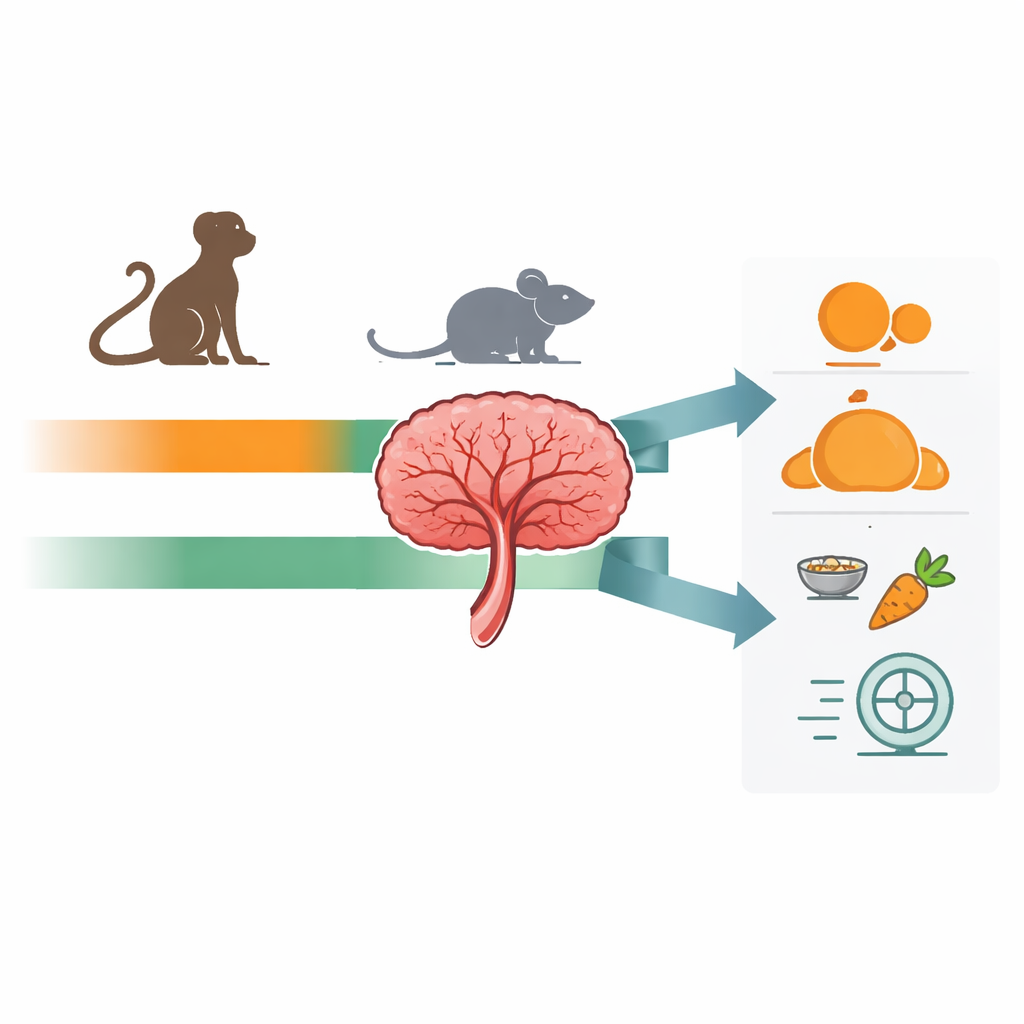
Many pregnant people spend the first months of pregnancy coping with nausea, food aversions, and overwhelming tiredness, often without clear answers about why their bodies feel that way. This study looks for clues in two familiar research animals—a small monkey called the common marmoset and the laboratory mouse—to see whether they show temporary dips in health and behavior during the time when the placenta is forming. By tracing subtle shifts in weight, eating, and movement, the researchers hope to build animal models that can eventually shed light on human “morning sickness” and related symptoms.
A closer look at early pregnancy troubles
Early pregnancy in humans is marked by nausea, vomiting, appetite loss, weight changes, and altered taste and smell. These symptoms tend to peak just when the placenta—the organ that connects mother and fetus—is growing most rapidly. Despite affecting most pregnant women and sometimes leading to serious complications, the biology behind these symptoms is still murky. One major roadblock is the lack of good animal models that mirror the timing and type of changes seen in people. While vets and zookeepers have long noted that some animals eat less or seem unwell in early pregnancy, those observations have rarely been followed up with systematic, quantitative research.
What the small monkeys revealed
The team first focused on common marmosets, small New World monkeys widely used in neuroscience and reproductive research. They tracked body weight across 115 pregnancies from 20 females housed in two different laboratories. Using a clustering analysis—essentially grouping similar weight-change patterns together—they identified one large group of pregnancies in which weight rose steadily, and another in which mothers showed a short-lived drop in weight midway through pregnancy, about 95 to 65 days before birth. This window matches the period when the marmoset placenta is actively developing. Overall, about 22 percent of pregnancies fell into the “transient weight loss” category, and some mothers showed this pattern repeatedly across multiple pregnancies, hinting at stable individual differences in susceptibility.
What the mice told us instead
Next, the researchers turned to mice, a mainstay of laboratory biology but a difficult model for nausea because mice do not vomit. Here, they measured body weight, daily food intake, and round-the-clock movement throughout pregnancy. As expected, mouse body weight steadily increased. However, a subtler pattern emerged when the pregnancy was divided into quarters. During the second quarter—when the mouse placenta is forming—the rate of increase in food intake slowed, and locomotor activity stopped rising and then later declined. In other words, the mice did not lose weight, but they temporarily ate and moved less intensely during the same relative stage of pregnancy when marmosets showed a brief weight dip.
Shared timing, different signals
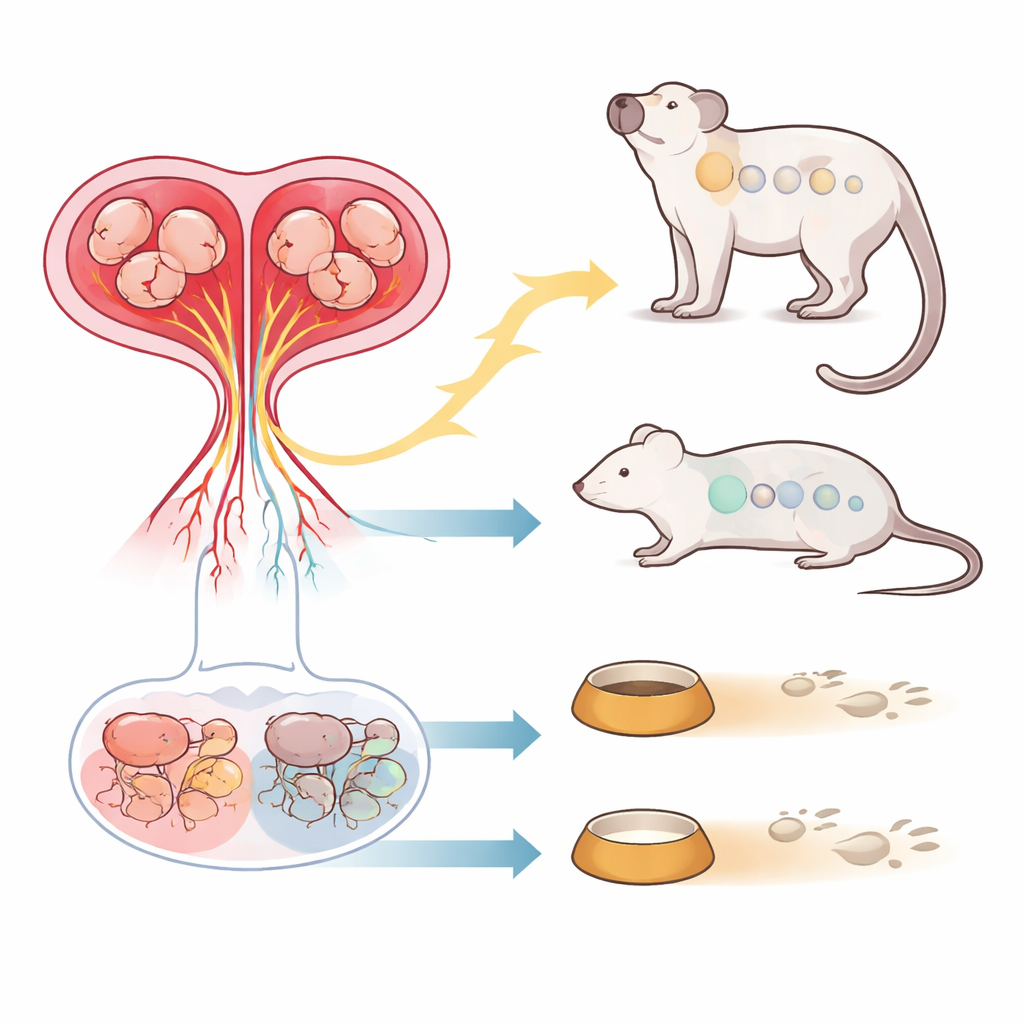
Taken together, the monkey and mouse data point to a common theme: a short, mid-pregnancy phase linked to placental growth during which mothers show signs of reduced physical condition, whether as weight loss (in some marmosets) or as blunted increases in eating and activity (in mice). These effects are modest and would have been easy to miss without careful, repeated measurements and modern statistical tools. The patterns also varied by species and individual. Marmosets showed clear mother-to-mother differences in how often weight loss occurred, while the inbred lab mice—genetically more uniform—displayed similar behavior patterns across individuals. Such variation suggests that genes, hormones, and placental structure may all play roles in shaping pregnancy-related discomforts.
Why this matters for human pregnancy
This study does not claim that monkeys and mice experience human-style morning sickness, nor does it pinpoint a single culprit molecule. Instead, it offers a carefully measured starting point: distinct, time-limited changes in body weight, eating, and movement in two mammal species during the placentation period. Because hormones and placental architecture differ across species, any comparison to humans must be cautious. Still, the shared mid-pregnancy window of altered physical state supports the idea that early pregnancy symptoms may be tied to signals coming from the growing placenta. With these animal models in hand, researchers can now probe those signals in detail, moving a step closer to understanding—and eventually easing—the burdens of early pregnancy.
Citation: Yano-Nashimoto, S., Shinozuka, K., Kurachi, T. et al. Transient changes in body weight and behavior during the placentation period in non-human primates and rodents. Sci Rep 16, 8162 (2026). https://doi.org/10.1038/s41598-026-41314-8
Keywords: pregnancy symptoms, placenta, marmoset, mouse behavior, morning sickness