Clear Sky Science · en
Integrated network pharmacology, molecular docking, and experimental validation reveal the antifungal and anti-inflammatory mechanisms of Camellia oleifera seed extracts against oral thrush
Why this matters for sore mouths
Oral thrush is a painful yeast infection in the mouth that often affects babies, older adults, denture wearers, and people with weakened immune systems. Standard antifungal drugs can cause side effects and are slowly losing their punch as yeast strains become resistant. This study asks whether natural compounds from the seeds of the Camellia oleifera tree, better known as a traditional oil plant in southern China, could help fight both the fungus that causes oral thrush and the mouth inflammation that comes with it.
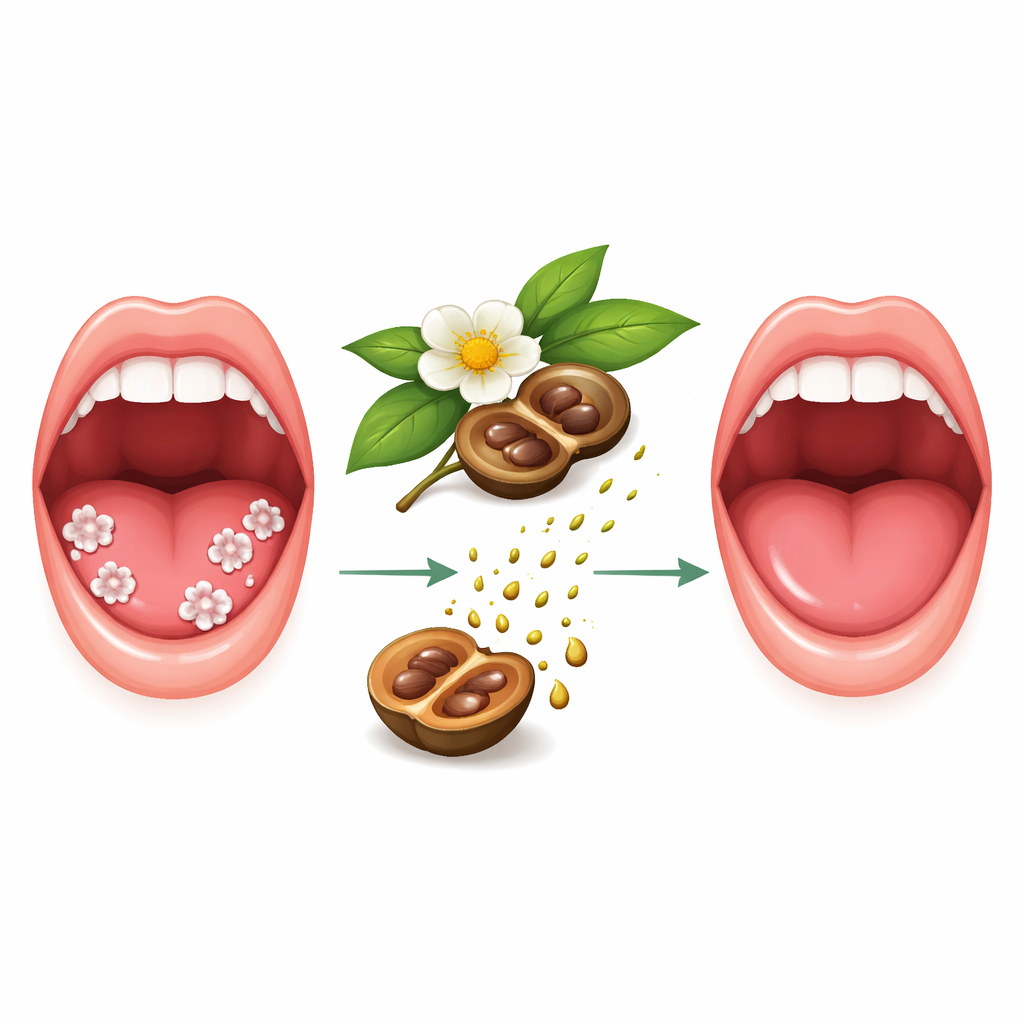
A plant seed with medical promise
The researchers focused on seed cake from Camellia oleifera, a leftover material from oil pressing that is rich in soap-like molecules called saponins and various plant antioxidants. Earlier work hinted that these seeds might have antimicrobial and anti-inflammatory effects, but their value against oral thrush had not been carefully tested. The team prepared two water-based extracts, one simply filtered and one heat-treated, and first used advanced chemical analysis to map out the small molecules they contained. From this chemical “fingerprint,” they identified 23 likely active ingredients, narrowing these down to 19 compounds that could plausibly act in the human body based on standard drug-likeness rules.
Connecting plant chemistry to disease pathways
Next, the scientists turned to computer-based methods to see how these seed compounds might interact with the biology of oral thrush. They pulled together hundreds of human genes linked to the disease and looked for overlaps with the predicted targets of the Camellia compounds. This produced a short list of 20 key targets, many involved in how the mouth’s lining and immune cells respond to Candida albicans, the main yeast behind oral thrush. A central player that emerged was STAT3, a protein that sits inside cells and switches on genes when the inflammatory signal IL-6 is present. Heavy activation of this IL-6/STAT3 pathway is known to drive both antifungal defenses and painful inflammation in the mouth. Computer docking simulations showed that tea saponin, a major compound in the seeds, could bind tightly to STAT3, hinting that it might help rebalance this overactive response.
Putting the extracts to the test in the lab
The team then tested the seed extracts against Candida in culture dishes. Both filtered and heat-treated extracts slowed the growth of free-floating yeast cells in a dose-dependent way and, at higher concentrations, almost completely stopped them. When yeast was allowed to form stubborn biofilms on acrylic material similar to denture plastic, long soaks in the extracts partly reduced these films, though not as strongly as a commercial denture cleaner. The researchers also studied tea saponin on its own and found it was particularly potent against free-floating Candida and could, with extended contact time, weaken biofilms as well. Alongside the antifungal tests, they exposed human gum cells to the same substances. Here, a challenge emerged: the concentrations needed to strongly suppress the fungus were close to, or even higher than, the levels that started to harm gum cells.
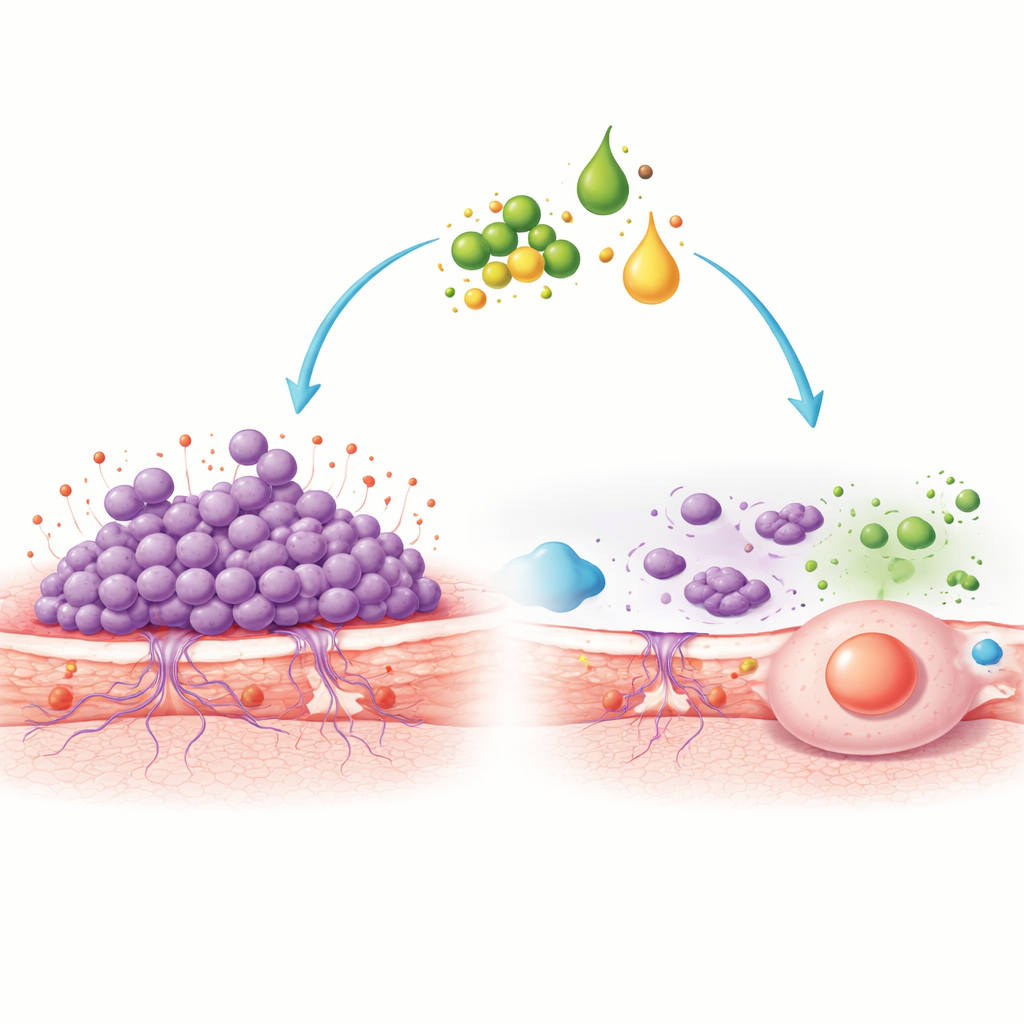
Balancing benefit and safety
To gauge this trade-off, the scientists calculated a “therapeutic index,” comparing the dose that damaged half the gum cells with the minimum dose that clearly inhibited fungal growth. This ratio was only about one third, meaning the safety margin was narrow in their in vitro system. On a more positive note, when denture-like plastic was soaked in the extracts or tea saponin and then rinsed, the solutions no longer showed measurable toxicity to gum cells, although some staining of the plastic occurred. Together with the docking results, these findings suggest that carefully controlled, short-contact or rinse-off uses—rather than long-term exposure—might be the most realistic way to harness the seed compounds.
What this means going forward
Overall, the study shows that Camellia oleifera seed extracts, and especially tea saponins, can directly weaken the yeast that causes oral thrush and may dial down harmful inflammation by acting on the IL-6/STAT3 signaling pathway. At the same time, the overlap between antifungal and toxic doses warns that the raw extracts, as currently prepared, are not ready-made mouth medicines. Instead, they look more like promising starting points for better-designed topical products—such as denture soaks, short-contact mouth rinses, or formulations that deliver the active molecules right where they are needed while sparing surrounding tissue. Further work in animals and carefully designed human studies will be needed to refine dosing, improve safety, and confirm whether this traditional plant resource can truly become a modern tool against oral thrush.
Citation: Zhang, X., Zeng, X., Zheng, M. et al. Integrated network pharmacology, molecular docking, and experimental validation reveal the antifungal and anti-inflammatory mechanisms of Camellia oleifera seed extracts against oral thrush. Sci Rep 16, 12244 (2026). https://doi.org/10.1038/s41598-026-41303-x
Keywords: oral thrush, Candida albicans, Camellia oleifera, natural antifungal, tea saponin