Clear Sky Science · en
Tree species determine soil microbial diversity: variation in fungal and bacterial communities in temperate forests
Why Forest Soils Hide a Secret World
Walk through a temperate forest and you see trunks, branches, and leaves, but beneath your feet lies an enormous hidden world of microbes that quietly keeps the forest alive. This study asks a deceptively simple question with big implications: does the kind of tree growing above you decide which microbes live in the soil below, and how well that soil works? By comparing soils under beech, oak, and linden trees in southern Poland, the researchers show that tree species do far more than decorate a landscape—they engineer the underground life that drives fertility, carbon storage, and forest resilience.
How Different Trees Shape the Ground Below
The team focused on three common European broadleaf trees: small-leaved linden, common beech, and sessile oak, all growing on the same type of fertile loess soil under similar climate and history. This careful choice removed many outside influences, so differences in the soil could be traced mainly to the trees themselves. Using a regular grid of sampling points in each stand, they collected topsoil down to 15 centimeters and measured basic features such as acidity, carbon and nitrogen content, and key nutrients like calcium, magnesium, potassium, and sodium.
The Soil Chemistry Signature of Each Tree
Each tree species left its own chemical fingerprint in the soil. Under linden, soils were less acidic, with the highest pH and the richest calcium levels, a combination that favors many soil organisms and efficient decomposition. Beech soils were the most acidic and poorest in calcium and magnesium, while oak soils fell in between for acidity but held the most carbon, nitrogen, and some other nutrients. In general, higher pH went hand in hand with more calcium and magnesium, while soils with a lower ratio of carbon to nitrogen hinted at faster nutrient cycling and easier access to nitrogen for plants.
The Underground Cast of Fungi and Bacteria
To see who actually lives in these soils, the researchers used DNA sequencing to catalogue fungi and bacteria. All three forest types hosted hundreds of fungal genera, dominated by three large groups that include both decomposers and partners of tree roots. The overall number of fungal genera did not differ strongly between tree species, but their mix did: for example, linden soils held more members of one major fungal group and a distinctive set of smaller genera linked to rapid breakdown of organic matter and suppression of plant diseases. Bacteria told a clearer story of richness. Oak and especially linden soils contained more bacterial genera than beech soils. Major bacterial groups shifted with soil conditions: some thrived in the more alkaline, calcium-rich soils under linden and oak, whereas others were associated with the more acidic soils under beech. 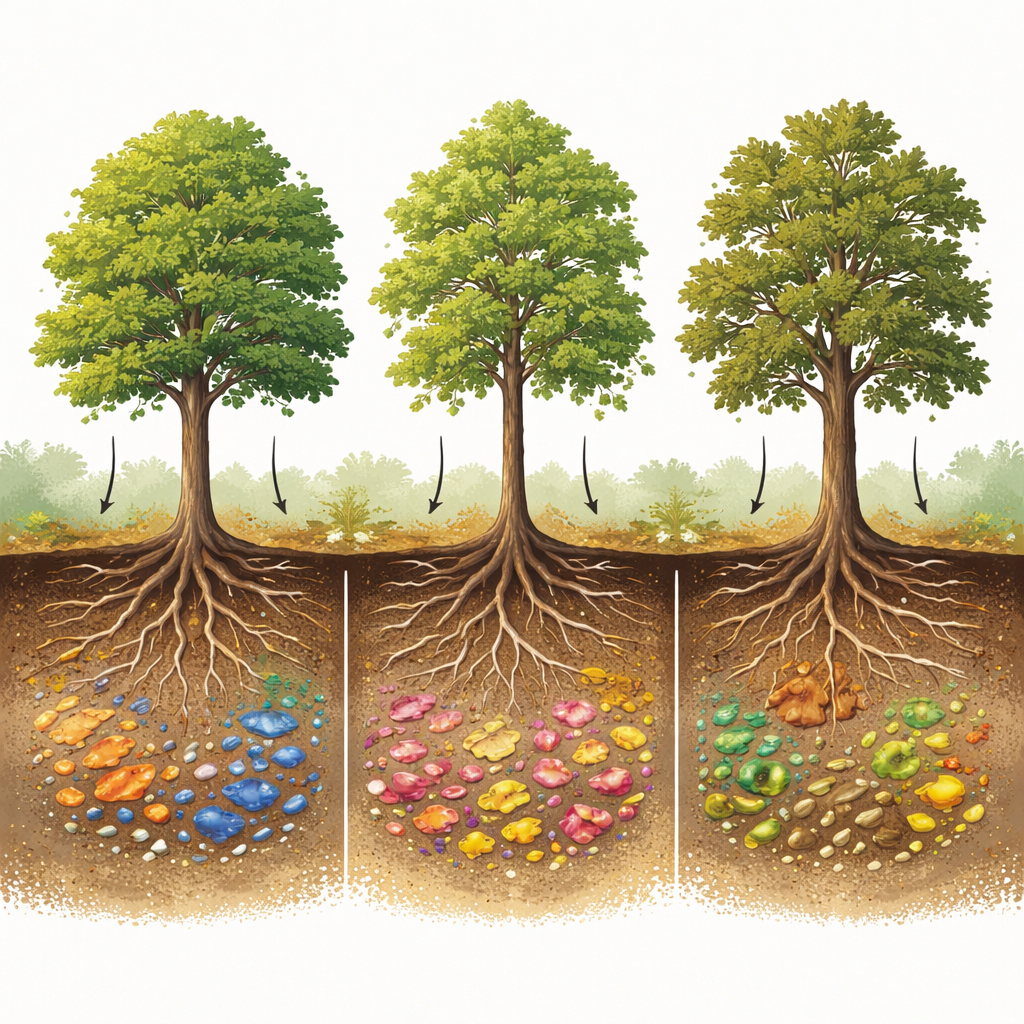
What Microbes Are Doing for the Forest
Looking beyond names, the study examined what kinds of roles these fungi play. Fungi that decompose dead organic matter were the dominant lifestyle under all three tree species, and were most abundant beneath linden, matching the idea of faster turnover and nutrient release. Fungi that form mutualistic partnerships with tree roots were most common under oak, pointing to a greater emphasis on long-term nutrient sharing there. Pathogenic fungi were a small fraction everywhere, suggesting that diverse, active communities help keep diseases in check. Many of the fungal and bacterial groups enriched under linden are known from other work to break down complex plant material, free up nutrients, fix nitrogen, or combat pathogens, painting a picture of particularly vigorous and beneficial soil life beneath these trees. 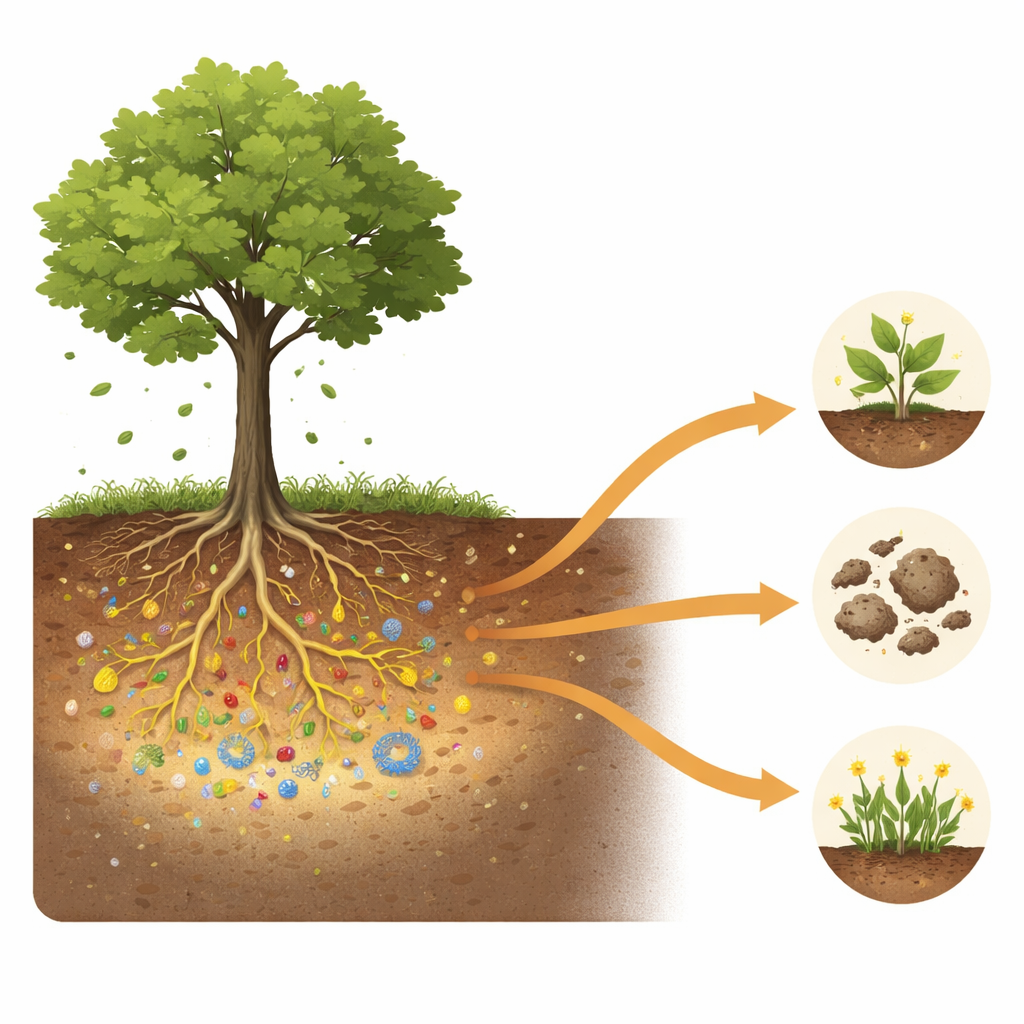
Why Tree Choice Matters for Future Forests
The study concludes that tree species strongly shape both soil chemistry and the diversity of the invisible life that runs forest ecosystems. Linden stands, in particular, create less acidic, calcium-rich soils that support especially rich bacterial and distinctive fungal communities, with signs of efficient nutrient cycling and plant-friendly functions. Oak and beech also foster their own characteristic underground worlds, but with different balances between decomposers and root partners. For forest managers and conservation planners, this means that choosing which trees to plant is also a decision about which microbial communities and soil processes to encourage. Incorporating this hidden dimension into reforestation and management—especially by including species like linden—could help maintain healthy soils, support biodiversity, and build forests more resilient to environmental change.
Citation: Piaszczyk, W., Lasota, J., Foremnik, K. et al. Tree species determine soil microbial diversity: variation in fungal and bacterial communities in temperate forests. Sci Rep 16, 11022 (2026). https://doi.org/10.1038/s41598-026-41297-6
Keywords: forest soil microbiome, tree species effects, temperate forests, soil biodiversity, linden beech oak