Clear Sky Science · en
Using critical points of logistic model to describe the growth of rice plant height in Taiwan
Why rice height matters to all of us
Rice feeds more than half the world, and Taiwan has been refining its rice for over a century. How tall each plant grows might sound like a minor detail, but height affects how much grain can be harvested, how easily storms can knock plants over, and how farmers decide when to fertilize and irrigate their fields. This study uses a mathematical growth curve, called a logistic model, to turn decades of plant height records from Taiwanese rice fields into a practical guide for understanding how rice grows in different seasons and for different varieties.
Following rice plants through their life
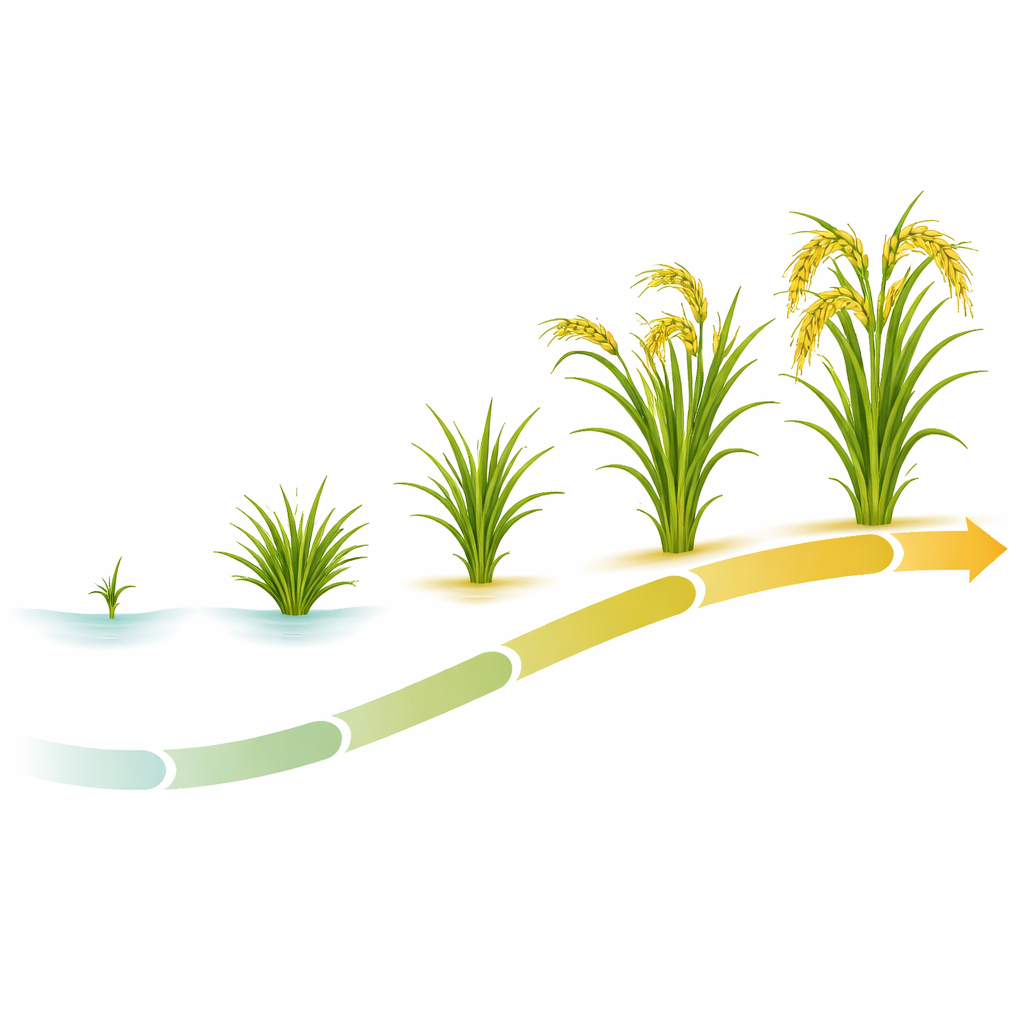
The researchers drew on nearly one hundred years of field trials from central Taiwan, covering 18 rice varieties grown in both spring and autumn. For each variety and season, they tracked plant height from just after transplanting until maturity. They then fitted these data with an S-shaped curve that describes how growth starts slowly, speeds up, and then tapers off as the plant reaches full height. From this curve, they extracted five key time points that line up with familiar stages farmers already recognize in the field: seedling establishment, the start of active branching (tillering), the period of most effective tillering, the start of flower cluster formation (panicle initiation), and the heading stage when the grain-bearing heads emerge.
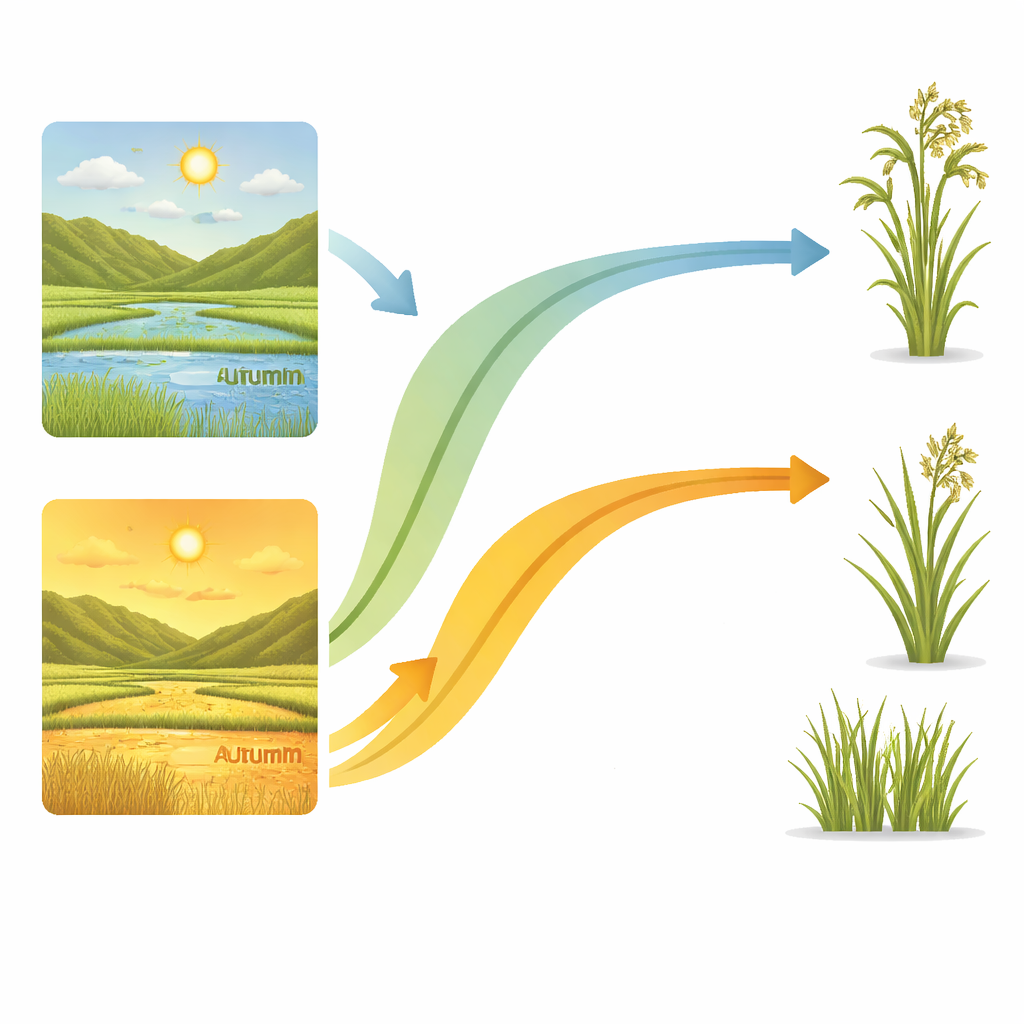
Spring versus autumn growth
By comparing these five time points between seasons, the team found that autumn rice generally moves through its growth stages earlier than spring rice. On average, the autumn crop hit its fastest growth rate and later critical stages several days to more than a month sooner than the spring crop. Although final plant heights in the two seasons were similar—around 110 centimeters on average—the shape of the growth curve differed. Autumn rice not only reached its peak growth rate sooner, it also grew slightly faster at that peak. This means the main “height-building” window, stretching from just after seedlings take hold to just before heading, occurs earlier and more intensely in the autumn season.
Old tall rice and newer shorter rice
The historical records also captured a shift in breeding goals over time. Early varieties in Taiwan, often of the indica type, tended to be tall—many exceeding 120 centimeters. These lofty plants were prone to lodging, where heavy heads and tall stems cause the plant to bend or fall, especially in wind or rain. Starting in the mid-20th century, breeders introduced shorter, stronger-stemmed japonica varieties that could better resist lodging and tolerate mechanical harvesting. The analysis confirms this trend: more recent varieties are noticeably shorter at maturity, yet the timing and maximum speed of their height growth are surprisingly similar to the older, taller lines. In other words, breeding reduced how tall the plants grow without dramatically changing when they pass through key developmental stages.
Turning curves into field decisions
Because the five critical points of the height curve match practical growth stages, they can be used to fine-tune field management. When the curve reaches the early acceleration point linked to tillering, farmers can schedule the first extra fertilizer dose to support the burst of new stems. As the curve approaches its middle point, marking the end of effective tillering, careful water management can encourage roots to grow deeper and stronger. Later, when the curve enters the stage associated with panicle formation, an additional fertilizer application helps build more grains per flower cluster. Finally, during the heading stage near the top of the curve, maintaining deeper water supports the transfer of sugars from leaves into filling grains. Although the logistic model cannot capture every physiological detail, it offers a simple, data-based way to read the rice plant’s “body clock.”
What this means for rice and farmers
This study shows that a relatively simple growth curve can turn long-term height measurements into a clear schedule of rice development. It reveals that autumn rice in Taiwan tends to grow faster and reach important stages earlier than spring rice, and that modern breeding has produced shorter, sturdier plants without greatly altering the timing of their growth. For farmers and advisors, these insights help match fertilizer and irrigation to the plant’s real needs, improving yield and stability while reducing waste. For a crop as central as rice, understanding something as basic as how tall it grows, and when, can have wide-reaching effects on food security and sustainable farming.
Citation: Hsieh, CY., Chen, H., Wu, YC. et al. Using critical points of logistic model to describe the growth of rice plant height in Taiwan. Sci Rep 16, 10081 (2026). https://doi.org/10.1038/s41598-026-41295-8
Keywords: rice growth, plant height, crop modeling, Taiwan agriculture, logistic curve