Clear Sky Science · en
Stages of objective memory impairment are associated with accelerated brain aging
Why Brain Age Matters for Memory
As people live longer, many worry about whether everyday forgetfulness is a normal part of aging or an early warning sign of dementia. Doctors can use spinal taps or brain scans to look for Alzheimer’s disease, but these tests are expensive, invasive, and not widely available. This study asks a simple but powerful question: can an easy memory test capture deeper changes in how quickly the brain itself is aging, and help flag who may be on a riskier path long before full-blown dementia appears?
A Simple Test for Subtle Memory Changes
The researchers focus on a framework called Stages of Objective Memory Impairment, or SOMI. SOMI uses scores from a structured memory task in which people learn pictures and later try to recall them, first on their own and then with helpful cues. Early SOMI stages (0–2) reflect trouble pulling information out of memory, but with cues people can still remember it—this is called a retrieval problem. Later stages (3–5) reflect a deeper issue: even with cues, the information seems to be gone, signaling a storage problem. This shift from retrieval to storage failure is thought to mark a turning point toward Alzheimer’s-type memory decline. 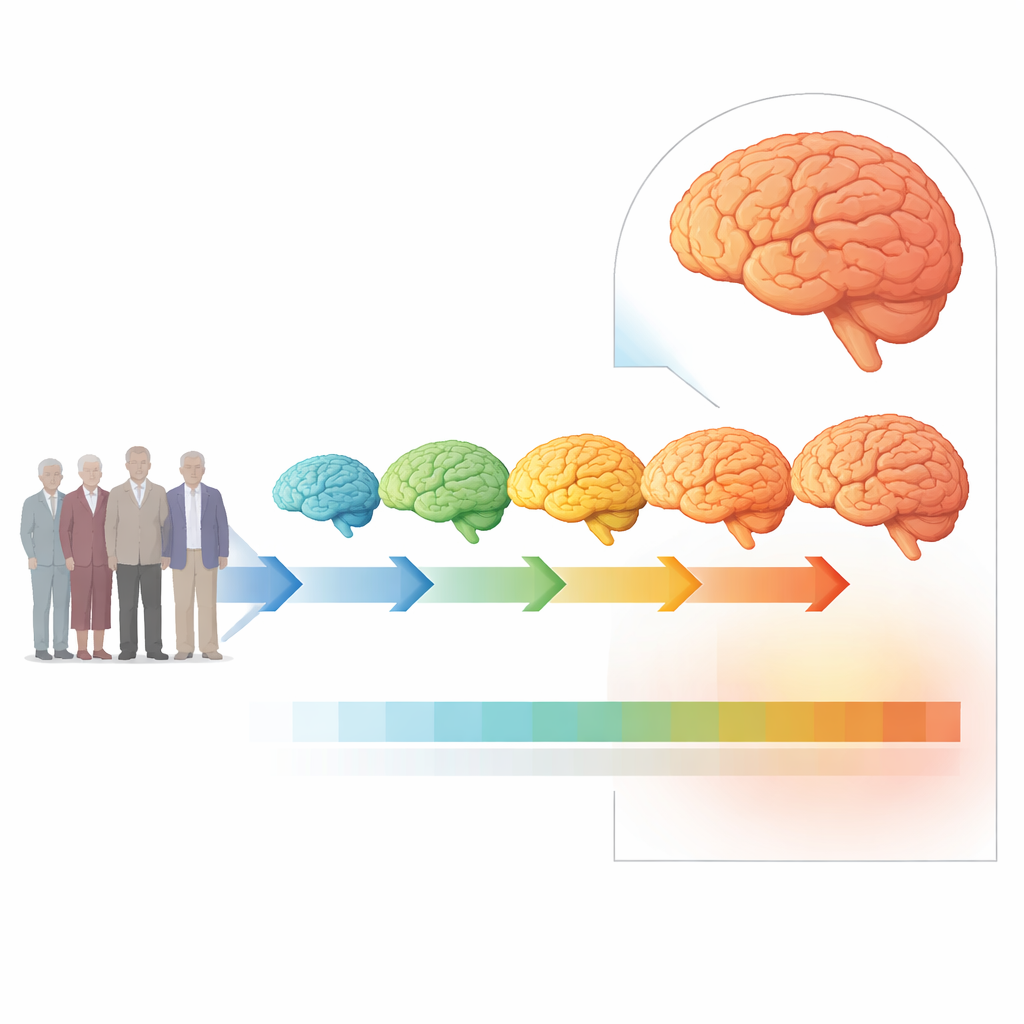
Measuring How Old the Brain Looks
Alongside SOMI, the team used a brain imaging measure called BrainAGE. Using magnetic resonance imaging (MRI) and machine learning, BrainAGE estimates how old a person’s brain looks compared with what is typical for their actual age. If a 72-year-old has a brain that looks more like that of an 80-year-old, their BrainAGE score is positive, suggesting accelerated brain aging; if it looks younger than expected, the score is lower or even negative. Unlike measures that focus on a single structure, BrainAGE summarizes subtle shrinkage and thinning across the entire brain, capturing a more global picture of brain health.
Linking Everyday Memory to Brain Aging
The study included 119 older adults from the Alzheimer and Music Therapy project in Norway, all of whom had some worry about their memory or thinking. Everyone completed detailed cognitive testing and an MRI scan. The scientists then asked whether people in higher SOMI stages also had higher BrainAGE scores—that is, whether greater memory problems went hand in hand with brains that looked older than their calendar age. They also checked whether this link held up after taking into account factors such as age, sex, education, and the size of the hippocampus, a key memory region that often shrinks in Alzheimer’s disease.
A Sharp Turning Point in Brain Health
The results showed a clear pattern: as SOMI stage increased, BrainAGE scores climbed. People with more serious memory impairment tended to have brains that looked several years older than their peers. Importantly, this relationship remained strong even after adjusting for age and for hippocampal volume, suggesting that SOMI captures widespread brain aging, not just damage in one region. The researchers also noticed that the increase in BrainAGE was not smooth. Brain aging rose only modestly across the early SOMI stages, where retrieval problems dominate, but jumped sharply once people reached stages marked by storage failure (SOMI 3–5). On average, those in the lower stages had brains about three and a half years older than expected, while those in the higher stages showed a gap of over eight years. 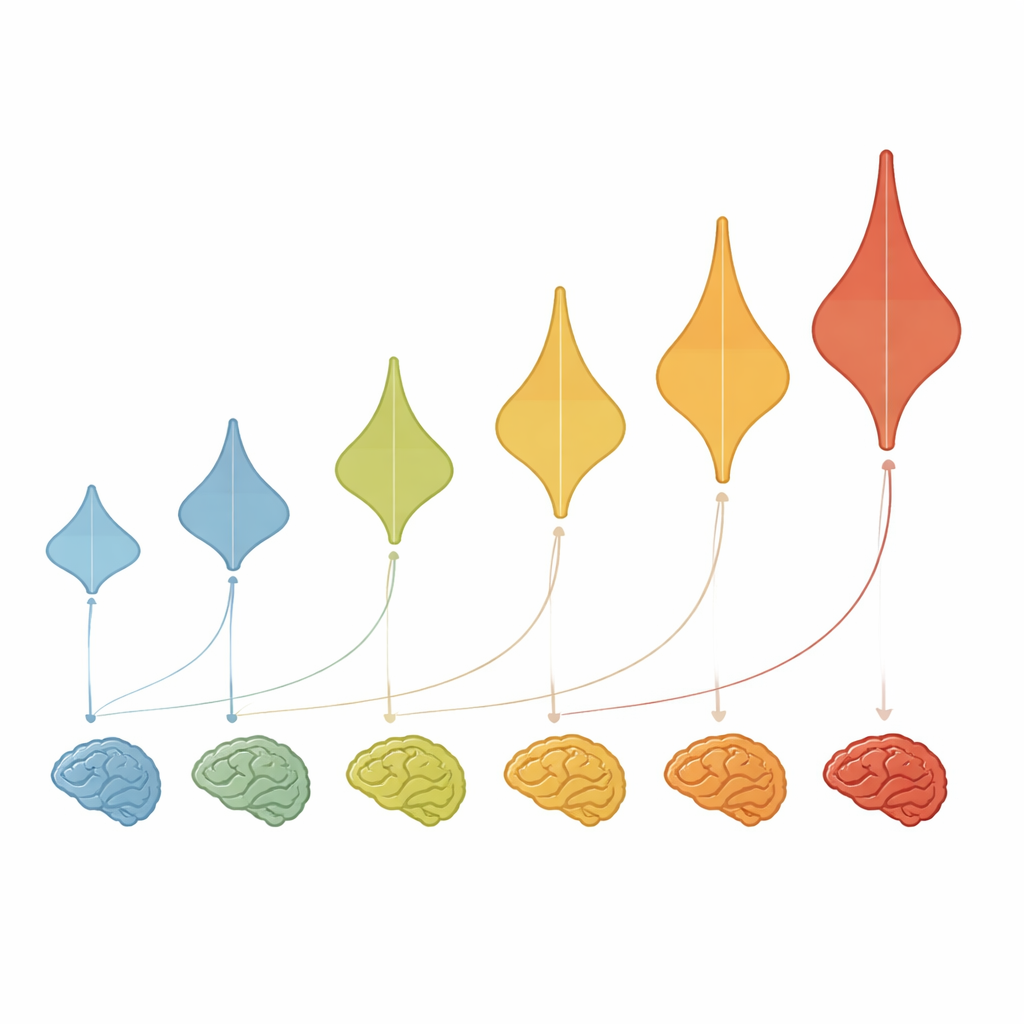
What This Means for Early Detection
For readers and patients, the take-home message is that a carefully designed memory test can do more than simply sort people into “good” or “bad” memory groups. The SOMI framework lines up with how old the brain appears on MRI, especially at the critical shift from milder retrieval problems to deeper storage loss. That makes SOMI a low-cost, non-invasive window into hidden brain changes that underlie Alzheimer’s disease. While this study is cross-sectional and cannot prove cause and effect, it strengthens the case for using structured memory staging to identify at-risk individuals earlier, guide who should receive more advanced testing, and help researchers track the impact of new treatments aimed at slowing both memory decline and brain aging.
Citation: Flo, B.K., Skouras, S., Matziorinis, A.M. et al. Stages of objective memory impairment are associated with accelerated brain aging. Sci Rep 16, 11837 (2026). https://doi.org/10.1038/s41598-026-41282-z
Keywords: Alzheimer’s disease, brain aging, memory tests, MRI imaging, early detection