Clear Sky Science · en
Detection of exercising ectopic atrial and ventricular beats using non-linear analysis of clinically normal racehorse electrocardiograms at rest or low-intensity exercise
Why the Heartbeats of Racehorses Matter
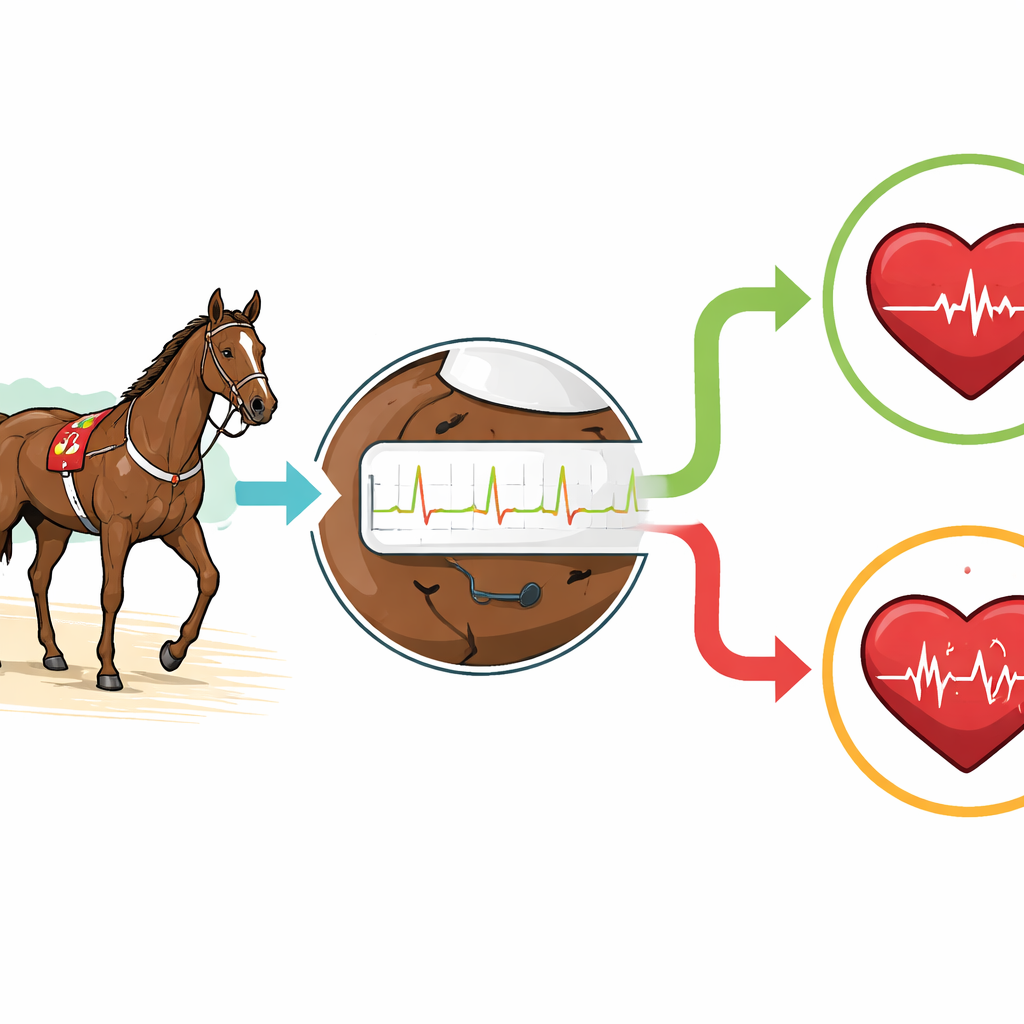
Top racehorses push their hearts to extreme limits, and some suffer dangerous rhythm disturbances during hard exercise. These irregular beats can sap performance and, in rare cases, contribute to sudden death on the track. Yet catching early warning signs usually demands complex heart recordings taken during intense workouts. This study explores a simpler idea: can subtle patterns hidden in short, quiet electrocardiograms (ECGs) recorded at rest or low‑intensity exercise reveal which horses will later develop abnormal beats at speed?
Hidden Clues in Normal Heart Traces
The researchers focused on “ectopic” beats—extra or misplaced beats that arise from the atria (upper chambers) or ventricles (lower chambers) of the heart during exercise. These events are common in otherwise healthy racehorses and may be completely harmless, mildly limit performance, or, in the worst cases, play a role in exercise‑associated sudden death. Traditionally, veterinarians detect them using ECGs recorded during fast work, which are technically demanding, full of movement artefacts, and require expert interpretation. In contrast, ECGs recorded at rest or at low speed are easy to obtain and read. The key question was whether apparently normal low‑intensity ECGs contain faint signatures of hearts that are prone to develop ectopic beats later in the same workout.
Measuring the Disorder in the Beat
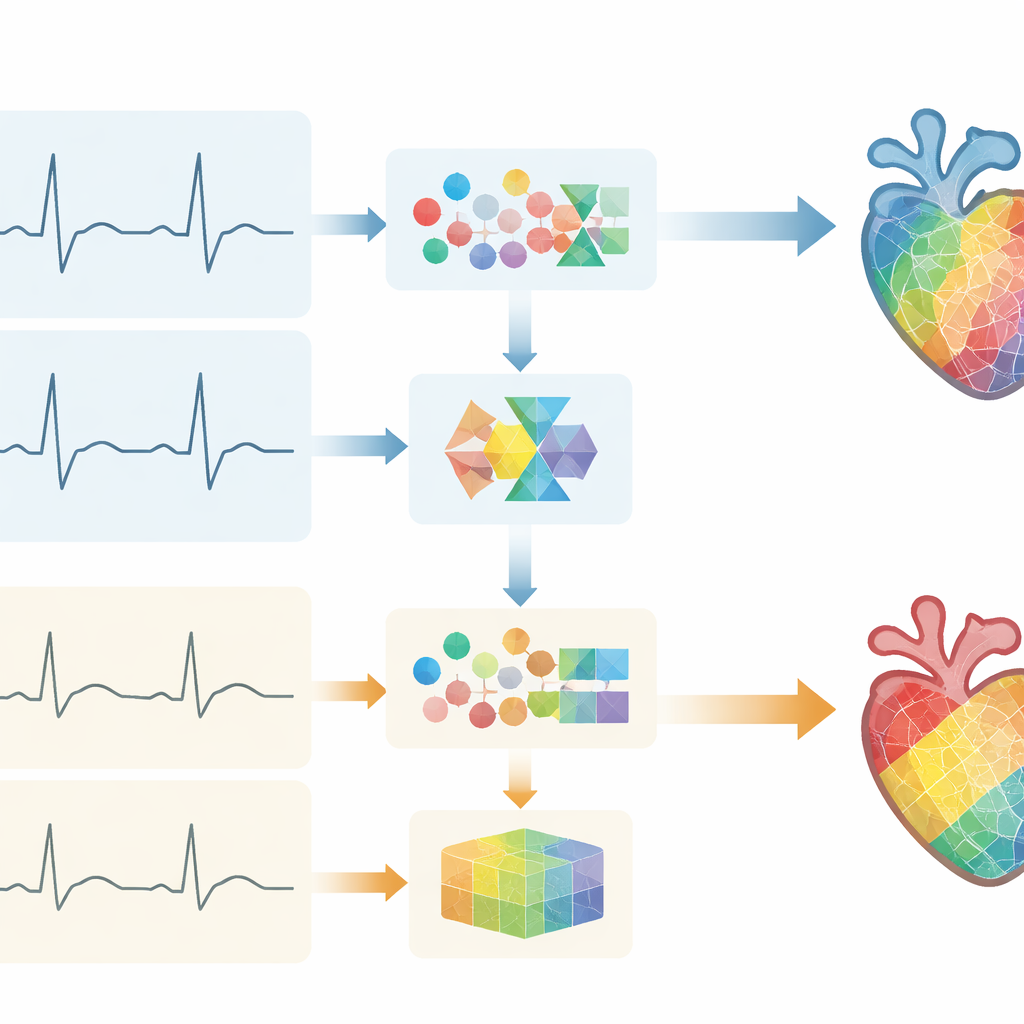
Instead of looking for visually obvious abnormalities, the team used mathematical tools that measure how “disordered” or complex the ECG signal is. These non‑linear methods—known as complexity and entropy estimators—treat the ECG like a string of symbols and ask how many different patterns are needed to describe it. A more intricate pattern gives higher complexity; a more repetitive, uniform pattern gives lower complexity. Working with 110 Thoroughbred and Standardbred racehorses in active training, the researchers recorded ambulatory ECGs before, during, and after routine exercise sessions. From these recordings, they automatically extracted 60‑second strips of clean, stable normal rhythm at heart rates between 20 and 120 beats per minute, then converted the waveforms into symbolic strings based on key points in each beat, such as the main spike and the recovery wave.
Finding the Sweet Spot in Heart Rate and Method
The investigators systematically tested many combinations of signal preprocessing choices, complexity estimators, and heart‑rate ranges to see which best separated horses that later showed ectopic beats during hard exercise (cases) from those that did not (controls). They discovered that performance depended strongly on heart rate and on which parts of the ECG were emphasized. The most useful information came from ECGs recorded at moderate, “submaximal” heart rates between 60 and 100 beats per minute—similar to a walk or easy trot for a racehorse. In this range, methods based on Lempel–Ziv ’76 and Titchener complexity performed far better than other entropy measures. Features linked to the end of the main contraction wave (the QRS complex) and the recovery wave (the T wave) were especially informative, suggesting that the way the heart resets itself between beats carries important clues about vulnerability to exercise‑induced rhythm problems.
How Well the Approach Worked
Using one of the best‑performing combinations—Lempel–Ziv ’76 complexity calculated from signals marked at the R peak and the ends of the S and T waves in ECGs between 60 and 100 beats per minute—the method achieved an area under the receiver‑operating curve of 0.86. In practical terms, this translated into sensitivity around 86 percent (few at‑risk horses missed) and specificity around 83 percent (most low‑risk horses correctly identified). Notably, the negative predictive value was about 98 percent, meaning that if the test judged a horse to be low risk, that horse was very unlikely to show ectopic beats at exercise. However, the positive predictive value was modest, about 40 percent: many horses flagged as potentially at risk would not actually develop problematic ectopic beats, underscoring that the method is best suited as a screening tool rather than a standalone diagnosis.
What This Means for Horses and Beyond
Overall, the study shows that by analyzing the subtle disorder in short, clean ECGs taken at comfortable paces, veterinarians can reliably rule out most horses that are unlikely to develop exercise‑related ectopic beats, while selecting a smaller group for more intensive monitoring during high‑speed work. This could reduce the need for technically challenging tests while still improving safety and performance oversight. The findings complement earlier work by the same group on another rhythm problem, paroxysmal atrial fibrillation, and hint at broader applications: similar non‑linear analyses might help flag early cardiovascular changes in human athletes too, especially when combined with modern artificial‑intelligence methods.
Citation: Alexeenko, V., Tavanaeimanesh, H., Stein, F. et al. Detection of exercising ectopic atrial and ventricular beats using non-linear analysis of clinically normal racehorse electrocardiograms at rest or low-intensity exercise. Sci Rep 16, 13357 (2026). https://doi.org/10.1038/s41598-026-41281-0
Keywords: racehorse arrhythmia, equine ECG, heart rhythm screening, signal complexity, sudden cardiac death