Clear Sky Science · en
Development and characterization of an aloe vera-based bio-emulsifier for sustainable bio-emulsion liquid membrane systems for wastewater treatment
Turning a Houseplant into a Water Cleaner
Many industries, from textiles to pharmaceuticals, release brightly colored dyes into water, creating pollution that is hard to remove. This study explores an unexpected helper: the common Aloe vera plant, better known for soothing sunburns. By turning compounds from Aloe vera leaves into a natural emulsifier, the authors build tiny liquid capsules that can strip dye molecules from dirty water efficiently, offering a greener alternative to conventional chemical treatments.
Why Cleaning Up Dyes Is So Difficult
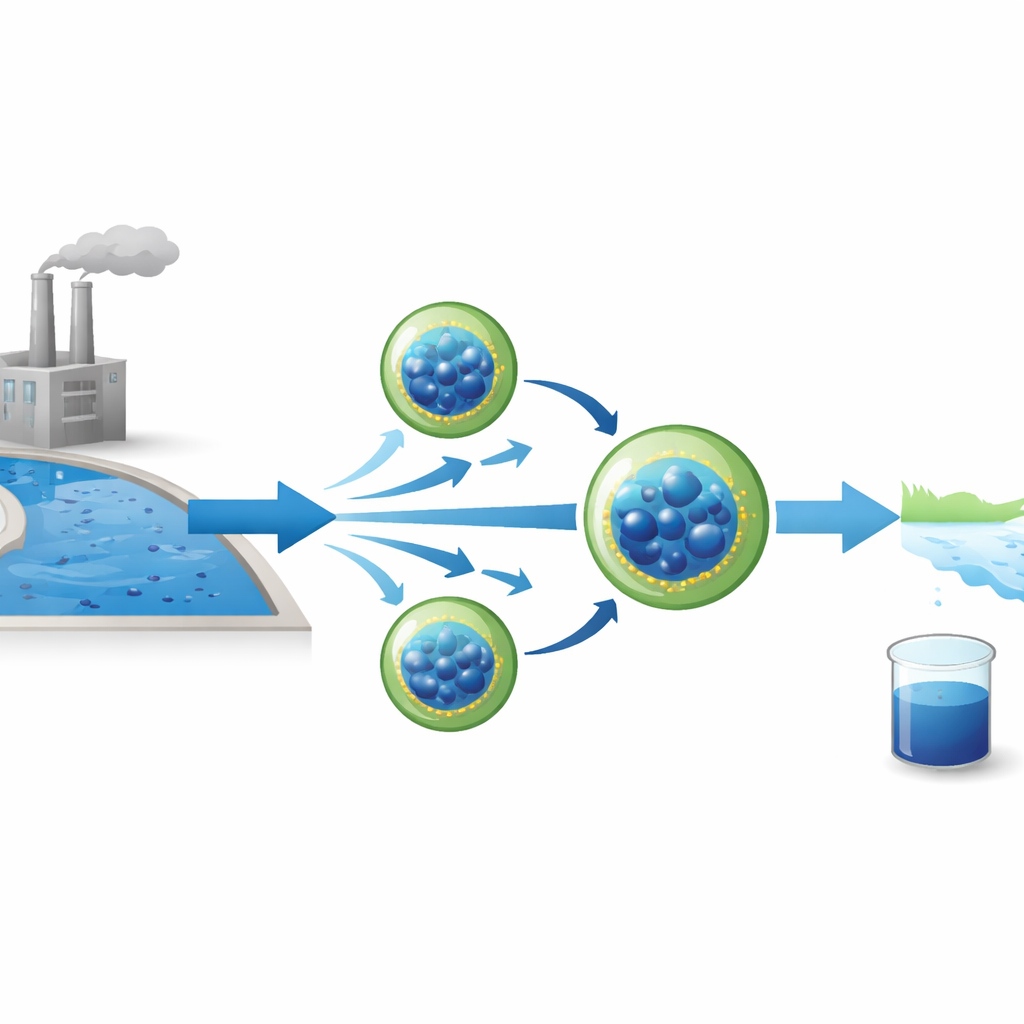
Wastewater packed with synthetic dyes is tough to treat because these molecules are chemically stable and resist breakdown in standard treatment plants. A promising approach called an emulsion liquid membrane uses microscopic droplets that act like mobile extraction units. Each droplet has an oily shell surrounding an inner water-based core. When these droplets are mixed into polluted water, dye molecules move from the outer water into the droplets and finally into the inner core, where they are trapped. In practice, however, these emulsions often fall apart: droplets merge, the inner core leaks, and the system quickly loses effectiveness.
Using Aloe Vera to Build Better Droplets
The researchers focused on replacing part of the usual synthetic chemistry with plant-based ingredients. They blended whole Aloe vera leaves with a mild solvent to extract a mixture of natural compounds that behave like soap molecules, with one end attracted to water and the other to oil. Tests using advanced chemical analysis techniques showed a rich blend of plant molecules with both water-loving and oil-loving parts, ideal for stabilizing the interface between oil and water. The team combined this Aloe extract with soybean oil (a renewable, food-grade oil) and a small amount of standard surfactant to form the outer shell of the droplets, while a sodium hydroxide solution served as the inner core that captures dye.
How Tiny Structures Make a Big Difference
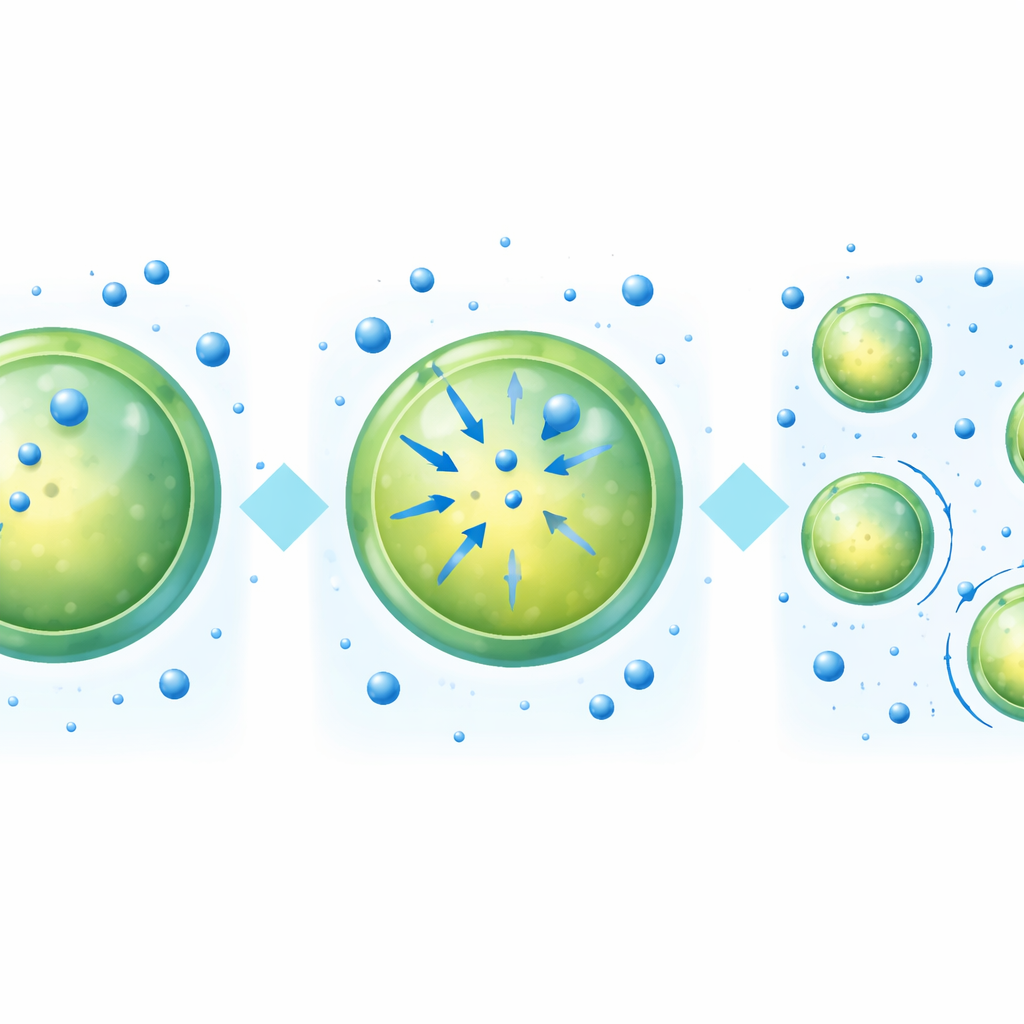
To understand whether the Aloe-based system really improved performance, the authors measured how the droplets behaved at very small scales. Surface tension tests showed that the Aloe extract strongly lowers the energy at the oil–water boundary, encouraging the formation of stable structures called micelles at around 2% by volume. The droplets in the finished emulsion were mostly between 50 and 200 nanometers across—thousands of times smaller than the width of a human hair—meaning a very large contact area between the droplets and the polluted water. Electrical measurements revealed a pronounced negative charge on the droplet surfaces, which helps them repel one another and avoid clumping. Flow tests showed that the mixture becomes thinner when stirred, making it easy to pump and mix while still remaining structured at rest.
Finding the Sweet Spot for Maximum Cleanup
The team then tuned practical conditions to get the best dye removal. By carefully adjusting the amount of Aloe extract, mixing speed, solution pH, strength of the inner core, and the volume ratio between shell and core, they identified a recipe that balances strong, stable droplets with fast dye capture. The optimal setup used 2.5% Aloe-based emulsifier, a moderate-to-high stirring speed, a mildly alkaline pH of 8, and a specific ratio between membrane and inner liquid. Under these conditions, the system removed about 98% of methylene blue dye—a common test pollutant—from water. Microscopy images showed that the droplets stayed uniform and well-dispersed for about 15 days before gradual merging and phase separation began to appear.
What This Means for Greener Water Treatment
In simple terms, the study shows that ingredients derived from Aloe vera can hold tiny liquid capsules together long enough and strongly enough to pull stubborn dyes out of wastewater with very high efficiency. By pairing a common plant extract with soybean oil, the researchers cut down on the need for petroleum-based solvents and complex additives such as nanoparticles or ionic liquids, without sacrificing performance. While further work is needed to scale up the process and test it on a wider range of real industrial effluents, this Aloe-based emulsion system points toward future treatment technologies that are not only effective, but also safer, cheaper, and more sustainable.
Citation: Wakle, M., Khuntia, S. Development and characterization of an aloe vera-based bio-emulsifier for sustainable bio-emulsion liquid membrane systems for wastewater treatment. Sci Rep 16, 14064 (2026). https://doi.org/10.1038/s41598-026-41280-1
Keywords: wastewater treatment, Aloe vera, emulsion liquid membrane, bio-based surfactant, dye removal