Clear Sky Science · en
Electric vehicle charging station recommendation system based on graph neural network and context-aware refinement
Why smarter charging matters
As electric vehicles become more common, finding a convenient place to plug in is turning into a daily concern for many drivers. Cities are racing to install more chargers, yet many stations sit underused while drivers complain about long detours, slow chargers, or broken equipment. This study tackles a simple but pressing question: how can we recommend the “right” charging station to each driver—nearby, compatible with their car and habits, and realistically available—using the kind of data that cities can actually collect today?
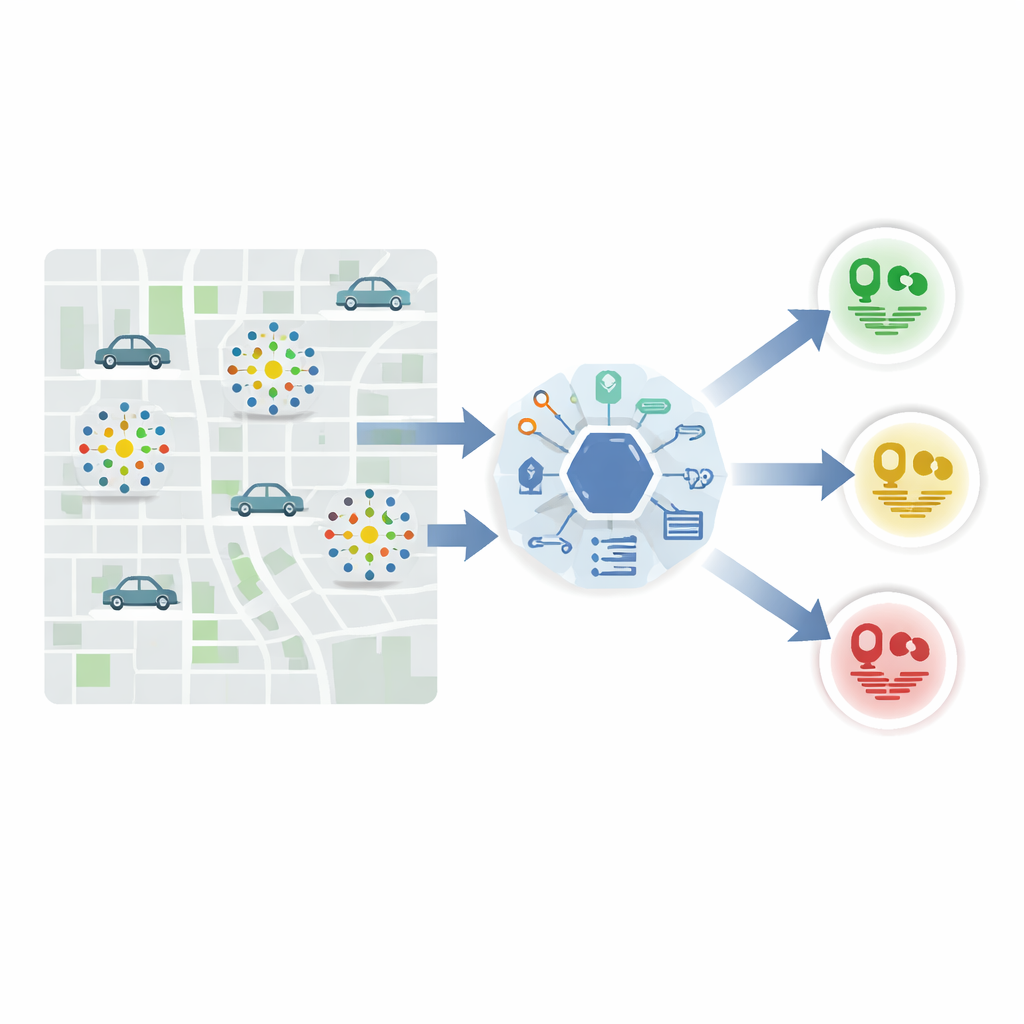
From scattered plugs to a smarter network
The authors start from a puzzle seen in many countries: even where the number of chargers looks sufficient on paper, drivers still struggle to find convenient spots. Stations are not always where the cars are, many are slow rather than fast, and some are restricted to certain users. Prior research has suggested where to build new stations or how to route cars using complex real-time data, but those approaches often depend on specialized infrastructure that most cities lack. This work instead aims for a practical recommendation system that can run on widely available information and still give personalized station suggestions to individual drivers.
Teaching a computer to learn driver habits
At the heart of the system is a graph-based recommendation engine. In this setup, each driver and each charging station is a point in a network, and a line connects them when the driver uses that station. A class of models known as graph neural networks dig into this web of connections to uncover patterns—such as which groups of drivers tend to favor similar stations—and use those patterns to generate a ranked list of promising stations for every driver. Because real charging records tied to individuals are hard to obtain for privacy reasons, the team built a detailed simulator that mimics driver behavior in the Seoul metropolitan area, using real statistics on vehicle registrations, travel patterns, charger locations, and the mix of fast and slow chargers. This synthetic but carefully validated data lets them test ideas without exposing anyone’s personal history.
Adding common-sense context: distance and speed
On its own, a graph model may suggest stations that look good statistically but are awkward in practice—too far from the driver’s current area or offering the wrong charging speed. Rather than rebuilding the model every time the city changes, the authors bolt on a separate “context-aware refinement” step that reshapes the ranked list after the graph has done its work. This extra module favors stations that are both geographically close and match the driver’s preference for fast or slow charging. To capture distance in a realistic way, the team clusters stations based on their latitude and longitude, grouping together locations that are actually near one another, even if they fall on different sides of an administrative boundary. Tests show that this geography-based clustering does a much better job than simple postal codes at surfacing truly nearby stations.
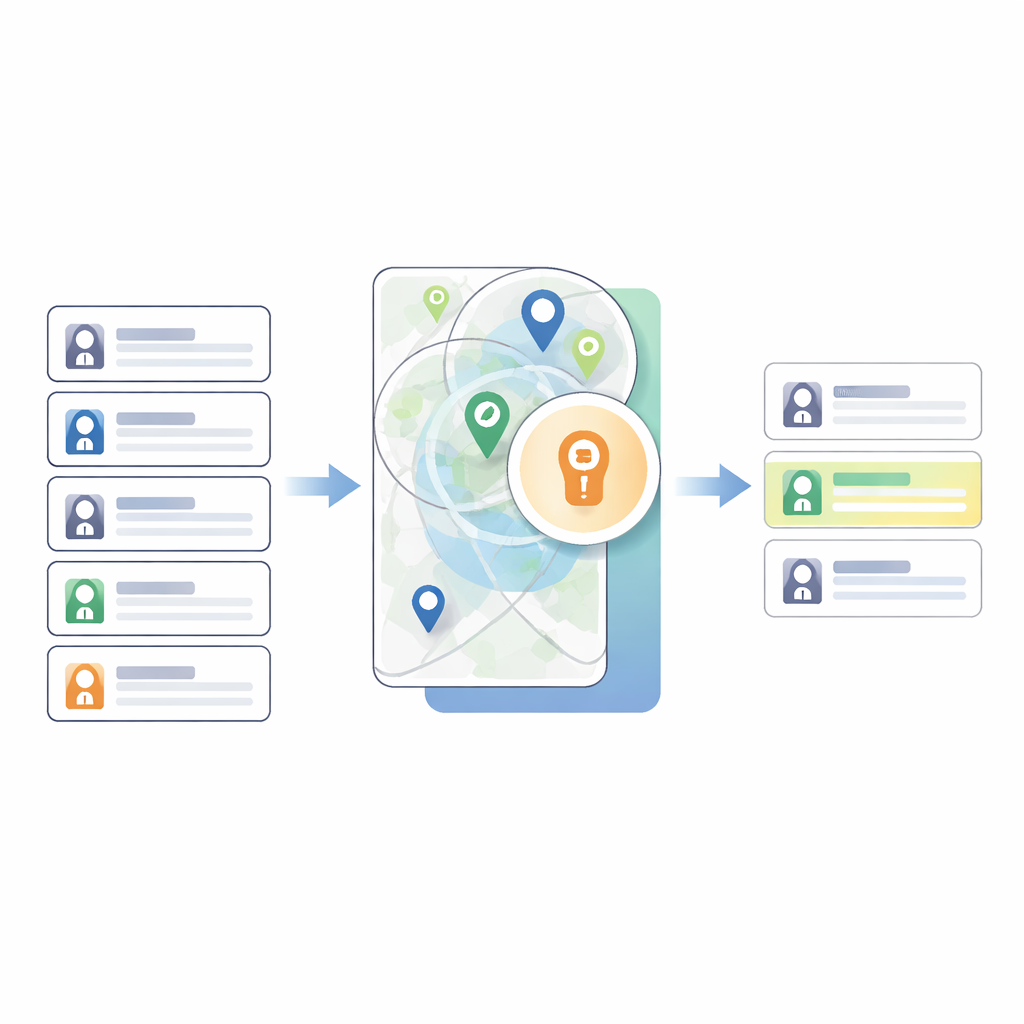
Putting the approach to the test
Using hundreds of thousands of simulated driver–station interactions and more than thirty thousand real charging points across the Seoul area, the researchers compared several state-of-the-art graph models and then measured how much their context-aware refinement improved the results. They found that including charging speed alone had only a modest effect. Location alone helped more, especially when based on the new spatial clusters. But the biggest gains came from combining both pieces of context—where the driver is likely to be and what kind of charger they tend to use. In some setups, recall of the correct station among the top 20 suggestions improved by more than half compared with using the graph model by itself, all while adding only about 10–12 percent extra computing time.
What this means for everyday drivers
For non-specialists, the key message is that smarter use of existing data can make EV charging feel far less like a gamble. By first learning broad patterns of station use and then quickly reordering suggestions based on simple, human-understandable factors—distance and charging speed—this framework can steer drivers toward practical options without needing constant retraining or heavy real-time tracking. Although the current study focuses on a static snapshot of conditions and uses simulated drivers, the same design could plug in real-time feeds about outages, queues, or prices, continuously refreshing recommendations while preserving privacy. In short, the work points toward EV apps that feel more like a helpful guide and less like a map of scattered pins.
Citation: Seo, D., Moon, J. & Kwon, HY. Electric vehicle charging station recommendation system based on graph neural network and context-aware refinement. Sci Rep 16, 11284 (2026). https://doi.org/10.1038/s41598-026-41271-2
Keywords: electric vehicle charging, recommendation system, graph neural networks, location-based services, smart city infrastructure