Clear Sky Science · en
Evaluation of phenolic profile and multi-biological activities of Lepista glaucocana extracts optimized by ANN-GA and RSM models
Why a Forest Mushroom Caught Scientists’ Attention
Mushrooms are increasingly recognized not just as food, but as miniature chemical factories that may help protect our cells, brains, and even guard against cancer. This study focuses on Lepista glaucocana, a little-known wild mushroom, and asks a practical question: if this fungus contains helpful natural compounds, how can we extract them in a way that makes them as powerful as possible? To answer that, the researchers pitted a classic statistics method against artificial intelligence to see which could design a better mushroom extract.
From Woodland Fungus to Concentrated Extract
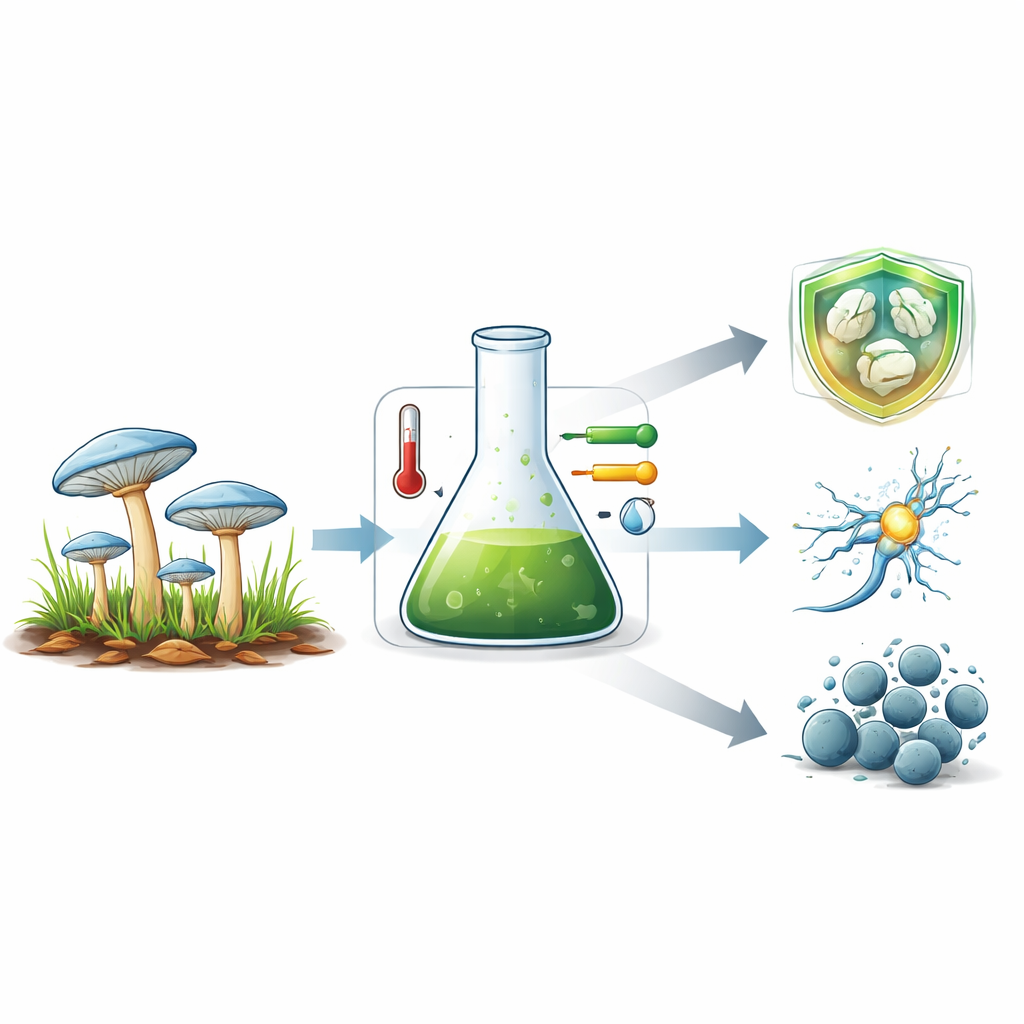
The team collected Lepista glaucocana from forests in Türkiye, dried and ground the mushrooms, and then soaked them in mixtures of water and ethanol under different conditions. They carefully changed three knobs: how hot the mixture was, how long it was extracted, and what proportion of water to alcohol was used. Rather than guessing, they built two kinds of mathematical “maps” to find the sweet spot where the extract showed the strongest antioxidant power. One map used a well-established statistical tool called response surface methodology, while the other relied on an artificial neural network coupled with a genetic algorithm—an AI approach that learns patterns and searches for the best combination of conditions.
How Artificial Intelligence Improved the Recipe
Both approaches examined how the three extraction knobs affected the total antioxidant status of the mushroom extracts. The AI-based model captured subtle, non‑linear relationships that the traditional method could not describe as precisely. When the researchers prepared new extracts using each method’s recommended conditions, the AI‑optimized extract consistently came out ahead. It had higher antioxidant scores in several standard tests, and lower measures of total oxidants and oxidative stress, suggesting that the AI recipe did a better job of pulling out protective molecules while limiting damaging by‑products.
Effects on Brain Enzymes and Cancer Cells
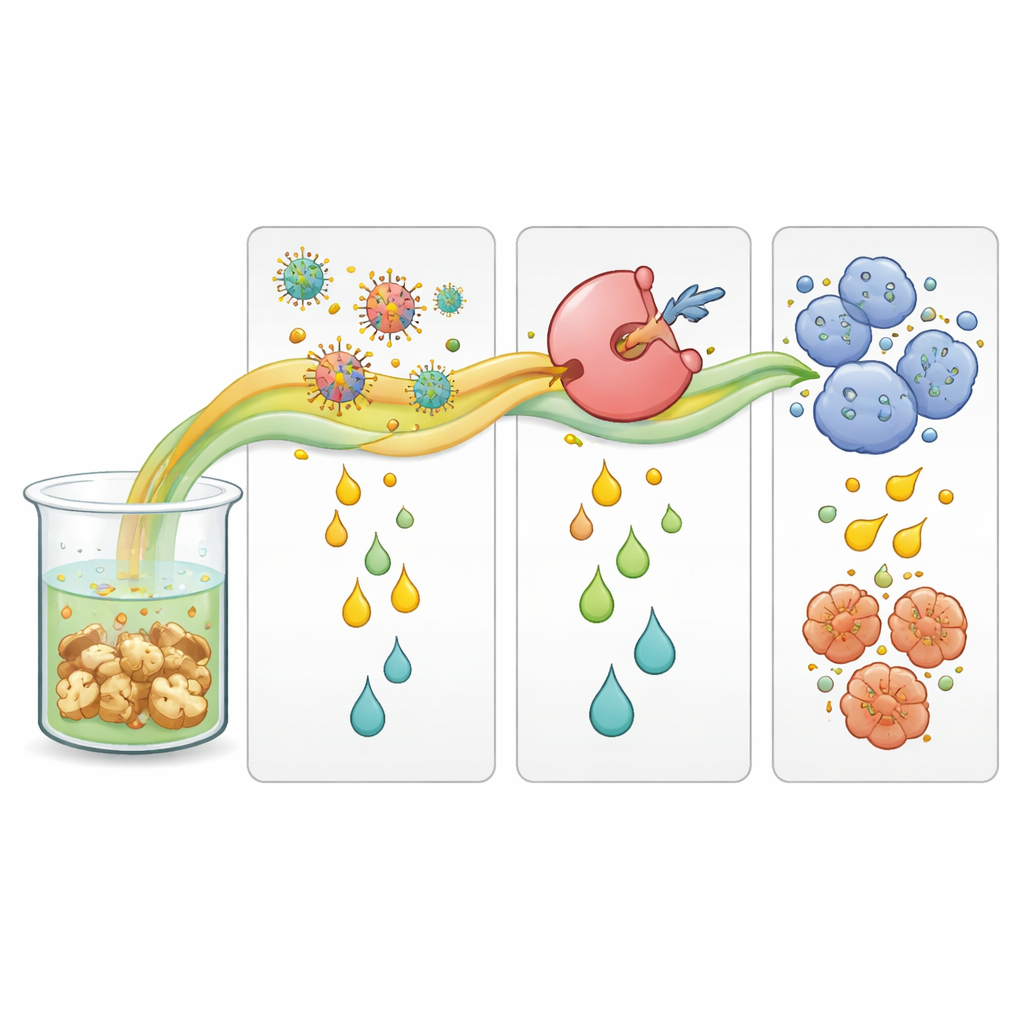
The scientists then looked beyond test-tube antioxidant readings to see whether these extracts could influence biological targets tied to disease. In nerve-related tests, both extracts slowed down two enzymes, acetylcholinesterase and butyrylcholinesterase, which normally break down the signaling molecule acetylcholine and are linked to memory and cognition. The AI-derived extract did this more effectively, meaning it inhibited the enzymes at lower doses. In cell culture experiments, the extracts were applied to human lung, breast, and prostate cancer cell lines. As the extract concentration increased, cancer cell growth dropped, and again, the AI‑optimized extract showed a stronger, dose‑dependent ability to reduce cell viability, especially in lung and prostate cancer cells.
The Hidden Role of Plant-Like Molecules
To understand why the AI recipe performed better, the team analyzed the chemical makeup of both extracts using a sensitive instrument that separates and measures individual molecules. They focused on phenolic compounds—plant-like substances often responsible for antioxidant and protective effects in foods. The AI‑optimized extract contained higher levels of several well-known phenolic acids, including gallic, protocatechuic, syringic, and 2‑hydroxycinnamic acids. These molecules are already known from other studies to neutralize free radicals, help shield cell membranes from oxidative damage, and in some cases interfere with the enzymes involved in nerve signaling and cancer cell survival. The richer phenolic profile of the AI extract closely matched its stronger antioxidant, enzyme‑inhibiting, and antiproliferative behavior.
What This Means for Future Natural Remedies
Put simply, this work shows that how we process a medicinal mushroom can be just as important as the mushroom itself. By letting an artificial intelligence system fine‑tune temperature, time, and solvent mix, the researchers produced a Lepista glaucocana extract that was chemically richer and biologically more active than one designed with a standard statistical approach. In laboratory tests, this AI‑optimized extract acted as a potent antioxidant, moderately slowed brain-related enzymes, and reduced the growth of several cancer cell lines. These results do not yet prove benefits in humans, but they highlight both L. glaucocana as a promising source of natural bioactive compounds and AI-driven optimization as a powerful tool for crafting stronger, more reliable mushroom-based ingredients for future food, supplement, or drug applications.
Citation: Giray, G. Evaluation of phenolic profile and multi-biological activities of Lepista glaucocana extracts optimized by ANN-GA and RSM models. Sci Rep 16, 10153 (2026). https://doi.org/10.1038/s41598-026-41267-y
Keywords: medicinal mushrooms, antioxidant extracts, phenolic compounds, artificial intelligence optimization, natural anticancer agents