Clear Sky Science · en
Association between steatotic liver disease and post-traumatic stress symptoms in the Fukushima health management survey
Why this story matters
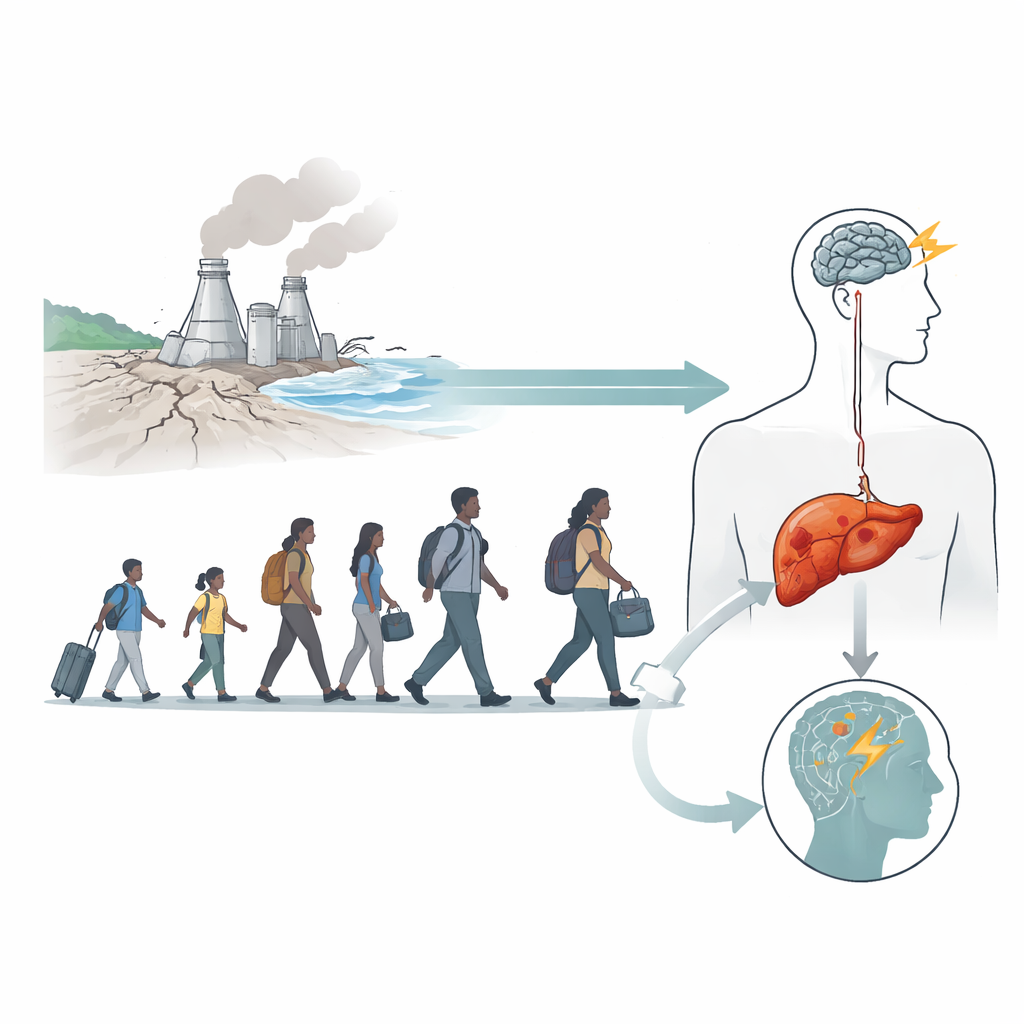
After major disasters, we often think first about visible injuries and destroyed buildings. Less obvious are the slow, intertwined changes in both body and mind that can unfold years later. This study followed thousands of adults affected by the 2011 Great East Japan Earthquake and Fukushima nuclear accident to ask a simple but important question: does having a fatty liver, a common and usually silent condition, make people more likely to develop post-traumatic stress symptoms over time? The answer could change how we monitor survivors’ health after catastrophic events.
The hidden burden after a disaster
The Fukushima Health Management Survey was launched to track the long-term health of residents who lived in or near evacuation zones after the nuclear power plant accident. Beyond radiation, the disaster disrupted daily life: people were evacuated, jobs were lost, and routines were upended. Earlier work from this survey showed increases in obesity, high blood pressure, diabetes, and other lifestyle-related illnesses, along with widespread psychological distress. About one in five adults screened positive for significant post-traumatic stress symptoms in the year after the earthquake, and new cases continued to appear years later. This long tail of mental health impact raised the question of how physical changes in the body might interact with emotional trauma.
A common liver condition in the spotlight
The researchers focused on steatotic liver disease, an umbrella term for conditions in which fat builds up in the liver. A key subtype, called metabolic dysfunction-associated steatotic liver disease (MASLD), is closely tied to traits like abdominal obesity, abnormal blood sugar, and unhealthy cholesterol levels. Importantly, this kind of fatty liver can be picked up in routine health checks using a calculation called the fatty liver index, based on measures such as waist size, body mass index, blood fats, and a liver enzyme test. Because MASLD reflects broader metabolic strain and can be improved with lifestyle changes, it is a practical marker for studying how physical health may shape mental health trajectories after a disaster.
Following survivors over eight years
The study included 16,392 adults aged 40 to 90 who took part in both a health check and a mental health and lifestyle questionnaire soon after the disaster. People who already had strong post-traumatic stress symptoms or certain liver diseases were excluded. Participants were then followed for an average of nearly five years, with repeated mail-in questionnaires that screened for symptoms such as intrusive memories, intense reactions to reminders, avoidance, and difficulty concentrating. The team estimated when new symptoms first emerged and compared rates between people with and without steatotic liver disease at baseline, while accounting for age, sex, evacuation status, unemployment, sleep problems, prior mental illness, drinking and smoking habits, and markers of liver scarring.
Fatty liver linked to later stress symptoms
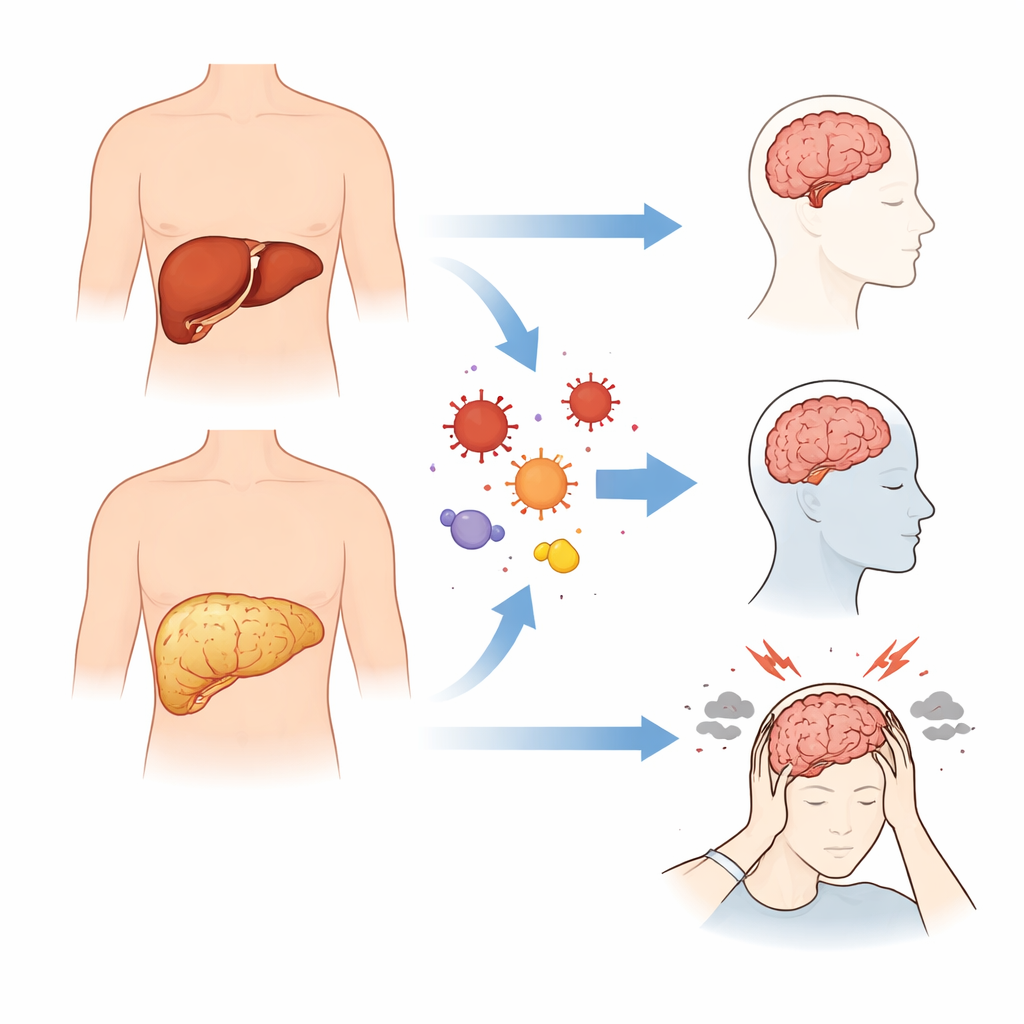
Over the follow-up period, about 13% of participants who had not initially screened positive went on to develop post-traumatic stress symptoms. Those with steatotic liver disease at the time of the disaster were more likely to be in this group than those without it. When the researchers looked more closely at liver subtypes, MASLD showed the clearest link: people with this metabolically driven form of fatty liver had a modest but statistically meaningful increase in risk of later post-traumatic stress symptoms, even after adjusting for many social and health factors. In contrast, fatty liver associated with heavier alcohol use did not show the same pattern. Strong insomnia symptoms, evacuation experience, unemployment, and a history of mental disorder were also independently associated with higher risk.
Possible biological bridges
Why might fat in the liver be connected to how people cope with trauma years later? One proposed bridge is chronic, low-grade inflammation. Metabolic problems such as high blood sugar, abnormal blood fats, and fatty liver are known to promote inflammatory signals that can circulate throughout the body. Other studies suggest these signals can influence the brain, affecting stress hormones, mood regulation, and the ability to extinguish fear memories. Elevated inflammatory markers have been linked to a greater chance of developing post-traumatic stress disorder, and animal experiments show that inflammation can make fear memories harder to erase. Although this study did not directly measure inflammation, the findings fit with the idea that an “inflamed metabolism” may leave disaster survivors more vulnerable to long-lasting psychological scars.
What this means for survivors and care
For lay readers, the key takeaway is that mental and physical recovery after a disaster are deeply intertwined. A seemingly silent condition like fatty liver, especially when driven by broader metabolic problems, may quietly raise the risk of developing stress-related symptoms years down the line. The authors argue that disaster responses should not focus only on counseling and immediate trauma care, but also on early screening for metabolic health, sleep problems, and fatty liver, followed by support for healthier lifestyles. While more research is needed to untangle cause and effect, this study suggests that protecting the liver – through diet, activity, sleep, and managing weight and blood sugar – could also help protect the mind in the long shadow of catastrophe.
Citation: Hayashi, F., Ohira, T., Takahashi, A. et al. Association between steatotic liver disease and post-traumatic stress symptoms in the Fukushima health management survey. Sci Rep 16, 11141 (2026). https://doi.org/10.1038/s41598-026-41265-0
Keywords: post-traumatic stress, fatty liver disease, Fukushima disaster, metabolic health, disaster survivors