Clear Sky Science · en
A transparent osmotic wound dressing ATKPAD promotes the healing process and regulates hypoxia-dependent inflammatory responses
Why a New Bandage Matters
Anyone who has dealt with a stubborn cut, a pressure sore, or a surgical wound knows how long and frustrating healing can be. Modern bandages do more than cover a wound: they carefully control moisture, oxygen, and infection risk. This study introduces ATKPAD, a new transparent wound dressing developed in Japan that uses food-preservation technology to gently draw out excess fluid while holding on to the body’s own healing signals. The researchers set out to uncover how this unusual pad changes the wound environment and whether it can genuinely speed repair.
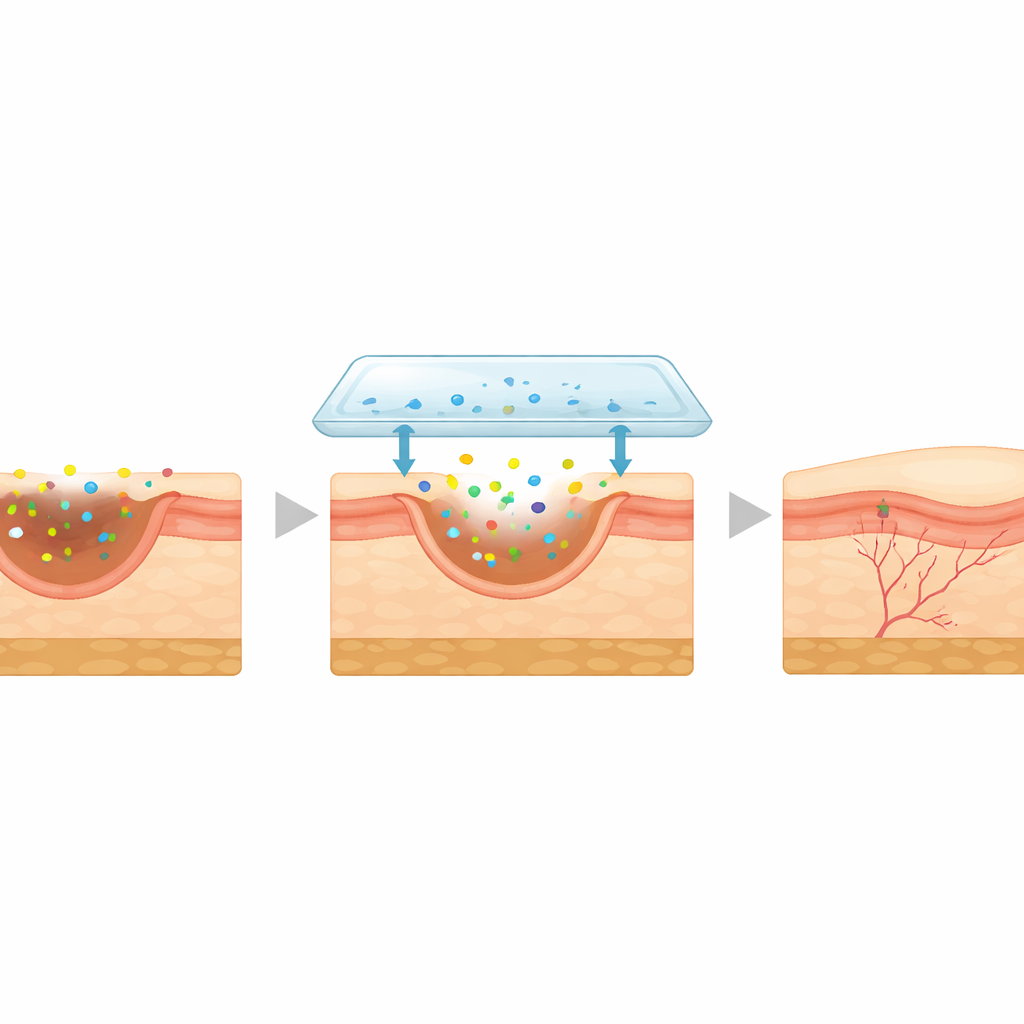
A Clear Window Over Healing Skin
ATKPAD is built like a tiny, flexible pouch. Inside is a thick gel made from reduced starch syrup and sodium alginate; outside is a clear, semi-permeable film of polyvinyl alcohol. This design lets water and small dissolved molecules move into the pad through osmotic pull, much like how salt draws water out of vegetables. At the same time, larger protein molecules—such as the signaling factors that cells release to coordinate repair—are held back near the wound surface. Because the film is transparent, doctors can see the wound without removing the dressing, avoiding unnecessary disturbance while still monitoring progress.
Holding On to the Body’s Own Repair Signals
To find out whether ATKPAD truly preserves key healing molecules, the team first used a simple two-chamber lab system. They placed a solution of cytokines and growth factors in the lower chamber and a concentrated solution above, separated by different test films. With the polyvinyl alcohol membrane used in ATKPAD, water moved upward, showing strong fluid absorption, but most of the cytokines and growth factors stayed in the lower chamber. Compared with common plastic films, the ATKPAD material absorbed more fluid while better retaining both inflammatory messengers and blood vessel–promoting factors. This suggested that, on a real wound, ATKPAD might keep helpful proteins in place even as it soaks up excess exudate.
Boosting Early Inflammation to Build New Tissue
The researchers then tested ATKPAD on full-thickness skin wounds in mice, comparing it with a standard transparent polyurethane film. Wounds covered with ATKPAD developed thicker, richer granulation tissue—the fresh, pink repair layer—within the first week. They also contained more tiny blood vessels and higher levels of a key vessel-growth factor, indicating stronger angiogenesis, the process of supplying new tissue with blood. Early after injury, ATKPAD-treated wounds showed a surge in white blood cells, especially neutrophils and macrophages, which are first responders that clear debris and send repair signals. Levels of inflammatory messengers such as interleukin-6 and tumor necrosis factor rose briefly, matching the increase in these cells.
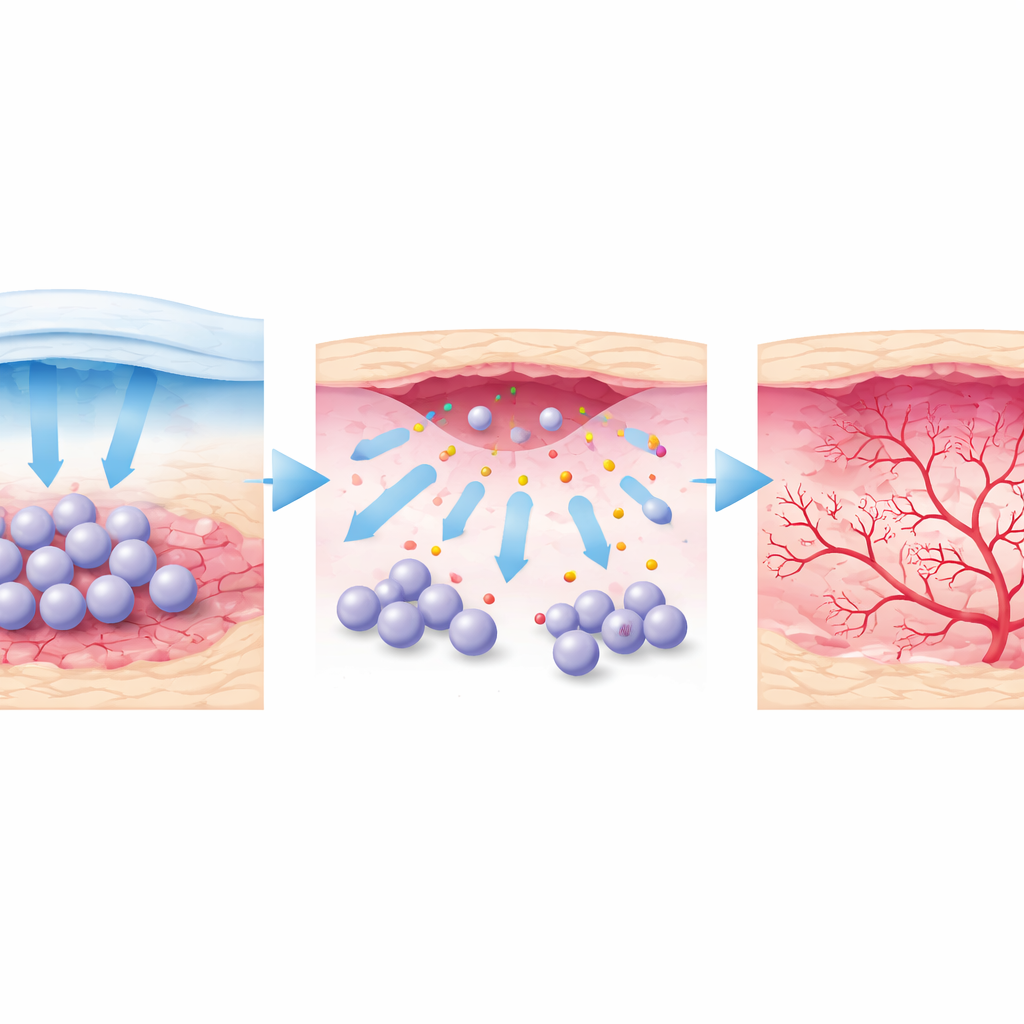
Creating a Helpful Low-Oxygen Niche
Unlike many dressings that aim simply to keep air away, ATKPAD appears to shape the wound’s oxygen balance in a specific way. Because its outer film lets almost no oxygen through, the tissue under the pad becomes mildly starved of oxygen, a state known as hypoxia. The study found higher levels of hypoxia-inducible factor-1α, a protein that switches on genes needed when oxygen is scarce, including those that attract neutrophils and help them function. Molecules that lure neutrophils into tissue, as well as energy-rich ATP released from damaged cells, were also more abundant under ATKPAD. Together, these changes seem to create a controlled burst of early inflammation that kick-starts repair, without clear evidence of long-term harmful swelling in this short-term mouse model.
What This Could Mean for Patient Care
In plain terms, ATKPAD acts like an intelligent sponge and shield: it pulls away excess fluid, concentrates the body’s own healing factors at the wound surface, and gently lowers oxygen to trigger a helpful early inflammatory phase. In mice, this combination led to stronger early repair tissue and more new blood vessels, suggesting that ATKPAD could be especially useful soon after injury or surgery. The dressing is also see-through, allowing clinicians to watch the wound without constant removal. While more work in larger animals and chronic human wounds is still needed, this study indicates that carefully engineered dressings like ATKPAD might turn the wound surface into a finely tuned healing chamber rather than just something to be covered.
Citation: Sato, Y., Ito, E., Tanno, H. et al. A transparent osmotic wound dressing ATKPAD promotes the healing process and regulates hypoxia-dependent inflammatory responses. Sci Rep 16, 12386 (2026). https://doi.org/10.1038/s41598-026-41264-1
Keywords: wound dressing, ATKPAD, moist wound healing, inflammation, hypoxia