Clear Sky Science · en
Harnessing knowledge management to transform agricultural development through innovation and sustainability
Why Smarter Farming Knowledge Matters
Agriculture feeds people, provides jobs, and anchors rural life, especially in countries rebuilding after conflict. Yet in many such places, including Iraq, good ideas and practical know-how rarely reach the right people at the right time. This article explores how organizing and using knowledge more intelligently inside government farm agencies can turn scattered experience into better harvests, stronger rural economies, and greater food security. It shows that how information is gathered, stored, shared, and put into practice can be just as important as water or fertilizer for a country’s fields.
Farming Challenges in a Fragile Setting
Iraq has fertile land and a long farming history, but decades of conflict, underinvestment, and dependence on oil have weakened its agricultural sector. Many farmers still rely on traditional methods, and public institutions struggle with outdated systems and poor coordination. Critical insights from research centers, extension officers, and farmers themselves are often lost in paper files, personal notebooks, or informal conversations. As a result, promising techniques for saving water, improving soils, or reaching new markets may never spread beyond a few local pioneers. The study focuses on Najaf’s Agricultural Directorate, a key provincial office that connects national ministries, research bodies, and farming communities, to ask how better knowledge practices inside this institution might translate into economic gains.
The Four Building Blocks of Useful Knowledge
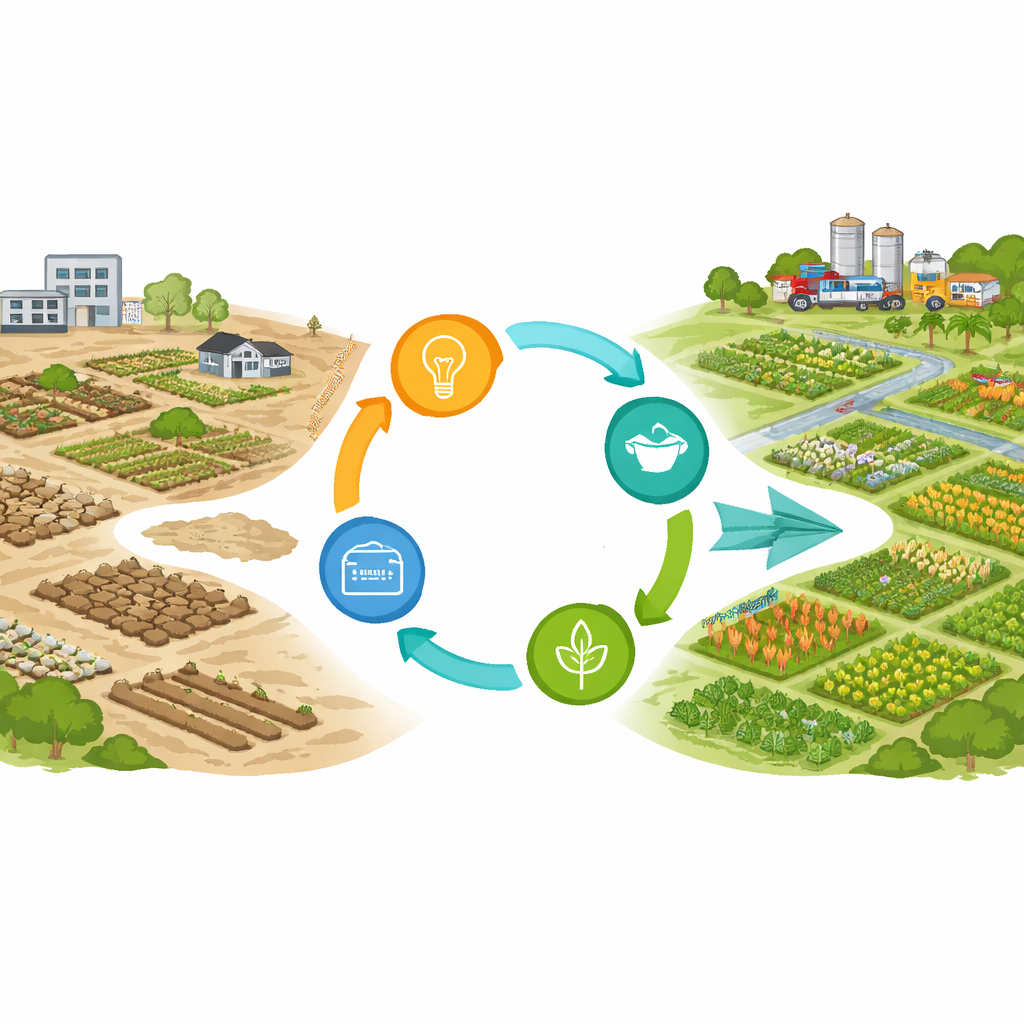
The researchers treat knowledge management as a cycle with four tightly linked parts: acquiring knowledge, storing it, transferring it, and applying it. Acquisition includes drawing on farmers’ hands-on experience, scientific research, and international examples. Storage means turning this information into a reliable institutional memory through archives and digital databases. Transfer involves moving knowledge across departments and out to the field through meetings, workshops, and advisory services. Application is where ideas shape plans, budgets, and day-to-day decisions. By reviewing 88 earlier studies and interviewing 24 experts, the authors developed a detailed framework for these components and linked them to concrete economic outcomes: better infrastructure, more employment, stronger trade and markets, and higher productivity and profitability.
From Ideas to Evidence on the Ground
To test this framework, the team created a 70-question survey and validated it with specialists before giving it to 261 employees of the Najaf Directorate. They then used advanced statistical techniques to see how mature the directorate’s knowledge practices are and how strongly these practices relate to economic development. Staff reported that acquiring knowledge and putting it to use are the strongest areas: they often tap into the experiences of local farmers and use new information to solve everyday problems. In contrast, systematic storage of information is the weakest link, and the sharing of knowledge across units is only moderate. Despite these shortcomings, the analysis shows that overall knowledge maturity explains almost half of the variation in the directorate’s contribution to economic development, with particularly strong effects on trade, markets, jobs, and farm performance.
How Better Knowledge Changes Outcomes
The results paint a clear picture of where smart knowledge practices make the biggest difference. When staff are good at gathering and applying knowledge, farms become more productive and profitable, and new work opportunities appear in rural areas. When information is properly stored and shared, markets work more smoothly: producers can respond to consumer tastes, link to new buyers, and build trust in higher-quality or environmentally friendly goods. However, the study finds that investment in physical infrastructure alone—such as buildings or equipment—has a weaker impact unless it is supported by effective learning and information systems. In short, warehouses, roads, and pumps only reach their full potential when people and institutions know how to use and adapt them over time.
What This Means for Farmers and Policymakers
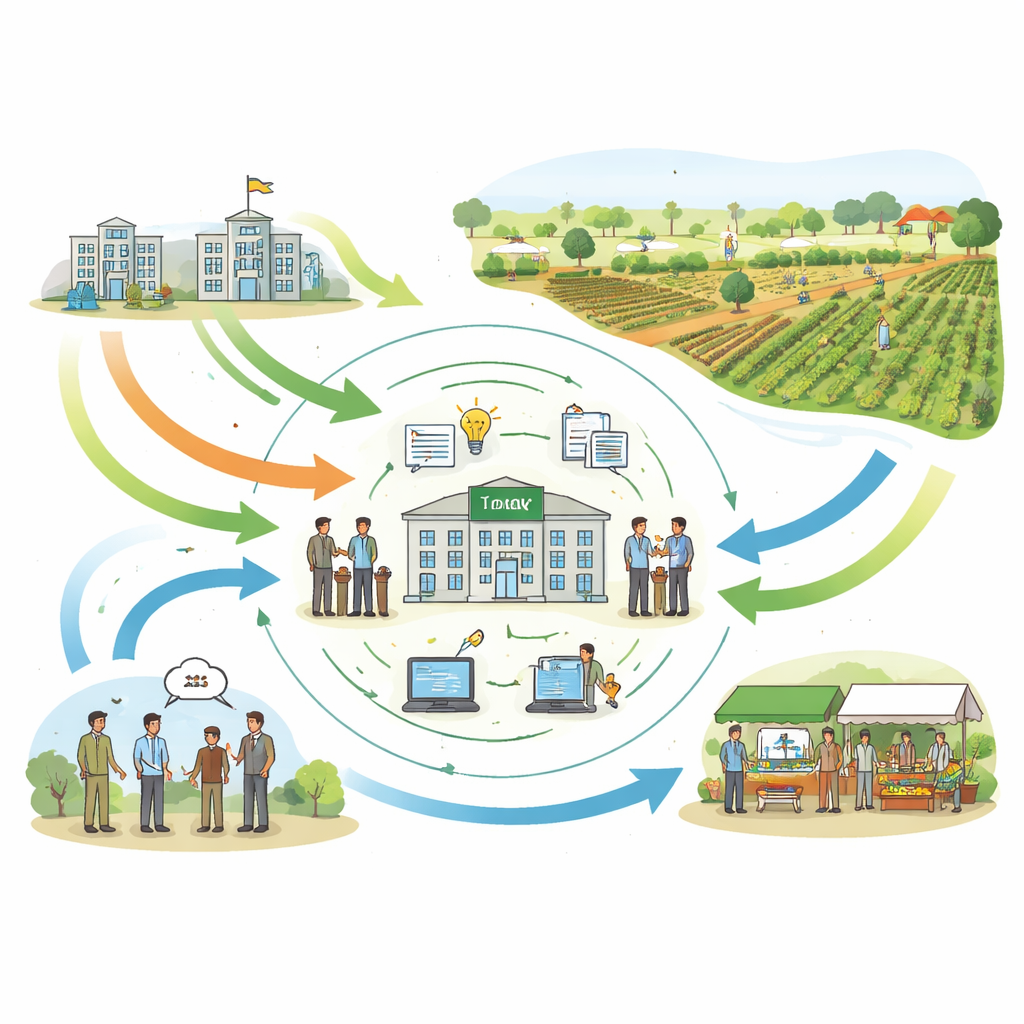
For a lay reader, the central message is straightforward: getting the right knowledge to the right people, and making sure it is not lost, is a powerful engine for rural prosperity. In Najaf’s public farm agency, better knowledge practices already translate into more active markets, more jobs, and more productive farms, even under difficult conditions. The authors argue that strengthening storage systems, digital tools, and routines for sharing experience would amplify these gains, not only in Iraq but in other fragile countries facing similar challenges. Rather than treating knowledge management as dry paperwork, the study presents it as an essential ingredient of sustainable agriculture, helping communities adapt to change, make wiser decisions, and build a more resilient food system.
Citation: Adheem Abed, T., Choobchian, S. & Abbasi, E. Harnessing knowledge management to transform agricultural development through innovation and sustainability. Sci Rep 16, 10103 (2026). https://doi.org/10.1038/s41598-026-41261-4
Keywords: knowledge management, sustainable agriculture, Iraq, rural employment, agricultural markets