Clear Sky Science · en
Melanin concentrating hormone regulates bone cell activities and calcium metabolism in regenerating goldfish scales
Why fish scales can teach us about our own bones
Goldfish might seem an unlikely model for understanding human bone health, but their scales are tiny living plates packed with bone cells and calcium. This study explores how a brain hormone called melanin-concentrating hormone (MCH), best known for controlling skin color and appetite in animals, also helps control how goldfish scales build up and break down calcium. By watching how scales regenerate after being removed, the researchers uncover a finely tuned system that may offer new clues about how hormones shape bone strength and mineral balance across vertebrates. 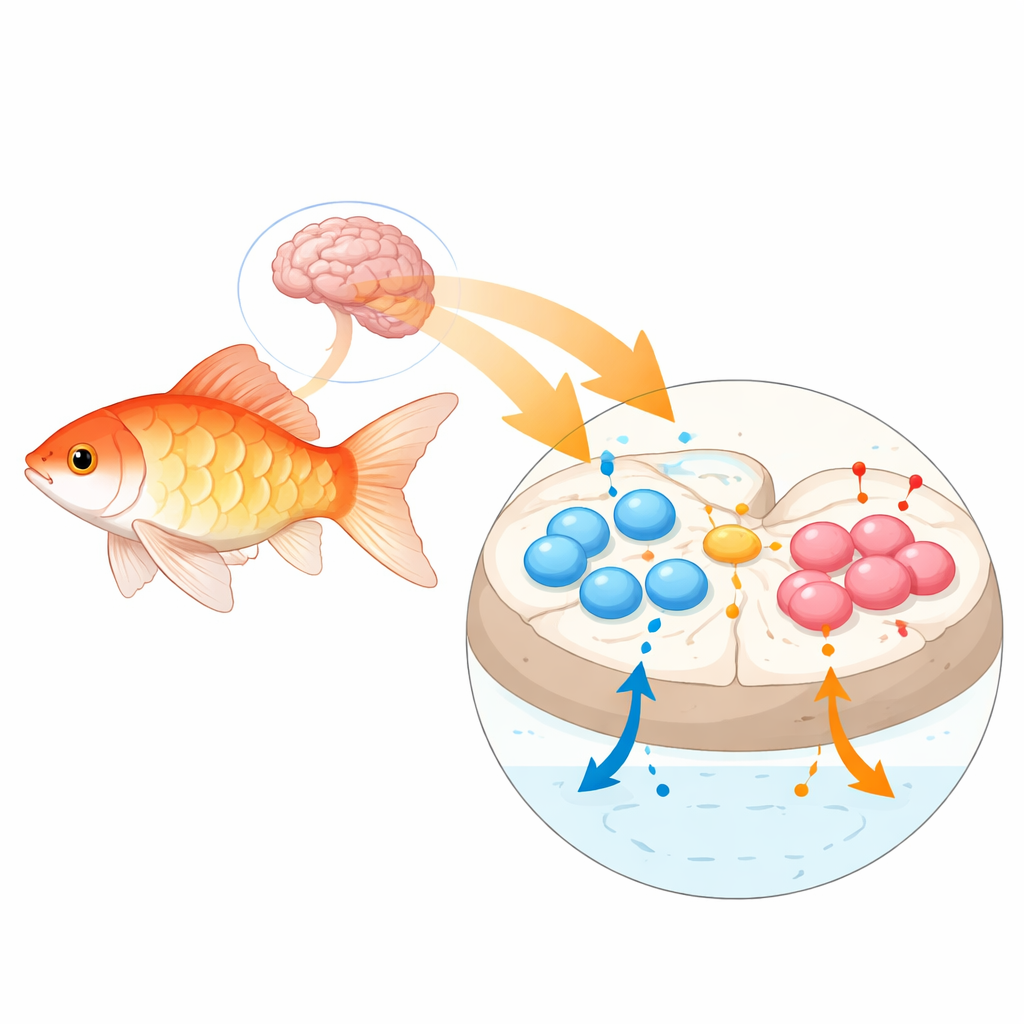
A brain messenger with a hidden bone role
MCH is produced in a region of the brain and released into the blood, where it can act on many tissues. In mammals, related hormones are known to affect bone loss and formation, but the details of how MCH itself acts on bone cells have remained murky. Goldfish scales provide a convenient window into this problem because they contain the same main cell types found in mammalian bone: cells that build mineral (osteoblast-like cells), cells that break it down (osteoclast-like cells), and a hardened matrix that serves as a calcium store. When scales are removed, new ones grow back quickly in a highly reproducible way, allowing scientists to track how hormones influence bone renewal over days rather than months.
Short bursts of hormone calm bone breakdown
The team first exposed regenerating scales, kept alive in culture dishes, to a single dose of MCH for a few hours. They measured the activity of genes that signal how strongly the scale’s bone-dissolving cells are working. After six hours, several of these osteoclast-related genes, as well as genes involved in signals that normally encourage bone breakdown, were turned down. When the researchers injected MCH once into living goldfish and waited 24 hours, they saw matching changes in the blood: both calcium levels and the activity of a marker enzyme of osteoclasts dropped. Together, these findings suggest that a brief pulse of MCH signals the scales to slow their calcium release into the bloodstream by damping down bone-resorbing cells.
Where the hormone lands: a specific receptor switch
Hormones act by docking onto specialized receptors on target cells. In goldfish, two types of MCH receptor are known. By examining genetic activity, the researchers found that only one of them, called MCH receptor 2, is present in both original and regenerating scales, as well as in a small gland that produces calcitonin, another hormone that suppresses bone breakdown. The other receptor type was absent from these sites. This pattern points to MCH receptor 2 as the main switch through which MCH can directly influence bone-like cells in the scale and possibly stimulate calcitonin release, giving MCH two routes to restrain excessive calcium release in the short term.
Long-term dosing flips the system into high gear
Next, the scientists asked what happens when the hormone signal is not just a brief pulse but is repeated over many days, mimicking a chronic state. They removed scales from one side of the fish, then injected MCH every other day for ten days as the scales regrew. In these regenerating scales, both a marker of bone-building cells (alkaline phosphatase) and a marker of bone-resorbing cells (TRAP) rose, indicating that the whole remodeling machinery was running faster. At the same time, the amount of calcium stored in the regenerating scales fell, while calcium and calcitonin in the blood climbed, and the two blood measures rose together. Importantly, the same hormone treatment barely affected older, fully formed scales on the other side of the body, highlighting that MCH’s strongest effects are limited to actively remodeling tissue. 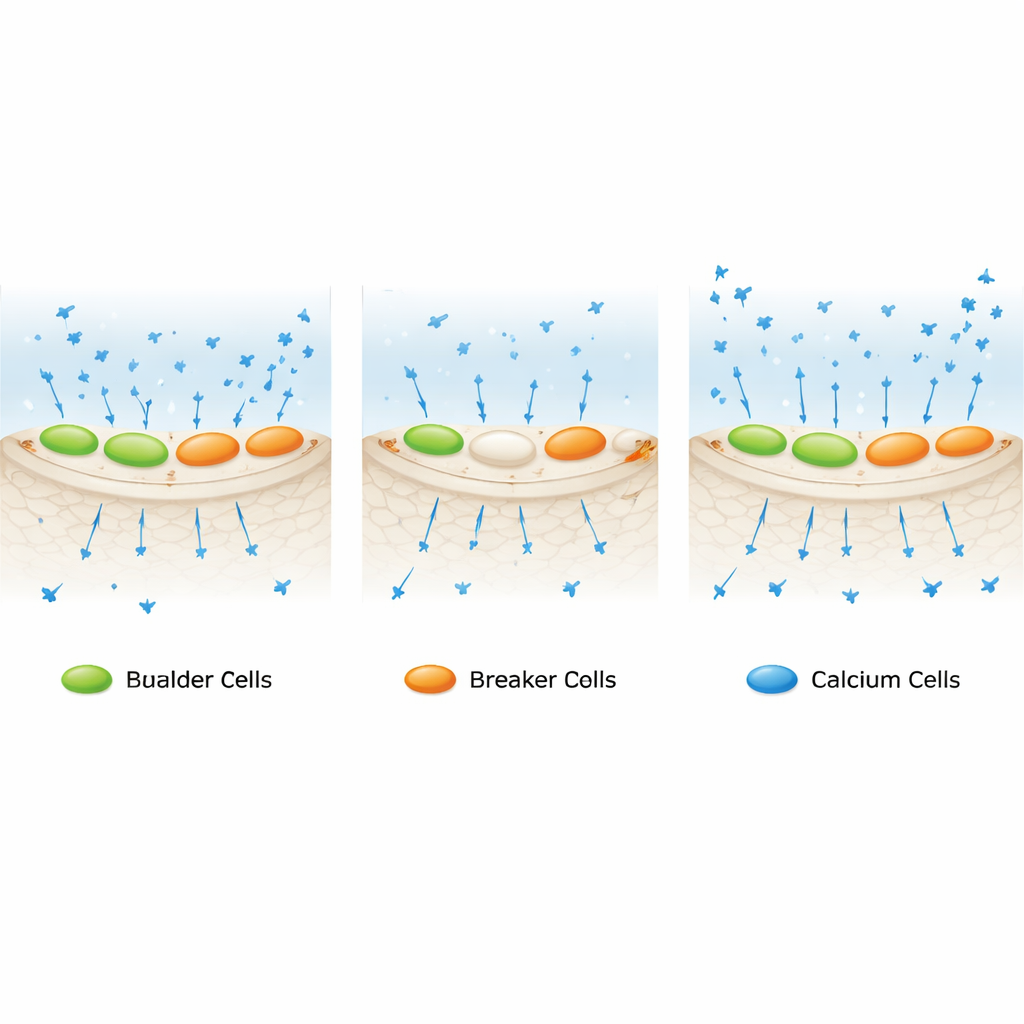
What this means for bones and calcium balance
To a non-specialist, the central message is that the same hormone can have opposite-looking effects depending on how and where it acts. A single dose of MCH calms down bone-dissolving cells in the scales and briefly lowers blood calcium, helping prevent sudden mineral surges. But when MCH levels are elevated repeatedly during scale regrowth, it drives both bone building and bone breakdown into a high-turnover state, reducing how much calcium ends up locked in the new scales while raising calcium in the blood. Rather than simply causing bone loss, MCH appears to tune mineral traffic differently in resting versus regenerating tissues. Because fish scales and mammalian bone share many features, this goldfish model may help researchers better understand how brain hormones shape bone renewal and calcium balance in other vertebrates, including humans.
Citation: Kuroda, K., Kimura, S., Mizusawa, K. et al. Melanin concentrating hormone regulates bone cell activities and calcium metabolism in regenerating goldfish scales. Sci Rep 16, 14293 (2026). https://doi.org/10.1038/s41598-026-41253-4
Keywords: bone metabolism, calcium balance, hormone signaling, fish scales, bone regeneration