Clear Sky Science · en
A joint modeling framework for time-to-fatigue prediction with a single wearable sensor biomarker
Why Knowing Fatigue Before It Hits Matters
Many jobs in factories and warehouses quietly drain a worker’s strength long before the shift ends. By the time people feel worn out, their risk of mistakes and injuries has already climbed. This study explores whether a single wearable sensor, worn on the body like a fitness tracker, can help forecast when a person is likely to become physically fatigued during demanding work. If time-to-fatigue can be predicted reliably, supervisors could adjust tasks or breaks before workers reach a risky state, improving both safety and productivity.
From Wrist Bands to Early Warnings
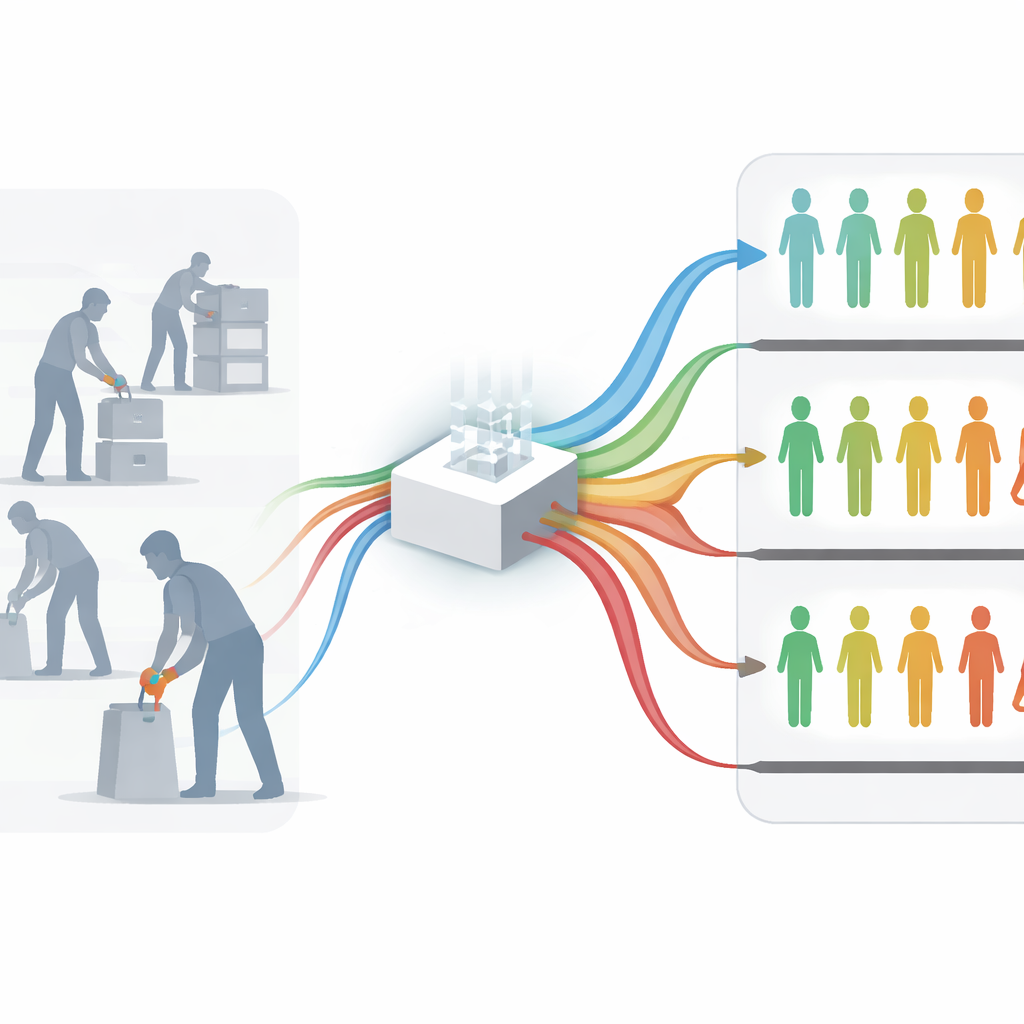
The researchers drew on two earlier laboratory studies that mimicked real manufacturing jobs. In one, volunteers spent up to three hours lifting and moving heavy containers or walking, bending, and fastening bolts. In the other, they repeatedly lifted weighted bottles from shoulder height and placed them into cartons for up to 45 minutes. Participants wore small motion sensors on body locations such as the wrist, hip, and trunk, and sometimes a heart-rate strap. These devices recorded how their bodies moved over time, while the workers periodically rated how tired they felt, allowing the team to define the moment each person reached a pre-set fatigue threshold.
Following One Signal Instead of Many
Modern wearables can track dozens of numerical features from motion, but too many inputs make prediction models hard to understand and to apply on the shop floor. The authors deliberately asked a simpler question: can a single well-chosen feature from one sensor give strong predictions of when fatigue will occur? They searched through many possible signals and focused on measures related to “jerk” at the wrist, which essentially captures how smooth or jerky a person’s movements are. Earlier work had linked jerk to whether someone was already fatigued; here, the aim was to see if it could also forecast how long it would take to reach that point.
Linking Changing Movements to the Clock
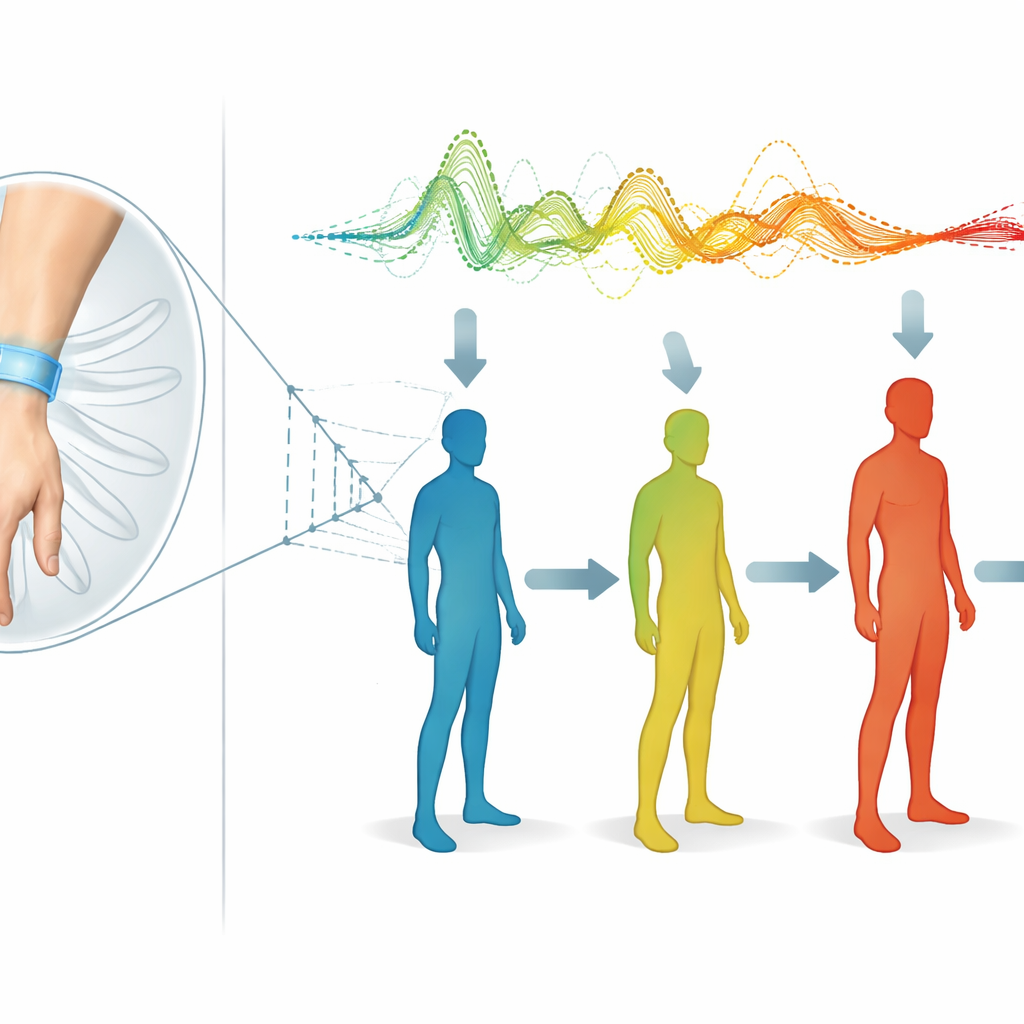
To connect these changing sensor readings with the ticking clock of fatigue onset, the team used a statistical strategy called joint modeling. In plain terms, it tracks how a signal from the wearable evolves for each person and, at the same time, learns how that evolving pattern relates to the eventual moment of fatigue. The model is updated as new sensor data arrive, much like a weather forecast that improves during the day. In both case studies, a joint model built on just one wrist-based jerk feature clearly beat standard methods that relied only on fixed task descriptions, such as the type of job or the weight being lifted. The new approach predicted which worker would fatigue sooner with better discrimination and smaller errors in estimated time-to-fatigue.
What Subtle Motion Changes Reveal
The results also shed light on how the body adapts as tiredness builds. In the longer, heavy material-handling tasks, workers who eventually became fatigued showed generally higher average jerk at the wrist, reflecting choppier, less controlled motions, and this pattern signaled a higher risk of reaching the fatigue threshold sooner. In the shorter bottle-picking task, a different jerk measure—capturing the behavior of the smoothest quarter of movements—proved most telling. When this measure trended downward over time, it suggested that the body was stiffening joints to keep movements precise despite growing strain, a strategy that paradoxically makes some motions smoother even as underlying fatigue deepens.
Bringing Predictive Fatigue Monitoring to Workplaces
For non-specialists, the key takeaway is that a single, thoughtfully placed wearable sensor can do more than flag that a worker is already tired; it can provide a running estimate of how close that person is to becoming too fatigued for safe, efficient work. Although these findings come from controlled lab settings with relatively small groups, they demonstrate a practical path toward real-time warning systems that respect privacy while supporting safety. With further testing in real workplaces and careful attention to ethical use, such models could help organizations redesign schedules and tasks so that fewer workers ever reach the dangerous edge of fatigue in the first place.
Citation: Lu, L., Sedighi-Maman, Z. & Cavuoto, L. A joint modeling framework for time-to-fatigue prediction with a single wearable sensor biomarker. Sci Rep 16, 12437 (2026). https://doi.org/10.1038/s41598-026-41249-0
Keywords: wearable sensors, worker fatigue, time-to-fatigue prediction, occupational safety, joint modeling