Clear Sky Science · en
Comparative metabolomic and physiological analysis uncovers distinct drought tolerance mechanisms in four rice cultivars
Why thirsty rice fields matter to all of us
Rice feeds about half the world’s population, yet it is one of the thirstiest crops on Earth. As droughts become more frequent and severe with climate change, understanding how rice plants survive with less water is key to protecting future food supplies. This study takes a close look inside four popular rice types from Egypt and Saudi Arabia, tracking not just how they grow under drought, but also how their internal chemistry shifts, molecule by molecule, to keep them alive.
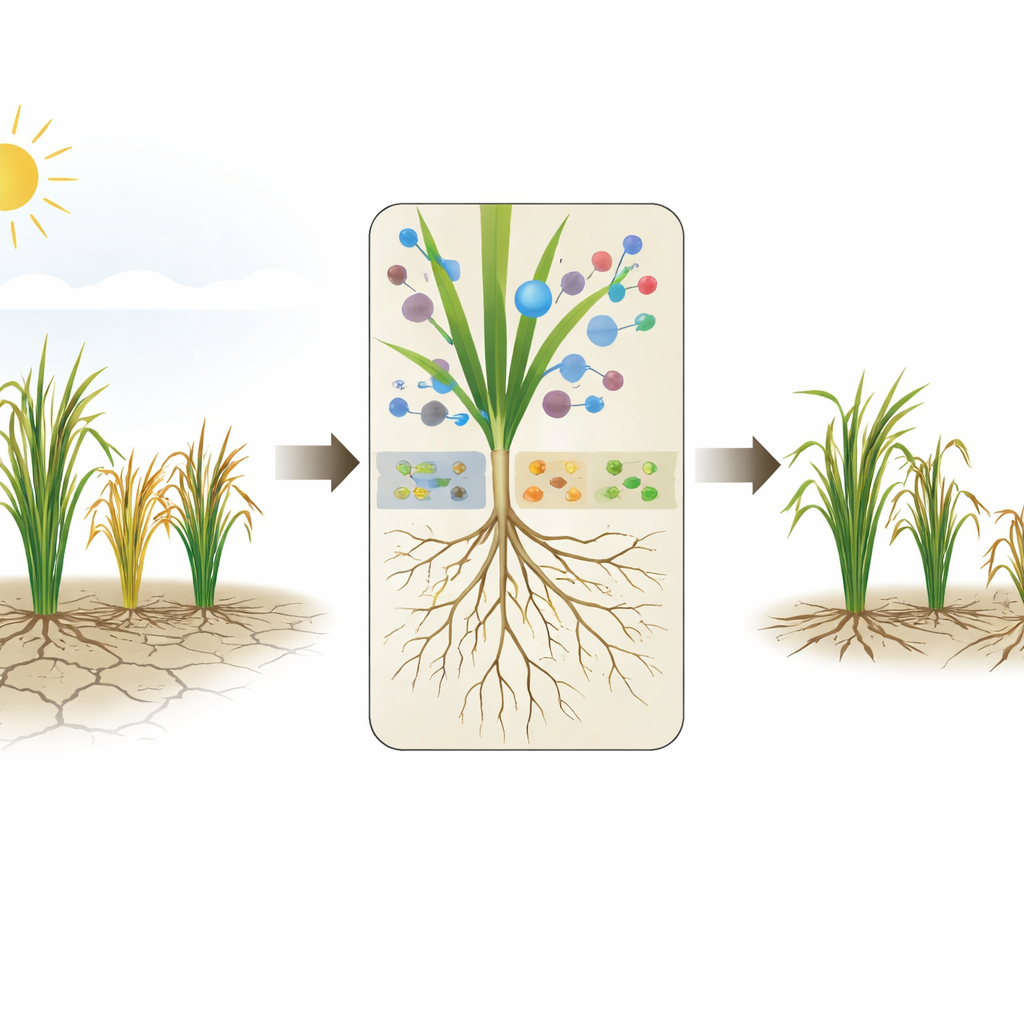
Testing rice under controlled dry conditions
The researchers grew seedlings of four rice cultivars—Giza 179, Hassawi, Super 300, and Y EGY—under controlled conditions, then imposed a carefully managed form of water stress using polyethylene glycol (PEG). PEG lowers the water potential around the roots, mimicking drought without changing nutrients in the soil. For two weeks, the team compared well-watered and stressed plants, measuring traits such as plant height, fresh and dry weight of shoots and roots, leaf greenness, leaf water content, and levels of the stress-related compound proline. This gave a whole-plant picture of which varieties could keep growing when water was scarce.
Which rice coped best with drought
Although Hassawi rice was the biggest and heaviest plant overall, it lost a substantial share of its biomass when water became limited. By combining six growth and physiological measurements into a single drought tolerance index, the study ranked Giza 179 as the most resilient cultivar: it retained about 85% of its performance under stress. Super 300 and Hassawi showed moderate tolerance, while Y EGY was clearly the most vulnerable, losing the most weight and water. Interestingly, the variety that built up the highest proline levels under stress—often considered a “good” stress marker—was actually the least drought-tolerant. This suggests that extreme accumulation of this compound may signal damage and emergency response, rather than genuine resilience.
Peeking into the plant’s chemical toolkit
To understand what was happening under the surface, the team used gas chromatography–mass spectrometry to catalogue hundreds of small molecules in leaf and root tissues. These metabolites include amino acids, organic acids, sugars, and other compounds that fuel energy production, protect cells, and move signals around the plant. Statistical tools were then used to pick out which molecules changed most under drought and how those changes differed among cultivars. Leaves and roots turned out to behave quite differently: root chemistry showed stronger, more cultivar-specific shifts, underscoring roots as the frontline of drought detection and response.
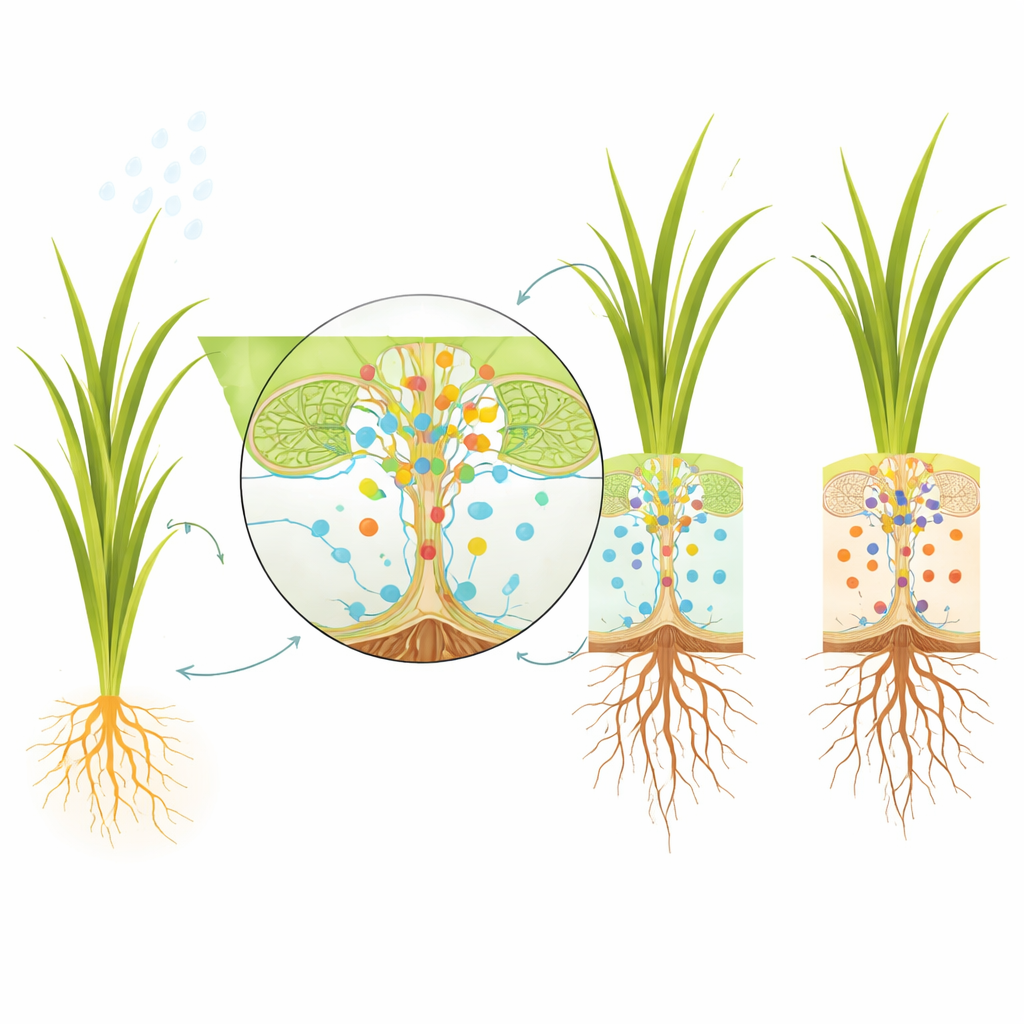
Different survival strategies inside the same species
The four rice types deployed distinct chemical tactics. Giza 179 activated a broad yet coordinated response: in leaves, it boosted key energy-cycle molecules such as citric and succinic acids, as well as compounds tied to signaling and membrane stability. In roots, it raised levels of the sugar trehalose and certain amino acids that can double as fuel and stress protectants, helping maintain energy flow and osmotic balance without overreacting. Hassawi and Super 300, by contrast, used more targeted strategies—selectively increasing a smaller set of protective molecules like trehalose or antioxidant phenolic compounds, while avoiding wholesale upheaval of metabolism. Y EGY showed the opposite pattern: widespread, sometimes chaotic shifts in root metabolites but a weaker, less coordinated response overall, matching its poor drought performance.
What this means for future rice breeding
By linking visible plant traits with detailed chemical fingerprints, the study shows that successful drought tolerance in rice is not about a single “magic” molecule or gene. Instead, the most robust cultivar, Giza 179, combines steady growth, moderate and efficient use of stress compounds like proline, and a well-orchestrated reshaping of core metabolic pathways—especially those that manage energy and water balance in roots. Other cultivars survive by more frugal, sharply focused adjustments. These insights offer breeders concrete metabolic markers and whole-plant patterns to select for, helping guide the development of new rice varieties that can thrive with less water and support food security in a warming, drying world.
Citation: Radwan, N.S., Lamlom, S.F., Emwas, AH. et al. Comparative metabolomic and physiological analysis uncovers distinct drought tolerance mechanisms in four rice cultivars. Sci Rep 16, 9672 (2026). https://doi.org/10.1038/s41598-026-41243-6
Keywords: rice drought tolerance, plant metabolomics, crop climate resilience, root stress responses, rice breeding