Clear Sky Science · en
Influence of body mass index on perceived lower facial asymmetry
Why Our Faces Look Different at Different Weights
Many people worry about how symmetrical their faces look, especially when considering orthodontic or cosmetic treatments. This study explores a simple but often overlooked question: does body weight change how much we notice small imbalances in the lower face, especially around the chin and jawline? The answer matters because what patients see in the mirror, and what professionals see in photos, can shape treatment decisions and expectations.
How Weight and the Face Are Connected
Our faces are rarely perfectly symmetrical, but small differences can influence how attractive, healthy, or confident we appear to others. One important factor is body mass index (BMI), a common measure based on height and weight. A higher BMI usually comes with fuller cheeks and thicker soft tissues over the bones of the face. Earlier work suggested that this extra softness may blur or hide the sharp bony outlines that reveal whether a jaw or chin is slightly off-center. Until now, however, no one had directly tested whether people actually notice facial asymmetry differently in thinner versus heavier faces.
Designing Carefully Controlled Face Images
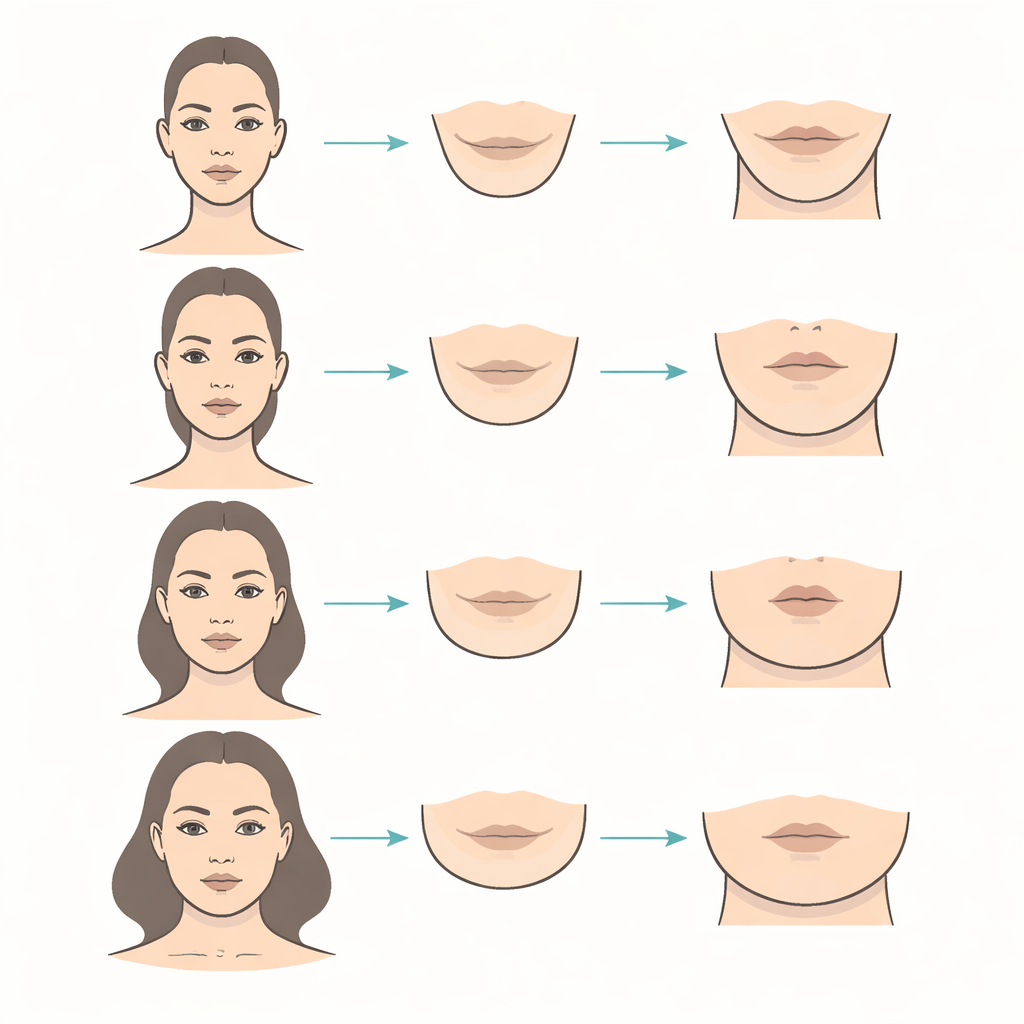
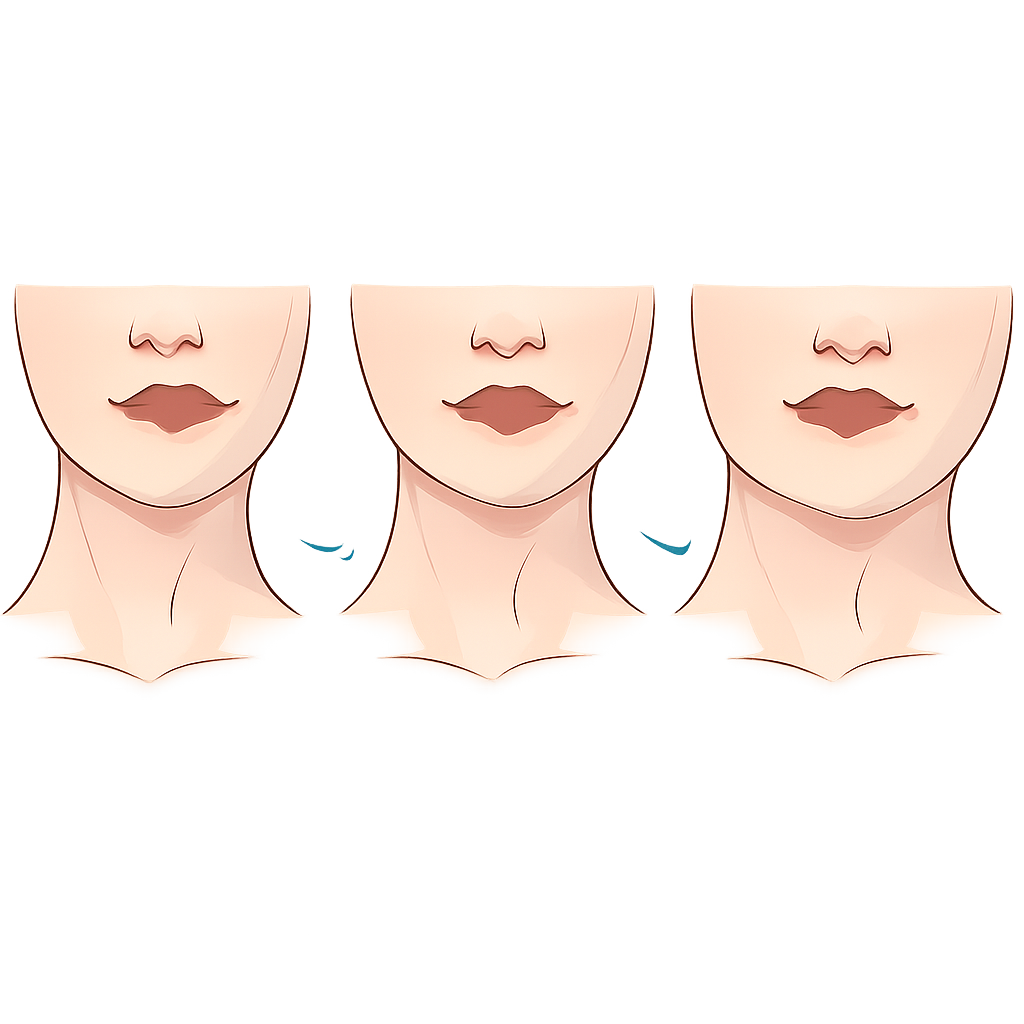
To isolate the effect of body weight, the researchers selected four women with very similar underlying bone structures but different BMI categories: severely underweight, normal weight, moderately obese, and severely obese. All had naturally symmetrical lower faces. The team took standardized front-view photographs, adjusted facial proportions so the upper, middle, and lower thirds of the face matched widely accepted aesthetic ratios, and digitally cleaned away distracting blemishes. They then created realistic but controlled lower-face asymmetry by rotating the chin slightly to one side by 2, 4, or 6 degrees while keeping the corners of the lips fixed. This allowed them to change only the position of the chin and jawline, without drawing extra attention through distorted lips.
Who Took Part and What They Were Asked to Do
An online survey showed 20 randomized images—five versions of each model—to 269 participants: orthodontists, general dentists, and laypeople with no dental training. Everyone saw each image on its own and rated how asymmetric the lower face looked using a seven-point scale, from "no asymmetry" to "maximum asymmetry." The same perfectly symmetrical images were repeated once to check that people gave similar scores the second time, which they did. Because the data did not follow a simple bell-shaped distribution, the team used non-parametric statistical tests better suited to real-world ratings to compare groups and angles of chin deviation.
What the Study Discovered About Seeing Asymmetry
Across almost all conditions, the more the chin was rotated, the higher the asymmetry scores became. But the ability to spot these changes strongly depended on both BMI and expertise. For the thinner and moderately overweight faces, orthodontists and dentists tended to notice asymmetry once the chin shift reached just over 2 millimeters, corresponding to about 4 degrees. Laypeople, by contrast, did not reliably detect a problem until the shift approached 3.4 millimeters, roughly 6 degrees. In the heaviest BMI group, thick soft tissues around the jaw made subtle shifts much harder to see: orthodontists needed a larger deviation, about 3.4 millimeters, to consistently spot it, while dentists and laypeople effectively could not detect the asymmetry at all. Statistical modeling confirmed that professional training, more than age or gender, was the key factor shaping these differences.
Why These Findings Matter in the Clinic
The results show that increasing BMI can act like a visual filter, softening the outlines of the jaw and masking small skeletal imbalances. Orthodontists are the most sensitive observers, then dentists, with laypeople least able to see subtle deviations. This gap can have real-world consequences. A patient with a higher BMI might see their face as balanced and accept a treatment plan focused mainly on the teeth. If that same person later loses a significant amount of weight, the now-thinner soft tissues may reveal an underlying jaw asymmetry they had never noticed before, leading to disappointment or a desire for further correction, possibly including surgery or cosmetic injections. Understanding that perception—rather than exact millimeter measurements—often drives satisfaction, clinicians are encouraged to consider a patient’s BMI, and the possibility of future weight changes, when discussing facial balance, setting expectations, and planning treatment.
Take-Home Message for Everyday Life
In plain terms, this study suggests that fuller faces can hide small crookedness in the lower jaw, while thinner faces tend to reveal it. Experts see these differences at smaller shifts than the rest of us, but everyone’s perception changes with body weight. For patients, that means changes on the scale can subtly reshape how their own face looks and feels to them. For clinicians, it is a reminder that talking about possible weight changes and how they might alter facial appearance is an important part of honest, long-term treatment planning.
Citation: Çakmak, B., Kale Varlık, S. & Tortop, T. Influence of body mass index on perceived lower facial asymmetry. Sci Rep 16, 11146 (2026). https://doi.org/10.1038/s41598-026-41238-3
Keywords: facial symmetry, body mass index, chin asymmetry, orthodontic aesthetics, facial perception