Clear Sky Science · en
Site-specific variation and non-indigenous species detection in Arabian Gulf biofouling communities using DNA metabarcoding and photographic surveys
Hidden hitchhikers on busy coasts
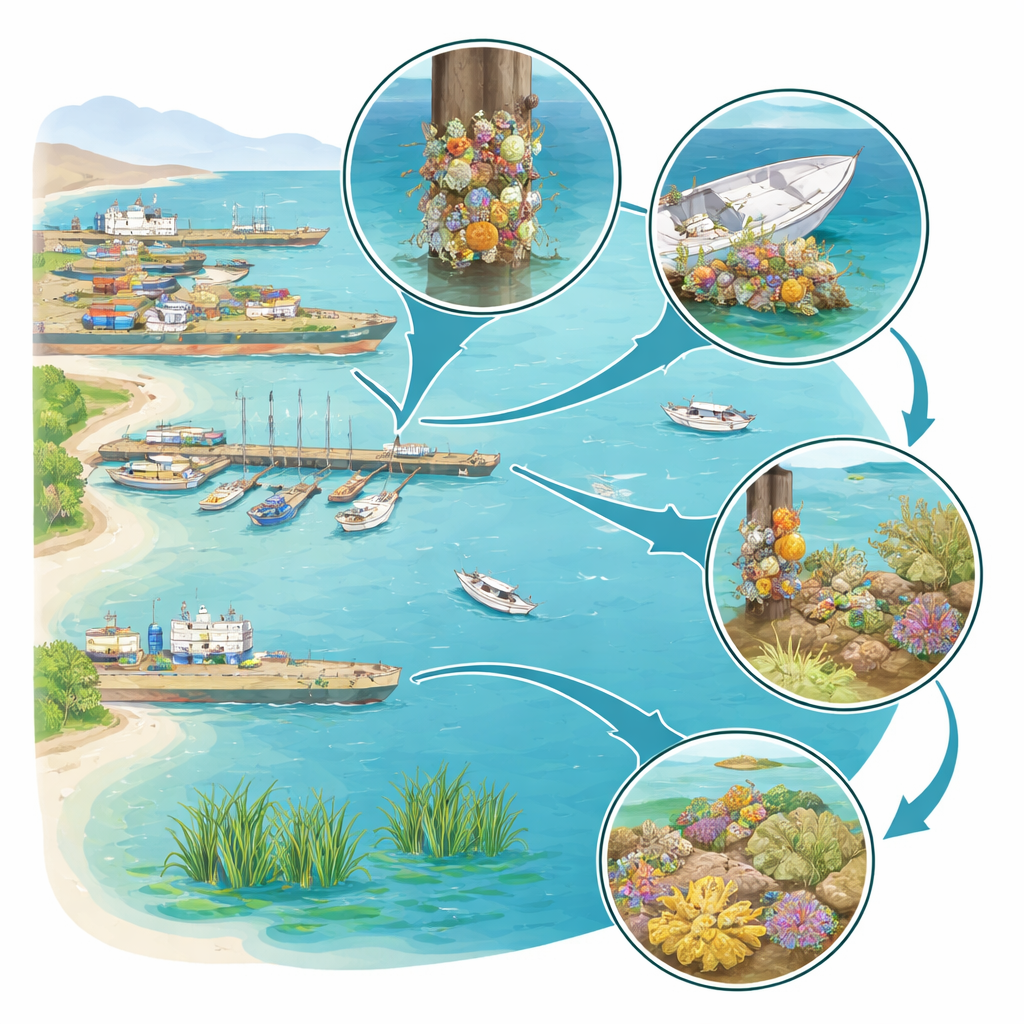
Along the Saudi shores of the Arabian Gulf, harbors, marinas, and floating docks are booming as trade and tourism grow. What most visitors never see is that these man-made structures quickly become living apartment blocks for small marine creatures. Among the native residents are unwanted stowaways from other parts of the world that can upset local ecosystems and harm coastal economies. This study offers the first detailed look at these "biofouling" communities over roughly 300 kilometers of coastline, asking where newcomers are most common and how best to spot them.
Ports as magnets for marine life
The researchers focused on 12 artificial sites spread across four coastal regions—from large commercial ports and industrial harbors to small fishing quays and leisure marinas. These structures provide hard surfaces in a naturally soft, sandy seascape, making them prime real estate for barnacles, worms, sea squirts, sponges, seaweeds, and many other organisms. The team also evaluated each harbor’s environmental risk, considering ship traffic, dredging, nearby industry, and how easily water inside the port is flushed by the tides. These factors are known to influence both pollution and the chances that incoming ships deliver new species.
Panels, scrapings, and DNA clues
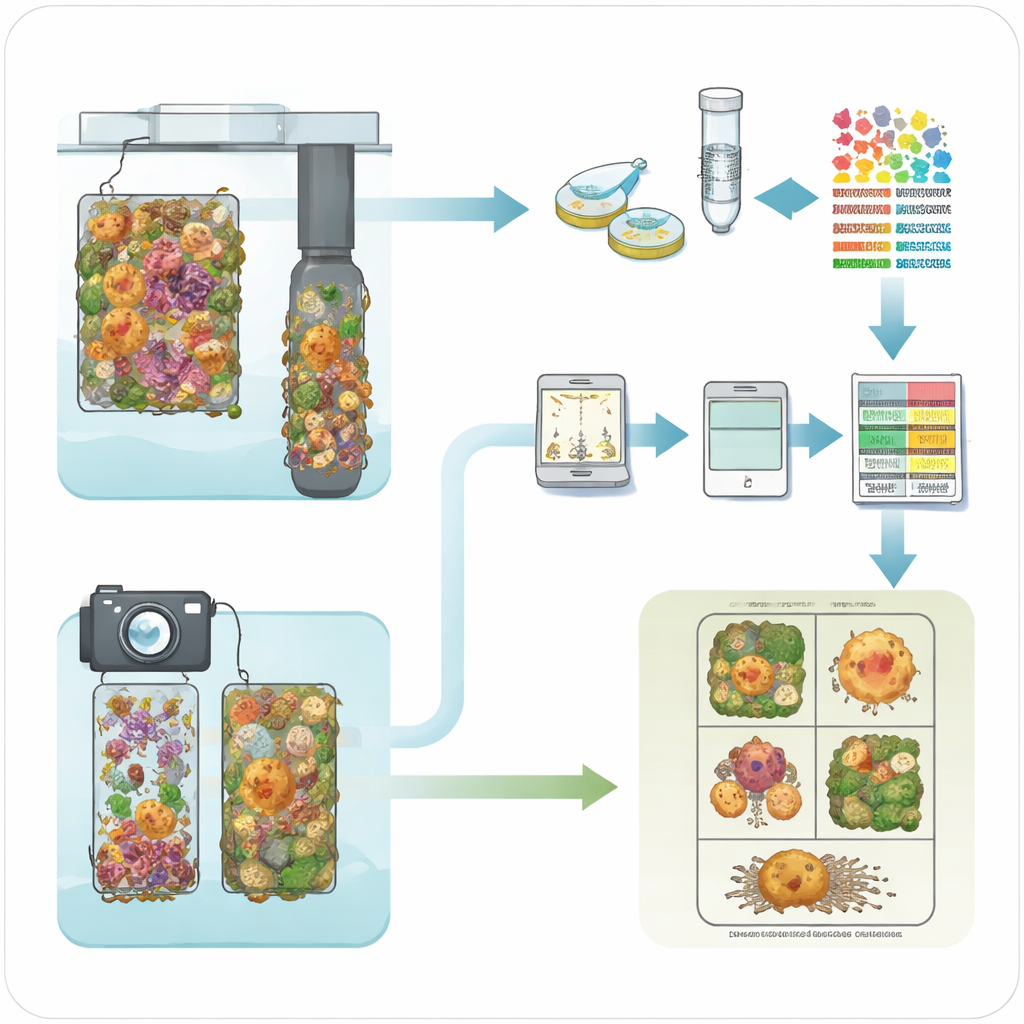
To sample this hidden world, the scientists used two complementary approaches. First, they bolted small plastic panels beneath docks and pontoons for three months, then photographed the panels in high detail and estimated how much surface each visible species covered. Second, they scraped life from those panels and from the surrounding permanent structures and analyzed the material using DNA metabarcoding, which reads short genetic barcodes to reveal which plants and animals are present. This allowed them to compare what the eye can see on photos with what DNA can uncover in the same communities.
Local differences matter more than broad patterns
The team found that community make-up varied strongly from site to site, but much less between broader regions or across the gradient of overall environmental risk. Even harbors separated by only a few kilometers could host very different mixes of species, likely driven by local conditions such as shading, water movement, structure design, and recent disturbance. Permanent vertical surfaces like pontoons and dock walls generally supported richer and more evenly balanced communities than the temporary horizontal panels, which reflected earlier stages of colonization and often favored fast-growing encrusting forms. These patterns suggest that fine-scale features of each harbor shape who settles and thrives there more than their position along the coast.
Unmasking newcomers with genetic tools
Across all methods, the study documented 57 species that were either clearly non-indigenous or cryptogenic—meaning their origin is uncertain but they may be non-native. DNA analyses detected far more of these questionable guests than image-based surveys alone, including many soft-bodied or tiny organisms that are almost impossible to identify visually. Industrial and commercial ports consistently hosted the highest richness and dominance of non-indigenous and cryptogenic species, sometimes making up more than half of all DNA reads. In contrast, recreational marinas tended to have fewer newcomers and more bare or disturbed surfaces, which may currently limit long-term establishment there. However, the authors caution that DNA identifications are only as reliable as the reference databases they rely on—an important concern in a region where many native species have never been sequenced.
What this means for protecting Gulf coasts
For non-specialists, the key message is that artificial shorelines in the Arabian Gulf are already hosting diverse communities that include a significant number of potential invaders, and that this risk is very uneven from harbor to harbor. The study shows that combining traditional photography with modern DNA tools gives a much clearer picture of who is present and where, allowing managers to focus attention on high-risk sites such as busy industrial ports. It also highlights the urgent need to build regional DNA reference libraries so that future genetic surveys can more confidently tell native residents from recent arrivals. Together, these steps lay the groundwork for early-warning systems that can help safeguard nearby natural habitats—such as mangroves, coral reefs, and seagrass beds—from the long-term impacts of unwanted marine hitchhikers.
Citation: Chebaane, S., Aylagas, E., Sempere-Valverde, J. et al. Site-specific variation and non-indigenous species detection in Arabian Gulf biofouling communities using DNA metabarcoding and photographic surveys. Sci Rep 16, 13564 (2026). https://doi.org/10.1038/s41598-026-41227-6
Keywords: marine biofouling, non-indigenous species, DNA metabarcoding, Arabian Gulf ports, marine biosecurity