Clear Sky Science · en
Mechanism of isoleucyl-tRNA synthetase 2 regulating proliferation and apoptosis of cervical cancer cells
Why this research matters for women’s health
Cervical cancer remains a major cause of illness and death for women worldwide, and current treatments do not work for everyone. This study explores a hidden “control knob” inside cancer cells—a protein called IARS2—that helps tumors grow and avoid cell death. By understanding how this control knob works, researchers hope to open up new options for drug development and even diet-based therapies that could make standard treatments more effective.
A protein that does more than build blocks
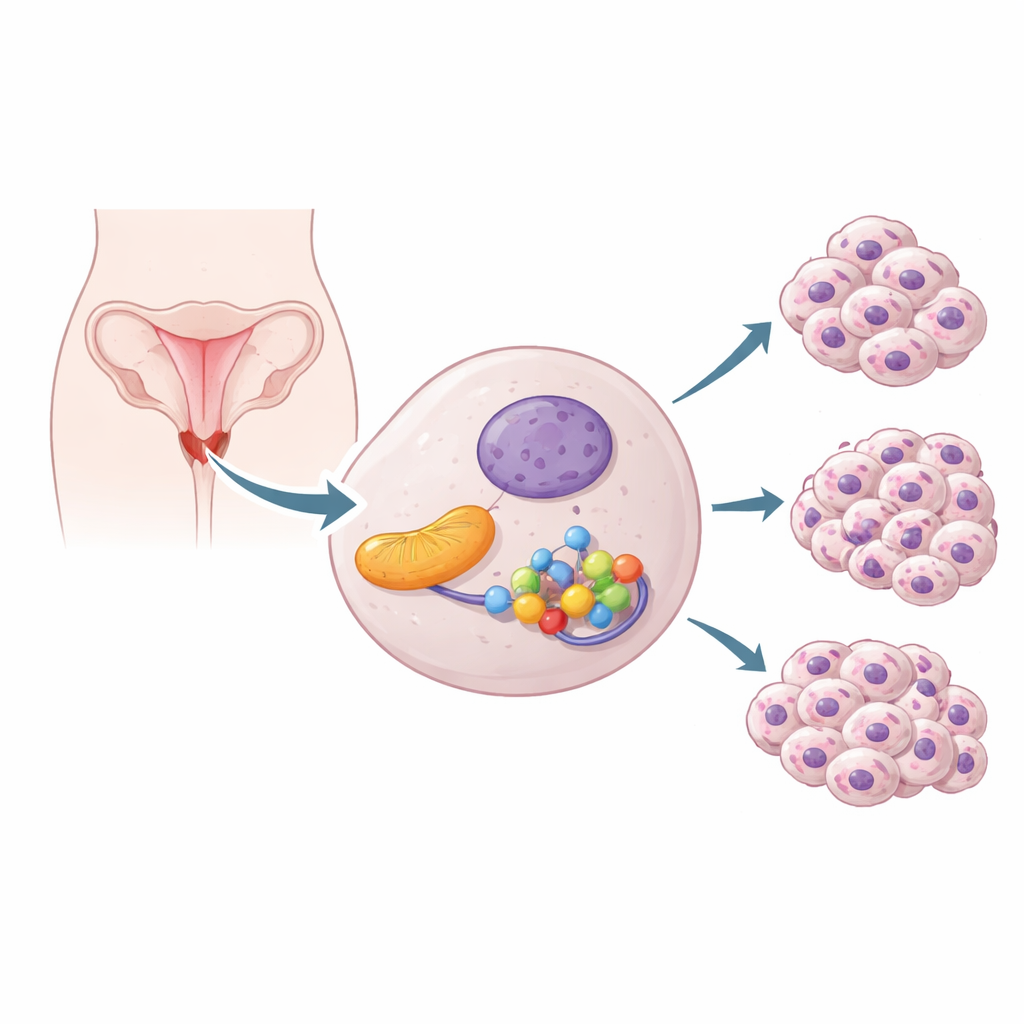
IARS2 normally helps cells build proteins by attaching the amino acid isoleucine to its carrier molecule. It lives mainly in the cell’s power plants, the mitochondria. Yet recent work hinted that IARS2 may also encourage several types of cancer. In this study, the authors focused on cervical cancer cells and asked two basic questions: Is IARS2 linked with how patients fare, and what exactly does it do inside tumor cells? They combined public patient data with experiments in laboratory-grown cervical cancer cells to trace IARS2’s role from clinical outcome down to molecular interactions.
Link between IARS2 levels and patient survival
Using data from a large cancer database, the researchers compared cervical cancer patients whose tumors had high or low levels of IARS2. They found that women with higher IARS2 in their tumors tended to have poorer overall survival within five years. This statistical link does not by itself prove cause and effect, but it strongly suggests that IARS2 is not just a bystander—it may actively support tumor aggressiveness, making it a promising candidate to target in future therapies or diagnostic tests.
How IARS2 helps cancer cells grow and avoid death
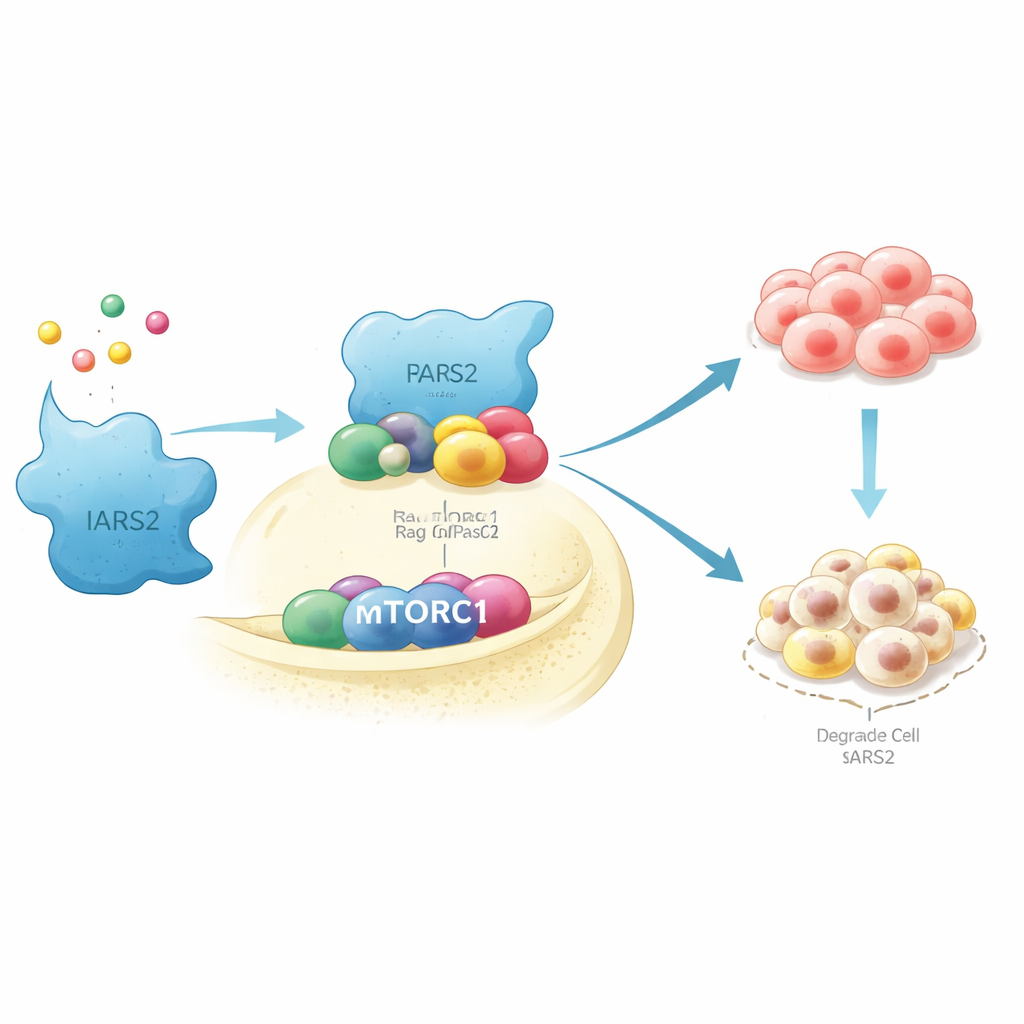
In cell-culture experiments, the team used small RNA molecules to dial down IARS2 in cervical cancer cells. When IARS2 was reduced, the cells grew more slowly and more of them underwent programmed cell death, a self-destruct process that healthy tissues use to remove damaged cells. The researchers traced these changes to a major growth-control hub called mTORC1 and its downstream partner eIF4E, both of which help cells ramp up protein production. Loss of IARS2 sped up the breakdown of the mTOR protein, shrinking the supply of this growth hub, which in turn reduced eIF4E levels and blunted the cells’ ability to keep dividing. When the scientists artificially boosted eIF4E, some of the lost growth and increased cell death were partly reversed, underscoring that this pathway is a key route through which IARS2 supports tumor survival.
A hidden amino acid sensor inside the growth switch
Digging deeper, the researchers asked which part of the IARS2 protein is essential for its tumor-promoting role. They engineered mutant versions that could no longer bind isoleucine, bind its carrier molecule, or enter mitochondria. Only the mutants that kept an intact isoleucine-binding pocket were able to maintain mTOR levels and cell growth, suggesting that IARS2 acts as an internal sensor of this amino acid. They also showed that IARS2 physically associates with Rag proteins, small molecular switches that bring mTORC1 to the cell’s recycling compartments when amino acids are plentiful. This places IARS2 directly in the amino acid–sensing machinery that controls whether cells commit to growth or restraint.
What this could mean for future treatments
Taken together, the work paints IARS2 as a kind of isoleucine-sensitive guardian of the mTOR growth hub in cervical cancer cells, protecting mTOR from degradation and keeping the protein-making machinery active. For patients, this raises two intriguing possibilities. First, drugs or genetic approaches that disrupt IARS2’s sensing function could push tumor cells toward slower growth and more cell death. Second, because tumors often rely heavily on certain amino acids, carefully designed diets that limit isoleucine—possibly combined with standard chemotherapy—might one day help weaken cervical cancers by starving this newly uncovered control point.
Citation: Bi, Y., Ye, Y., Wu, X. et al. Mechanism of isoleucyl-tRNA synthetase 2 regulating proliferation and apoptosis of cervical cancer cells. Sci Rep 16, 11578 (2026). https://doi.org/10.1038/s41598-026-41218-7
Keywords: cervical cancer, mTOR signaling, amino acid sensing, IARS2, cancer metabolism