Clear Sky Science · en
A cost-optimized medical digital twin framework for secure and efficient patient data management in smart healthcare
Why your hospital data needs a smart double
Hospitals are rapidly filling with sensors, apps, and scanners that watch over patients every second. All of this information could help doctors act earlier and tailor treatments, but only if it can be moved, processed, and protected fast enough. This paper presents a new way to build a "digital double" of each patient that keeps up in real time while keeping costs and privacy risks under control, especially in demanding settings like intensive care units.
From patient to digital twin
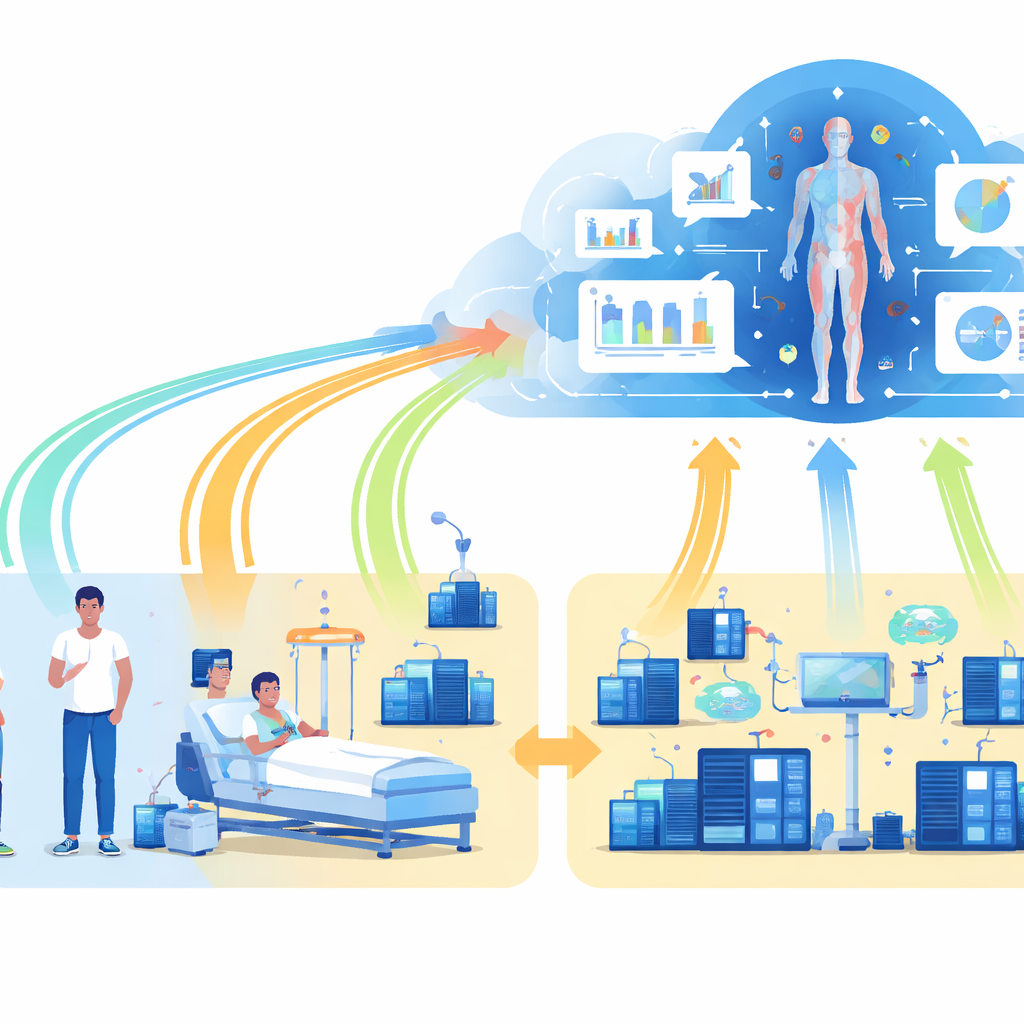
In the vision described here, every patient is linked to a medical digital twin: a virtual counterpart that mirrors their current condition and likely near future. Wearable heart monitors, insulin pumps, smart inhalers, and imaging systems stream data into this twin. The twin analyzes incoming signals to forecast dangerous events, suggest drug doses, and alert staff before a crisis unfolds. To do that safely, the system must decide where each piece of work happens—on nearby devices, in hospital rooms, or in distant data centers—without slowing down or exposing sensitive records.
Three-way balancing act: speed, cost, and safety
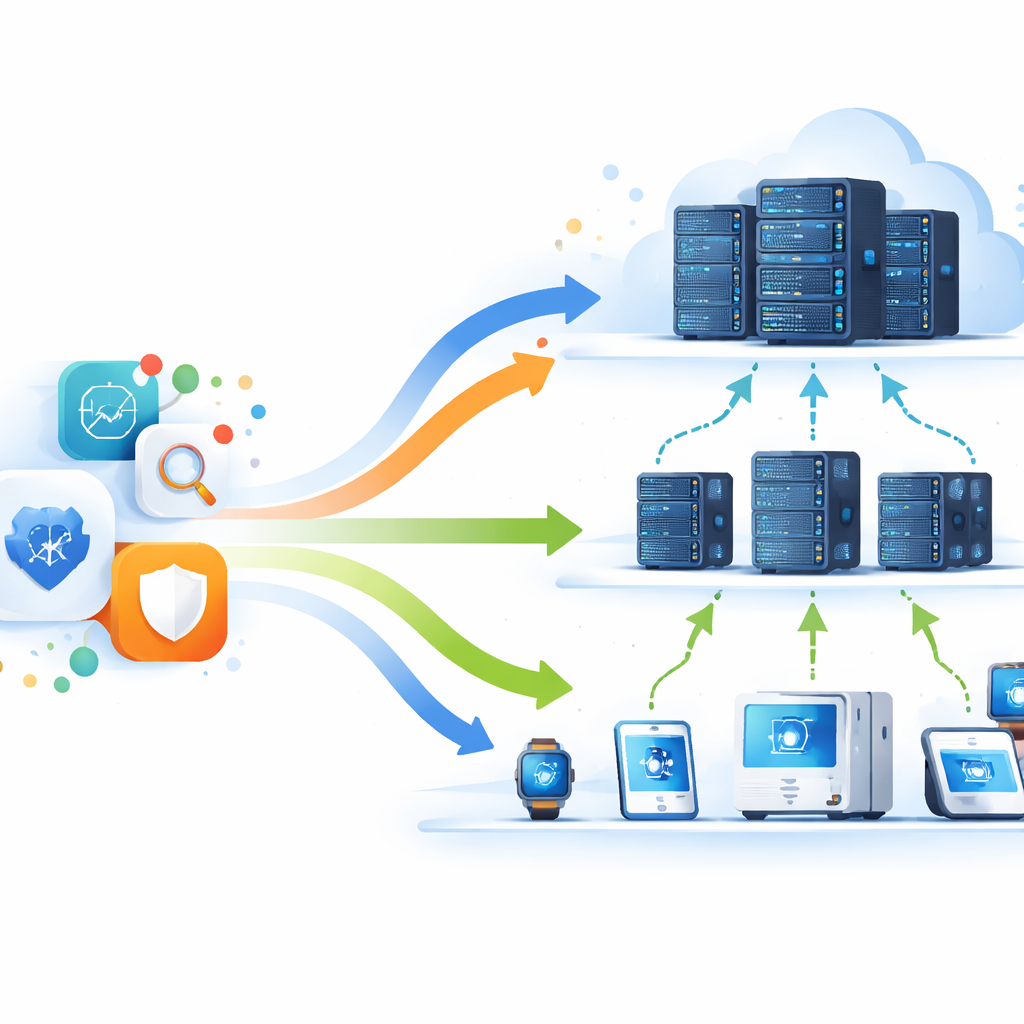
The authors show that running these digital twins is not just a technical challenge but an economic and ethical one. Every task, such as syncing sensor data, running an AI prediction, or updating a model, can be sent to different kinds of computers: small units close to the bedside (edge), intermediate servers within the hospital (fog), or powerful cloud machines. Edge devices respond quickly but have limited power; clouds are strong but far away and potentially more exposed. The framework treats this as a three-way balancing act: reduce delay so care can be truly real time, keep operating costs manageable for hospitals, and maintain a high level of data protection that respects privacy laws.
How the smart scheduler makes choices
To manage this balance, the team designs a set of decision tools that act like a traffic controller for digital twin tasks. The most exact tool uses mathematical optimization to find the best possible assignment of tasks to machines, considering limits on computing power, minimum security levels, and how clinically urgent each task is. Because this exact method becomes too slow as the system grows, the authors add two faster strategies. One is a quick, rule-based method that greedily sends each new task to a sensible machine while respecting capacity and security rules. The other combines learning and evolution-inspired search so the system can improve its choices over time in complex, changing environments.
Testing in a virtual intensive care unit
The framework is tested using detailed simulations of a smart intensive care unit with 4, 8, and 12 patients. Each virtual patient generates realistic workloads, including heart rhythm syncing, anomaly detection, AI-based risk scores, and periodic model updates. Across many test settings, the exact mathematical method always finds the best combination of speed, cost, and security but takes too long for real-time use when many patients are involved. The quick, rule-based scheduler runs almost instantly and stays within about five to eight percent of the ideal solution for small and medium loads. The learning-based method comes closest to the ideal in larger and more security-conscious scenarios, staying within roughly three percent of the best value while still scaling to heavier workloads.
What this means for future smart hospitals
Taken together, the results suggest a practical road map for hospitals that want to use patient digital twins without being overwhelmed by bills, delays, or privacy threats. The proposed design shows that it is possible to tune a system so that some situations emphasize low delay, others emphasize strict protection, and still others aim for a balanced blend, all while remaining understandable to clinicians and auditors. In plain terms, the study argues that with the right mix of smart scheduling and layered computing, hospitals can safely give every patient a high-fidelity digital double that helps doctors act faster, more accurately, and with greater confidence that sensitive data remains secure.
Citation: Alotaibi, F.M., Ahmad, S., Akram, T. et al. A cost-optimized medical digital twin framework for secure and efficient patient data management in smart healthcare. Sci Rep 16, 11407 (2026). https://doi.org/10.1038/s41598-026-41205-y
Keywords: medical digital twin, smart healthcare, edge and cloud computing, patient data security, AI task scheduling