Clear Sky Science · en
Synthesis and characterization of Curcuma Caesia plant root extract-mediated ZnO nanoparticles: efficacy as soil conditioner and plant growth promoter
Turning Kitchen Spices into Smart Plant Helpers
Feeding a growing world without exhausting soil and water is one of this century’s biggest challenges. This study explores an unexpected ally in that effort: a dark, aromatic turmeric relative called Curcuma caesia, and the tiny zinc-based particles that can be made from its roots. By using this plant to create ultra-small zinc oxide particles and applying them to okra crops, the researchers show how common plants and common minerals can be combined into a gentle, targeted booster for soil health and food production. 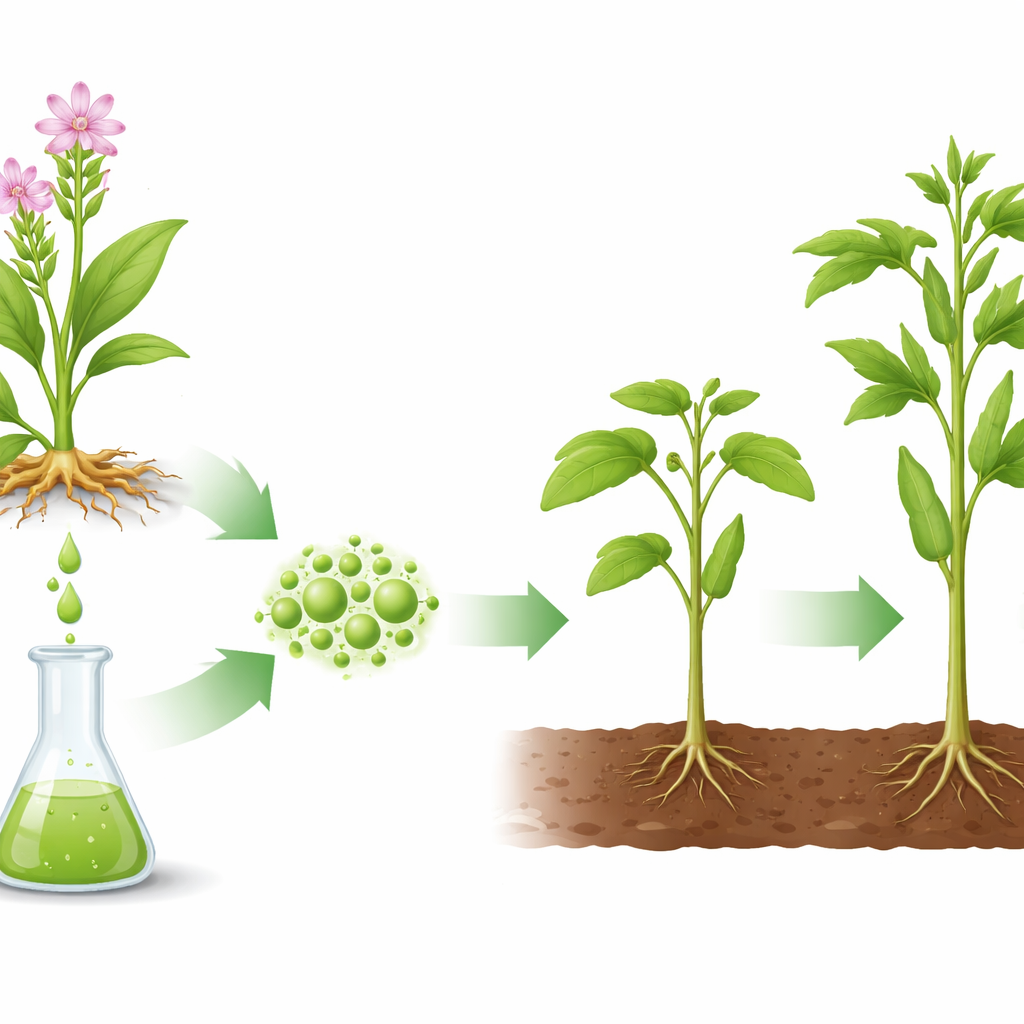
Tiny Tools for Greener Farming
Nanotechnology deals with structures so small that thousands of them could fit across the width of a human hair. At this scale, materials often behave differently: they dissolve, move, and react in ways that can be tuned for specific jobs. In agriculture, such nano-sized tools can help plants use nutrients more efficiently, reduce the need for chemical fertilizers and pesticides, and better withstand stress. Zinc is an essential trace nutrient for plants, but in ordinary fertilizers much of it is wasted or washed away. Turning zinc into nano-sized particles offers a way to deliver it more precisely—if those particles can be made safely and cheaply.
Making Nanoparticles with a Medicinal Root
Instead of relying on harsh chemicals to manufacture zinc oxide nanoparticles, the team turned to Curcuma caesia, a medicinal plant related to turmeric. They prepared an extract from its underground stems, or rhizomes, and mixed this with a zinc salt solution under controlled heating. Natural compounds in the extract acted like tiny factories and shields at once: they helped the zinc form solid particles and then coated their surfaces, keeping them from clumping. A suite of instruments confirmed what had been made. Light absorption tests revealed a signature of zinc oxide, X-ray measurements showed that the particles were crystalline, and imaging methods such as electron and atomic-force microscopy revealed their shape, roughness, and tendency to form small clusters. Electrical measurements indicated that the particles formed a reasonably stable suspension in water. 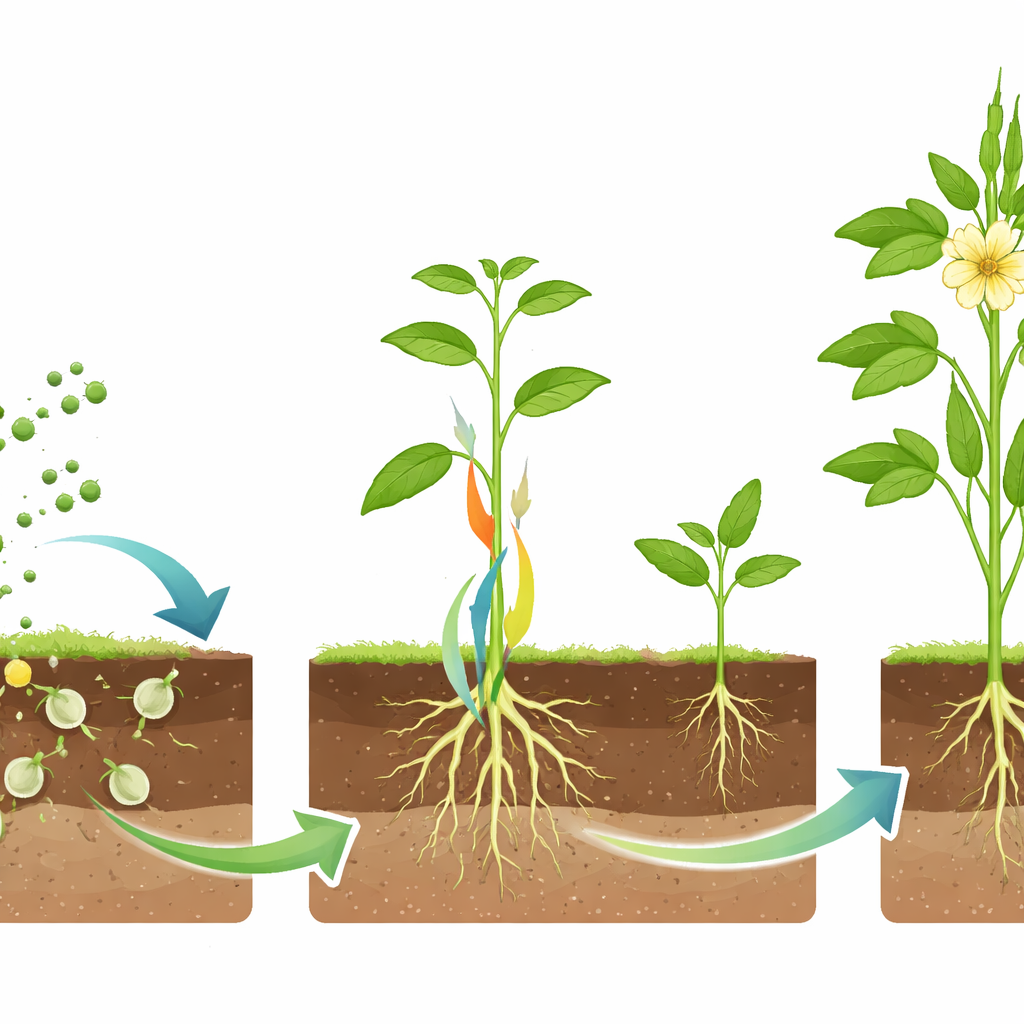
Testing the Effect on Okra in Real Soil
To move beyond the lab beaker, the researchers planted okra, a popular vegetable also known as lady’s finger, in field plots. Seeds were soaked in solutions containing different amounts of the plant-made zinc oxide particles, then grown in soil under ordinary outdoor conditions. Over the season, the team measured how many seeds sprouted, how tall the plants grew, how large the leaves became, how early and how abundantly they flowered, and how many pods and seeds each plant produced. Compared with untreated plants, those exposed to the nanoparticles generally germinated better, grew taller with broader leaves, and produced more flowers and pods, although the exact response depended on dose. Moderate amounts tended to give the best balance between strong growth and heavy seed filling, while very high amounts mainly pushed flowering and pod number.
Peeking Inside the Pods
Plant appearance is only part of the story; what happens to their internal chemistry matters too. To probe this, the researchers used a powerful technique called nuclear magnetic resonance to profile dozens of small molecules inside okra pods. These include basic building blocks such as sugars and amino acids, as well as more complex defense and signaling compounds often linked to flavor, color, and stress resistance. The nanoparticle-treated plants showed clear shifts in these chemical fingerprints. Many molecules associated with energy use, growth regulation, and natural protective systems were present in altered amounts, suggesting that the zinc-rich nanomaterial was gently steering the plant’s metabolism rather than simply forcing faster growth.
From Lab Concept to Sustainable Harvest
Taken together, the work shows that zinc oxide nanoparticles made with the help of Curcuma caesia roots can act as an eco-friendly aid for okra cultivation. They improve germination, growth, flowering, and yield when applied at suitable levels, and they nudge the plant’s internal chemistry in ways consistent with better nutrient use and stress handling. While more testing is needed across soils, climates, and crops, this approach points toward a future in which smart, plant-derived nanomaterials help farmers harvest more food from the same land with fewer conventional inputs, blending age-old herbal knowledge with cutting-edge materials science.
Citation: Pathak, A., Choudhary, P., Kumari, G. et al. Synthesis and characterization of Curcuma Caesia plant root extract-mediated ZnO nanoparticles: efficacy as soil conditioner and plant growth promoter. Sci Rep 16, 13050 (2026). https://doi.org/10.1038/s41598-026-41196-w
Keywords: green nanotechnology, zinc oxide nanoparticles, okra cultivation, plant growth promotion, sustainable agriculture