Clear Sky Science · en
Integrative multivariate analysis reveals four distinct salinity tolerance strategies in Alstroemeria cultivars
Why salty water matters for favorite cut flowers
Many of the flowers that brighten living rooms and weddings are grown in greenhouses using irrigation water that is not always fresh. As salts build up in pots and recycling systems, plants can struggle, losing leaves, color, and overall appeal. This study looks at Alstroemeria, a popular cut flower, to ask a practical question: which varieties can better handle salty conditions, and what is happening inside their leaves when they do?
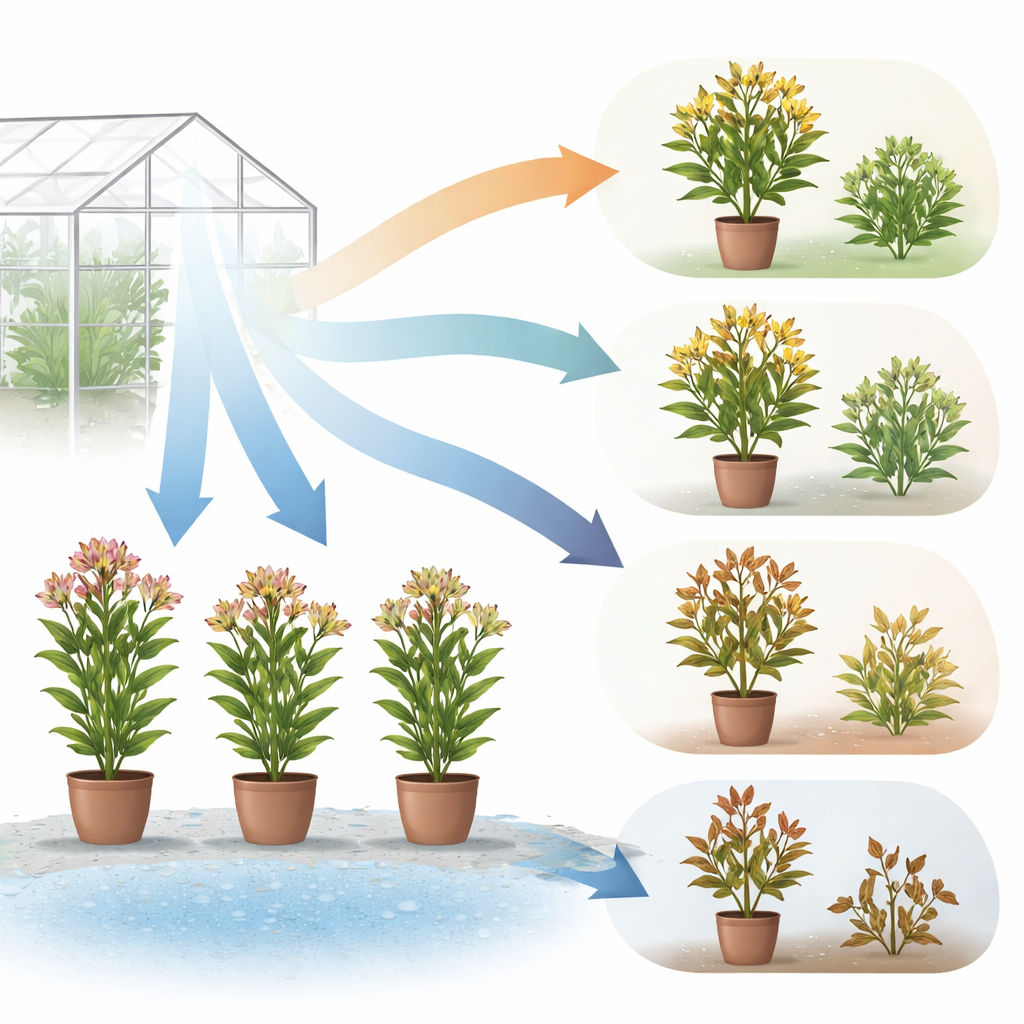
Testing four kinds of Alstroemeria
The researchers compared four commercial Alstroemeria cultivars: two shorter, compact types (Inca Sweety and Dwarf Red) and two taller ones (Orange Queen and Amatista). Plants were grown in pots in a greenhouse and watered with nutrient solutions containing four levels of common table salt, from none up to amounts similar to those found in moderately salty soils. Over six weeks, the team measured how tall the stems grew, how thick and heavy they were, how many leaves the plants kept, and how much leaf area they produced. They also tracked color-related pigments in the leaves and several chemical signs of stress and internal protection.
Visible growth and color changes under salt
Salt quickly separated the “tough” from the “tender.” The dwarf cultivars held their shape better, keeping stem length, leaf number, and leaf area relatively stable, especially Inca Sweety. The tall cultivars were more easily knocked back: Amatista in particular suffered sharp drops in stem size and overall biomass as salt rose. Leaf color told a similar story. Inca Sweety largely maintained its green color and chlorophyll levels, while the others showed more yellowing and pigment loss at higher salt levels. These changes matter directly to growers, because stem strength and leaf appearance determine whether a stem is marketable.
Hidden chemical shields and warning signs
Beyond what the eye can see, the team examined molecules that help plants cope with stress. Some compounds, such as phenols and flavonoids, act like built‑in antioxidants; others, including specific enzymes, form a clean‑up crew to remove harmful by‑products. Inca Sweety stood out by keeping its internal chemistry remarkably steady. Its levels of protective molecules and key enzymes shifted only modestly, suggesting that it prevented much of the damage before it started. Dwarf Red, Orange Queen, and Amatista tended to ramp up these defenses as salt increased, but not always in a lasting way. For example, Amatista showed a mid‑range surge in protective enzymes that later collapsed under the highest salt, leaving it vulnerable just when it needed protection most.
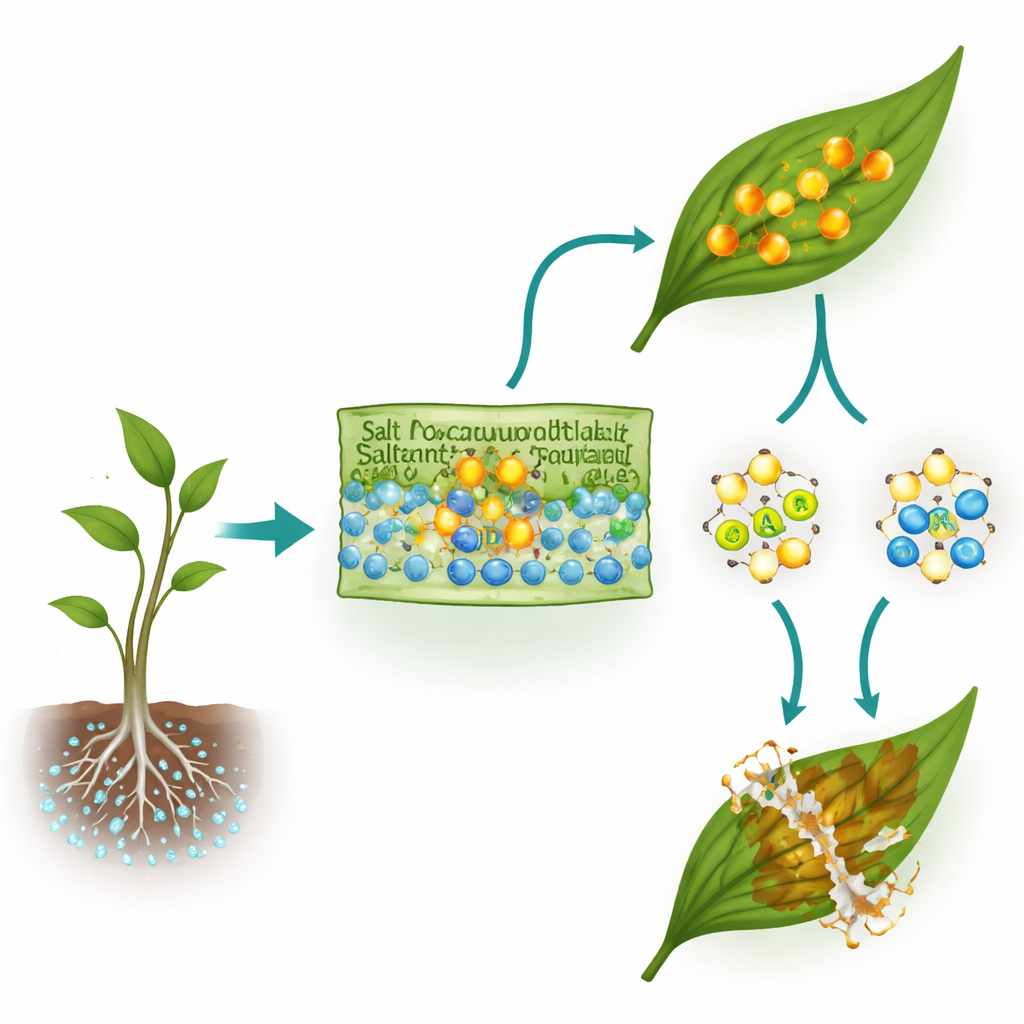
Four different ways to cope with salt
When the researchers looked at all traits together using multivariate statistics, four distinct “strategies” emerged. Inca Sweety behaved like a steady regulator, balancing growth and defense so that both stayed functional. Dwarf Red prioritized emergency detoxification, strongly activating certain enzymes while sacrificing growth. Amatista initially tried to defend itself but could not sustain its response, leading to pigment loss and rising damage markers in its leaves. Orange Queen adopted a slower, less coordinated defensive pattern, managing moderate stress but faltering at higher salt. Across all plants, a clear trade‑off appeared: traits linked to growth and greenness declined just as stress and defense traits rose.
What this means for growers and gardeners
The study concludes that salt tolerance in Alstroemeria is not about having the single strongest enzyme or the highest level of one chemical. Instead, resilience comes from well‑timed, well‑balanced coordination among growth, photosynthesis, and antioxidant defenses. Inca Sweety’s calm, integrated response makes it the best candidate for salty greenhouse conditions, while Dwarf Red offers a more defensive, though less productive, option. Amatista and Orange Queen, by contrast, are riskier choices where water quality is marginal. For the flower industry, this work provides a roadmap for choosing and breeding varieties that keep their beauty even when the water is less than ideal.
Citation: Mollanejad, M., Jabbarzadeh, Z. Integrative multivariate analysis reveals four distinct salinity tolerance strategies in Alstroemeria cultivars. Sci Rep 16, 10089 (2026). https://doi.org/10.1038/s41598-026-41188-w
Keywords: salinity tolerance, ornamental flowers, Alstroemeria, plant stress physiology, greenhouse cultivation