Clear Sky Science · en
A novel bioenergetic model outlines the metabolism of a deep-sea clam and that of its sulfur-oxidizing symbionts
Life in the Deep Without Sunlight
Far beneath the reach of sunlight, on the dark seafloor, some clams survive thanks to a remarkable partnership with bacteria. This study explores how a deep-sea clam species, Christineconcha regab, and the microbes living inside its gills share and trade energy. By building a detailed mathematical model of this relationship, the authors show how the clam can keep a steady food supply and cope with harsh, changeable conditions at cold seeps where chemical-rich fluids leak from the seabed.
A Hidden Farm Inside a Clam
C. regab lives at great depths on the Atlantic seafloor, clustered in patches where methane and sulfide seep from the sediment. Like other “chemosynthetic” animals, it does not rely mainly on plankton or plants for food. Instead, its enlarged gills host dense communities of sulfur-oxidizing bacteria that can turn chemical energy from hydrogen sulfide into organic matter. The clam pumps in sulfide from the mud with its foot and draws in oxygen and carbon dioxide from seawater across its gills. In return, the bacteria grow inside its tissues, effectively forming an internal farm that feeds the host when the clam digests some of them.
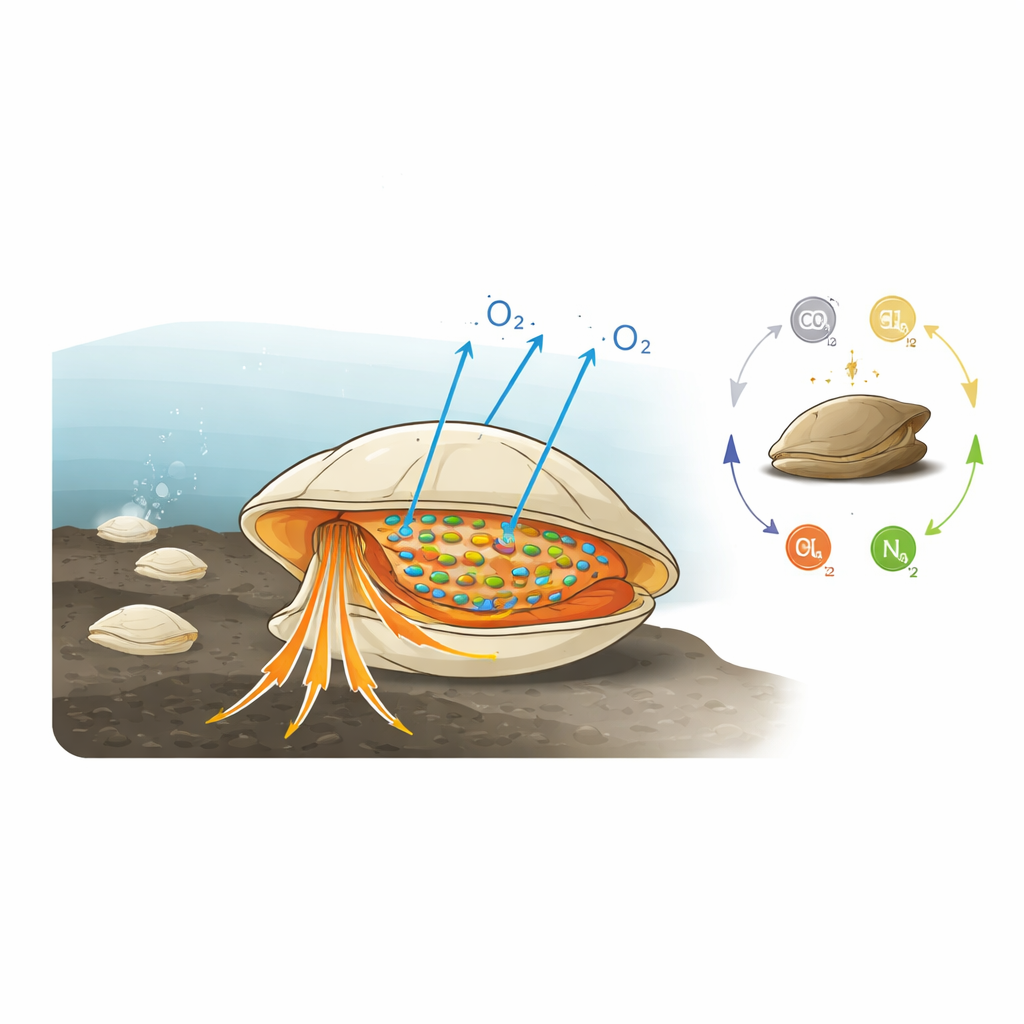
Building an Energy Budget for Two Partners
To untangle who does what in this partnership, the researchers developed two “dynamic energy budget” models. These models treat the clam as a living energy accountant, tracking how food is taken in, transformed, used for growth and reproduction, and lost as heat or waste. A first, more traditional model treated the clam and its microbes as a single black box. The second, innovative “farming” model described host and bacteria separately. It explicitly represented the bacteria’s growth on sulfide, their use of oxygen and nutrients, and the way their biomass is then eaten by the clam. Using field and lab measurements from multiple deep-sea sites, the team tuned both models and compared how well they reproduced observed growth rates, shell sizes, reproduction, and chemical fluxes.
A Surprising Strategy for Steady Eating
The farming model uncovered an unexpected feeding strategy. Instead of maximizing its own ingestion whenever more food is available, the clam appears to maintain a low but stable intake. When sulfide is scarcer, the model predicts that bacterial biomass inside the gills becomes larger, so that total sulfide use by the symbionts and thus food delivery to the host stay roughly constant. In effect, the clam’s internal “herd” of bacteria swells or shrinks to buffer swings in the outside environment, allowing the host to keep eating at a steady rate. The authors interpret this as a new kind of homeostasis: rather than adjusting how fast it eats, the clam adjusts how many symbionts it maintains.
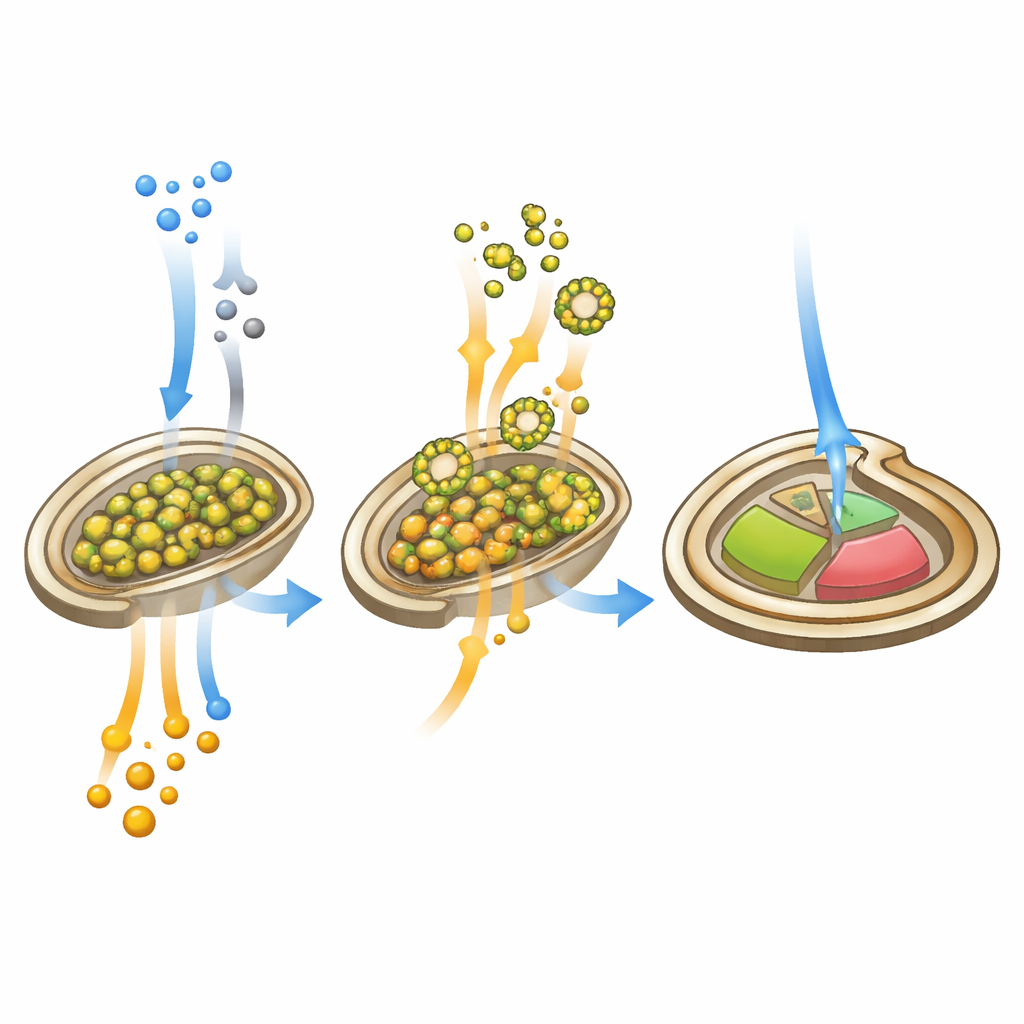
Who Spends the Oxygen and Where the Energy Goes
The farming model also allowed the team to separate how much carbon, nitrogen, sulfur, and oxygen are used by the clam versus by the bacteria. For adult clams under typical cold-seep conditions, the bacteria were predicted to consume about 99 percent of the oxygen used by the whole association. Most of the chemicals the clam assimilates end up paying its “maintenance bills” – keeping cells and ion balances running – with a smaller share supporting new tissue and reproduction. By contrast, the bacteria invest a larger fraction of their chemical intake into growth, which ultimately becomes food for the host. The model’s estimates of growth rates and many chemical yields matched available measurements and known values from related species, lending confidence to its main conclusions.
Why This Deep-Sea Partnership Matters
By explicitly modeling both partners, this work shows that the clam–bacteria team functions as a regulated, two-species engine. The clam supports its symbionts by delivering chemicals and space; the bacteria, in turn, buffer fluctuations in environmental sulfide and shoulder most of the oxygen demand, while supplying the clam with a slow but reliable food stream. This helps explain how C. regab can thrive for years in unstable, low-light habitats fueled only by chemical energy. The new model provides a framework for exploring how such deep-sea communities might respond to natural changes or human impacts that alter fluid flow, oxygen availability, or sediment chemistry.
Citation: Vandenberghe, M., Marques, G.M., Andersen, A.C. et al. A novel bioenergetic model outlines the metabolism of a deep-sea clam and that of its sulfur-oxidizing symbionts. Sci Rep 16, 14383 (2026). https://doi.org/10.1038/s41598-026-41176-0
Keywords: deep-sea chemosynthesis, symbiotic clams, sulfur-oxidizing bacteria, energy budget modeling, cold seep ecosystems