Clear Sky Science · en
Evaluation of structural and thermal performance of polystyrene integrated cross laminated timber panels
Why smarter wooden walls matter
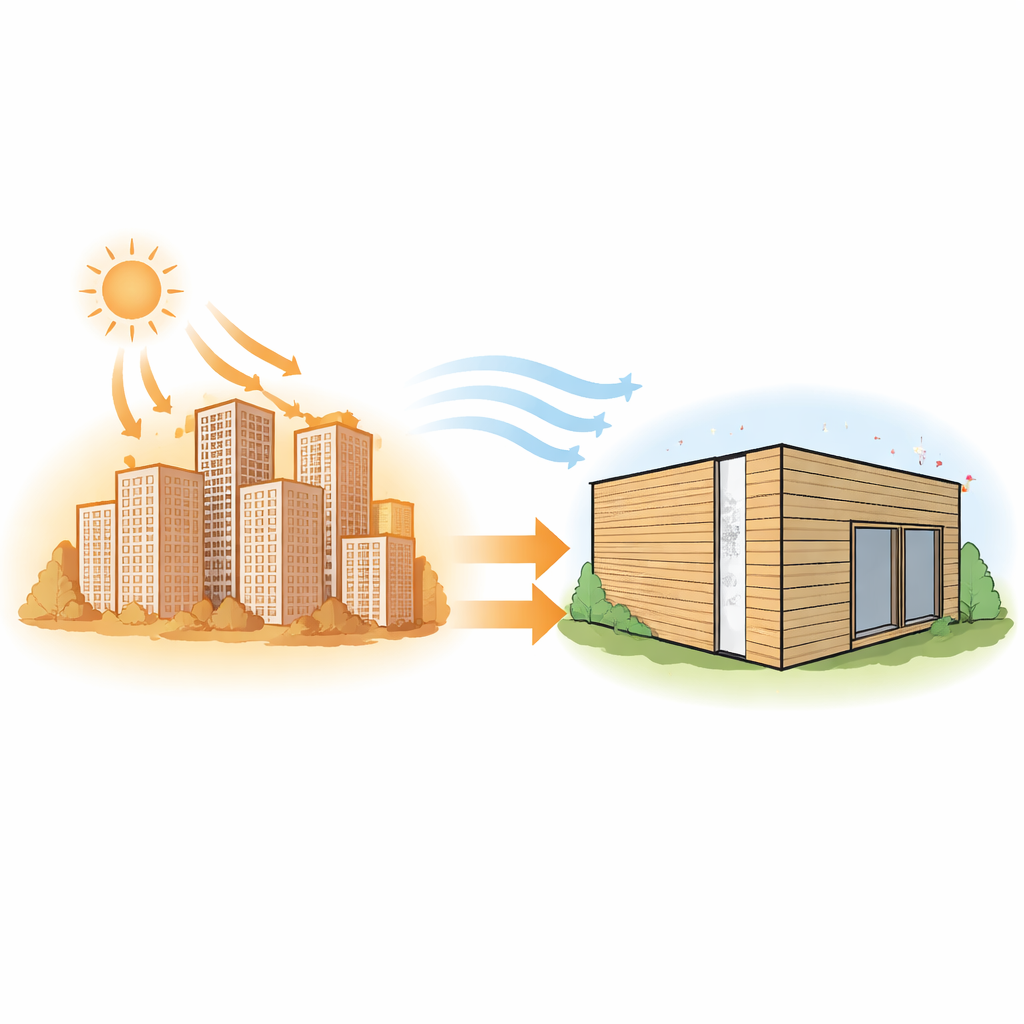
As cities grapple with rising energy bills, climate change, and earthquake risks, the materials we build with are under fresh scrutiny. This study explores a new type of wooden wall panel that aims to do two jobs at once: stand up safely under sideways shaking forces and keep heat from leaking out of homes. By blending solid wood with common foam insulation, the researchers show how buildings can become lighter, more energy efficient, and still robust enough for seismic regions.
Wood as a modern building backbone
Cross‑laminated timber, or CLT, is at the heart of this work. CLT panels are made by gluing together several layers of boards so that each layer runs at right angles to the next, forming large, stiff slabs. These panels are much lighter than concrete and steel yet can carry impressive loads, which has made them popular in sustainable construction. However, standard CLT uses a lot of solid wood and is not particularly good at slowing heat loss on its own. To reach high energy performance, builders usually add separate insulation layers, which increases thickness, cost, and material use.
Blending wood and foam in one panel
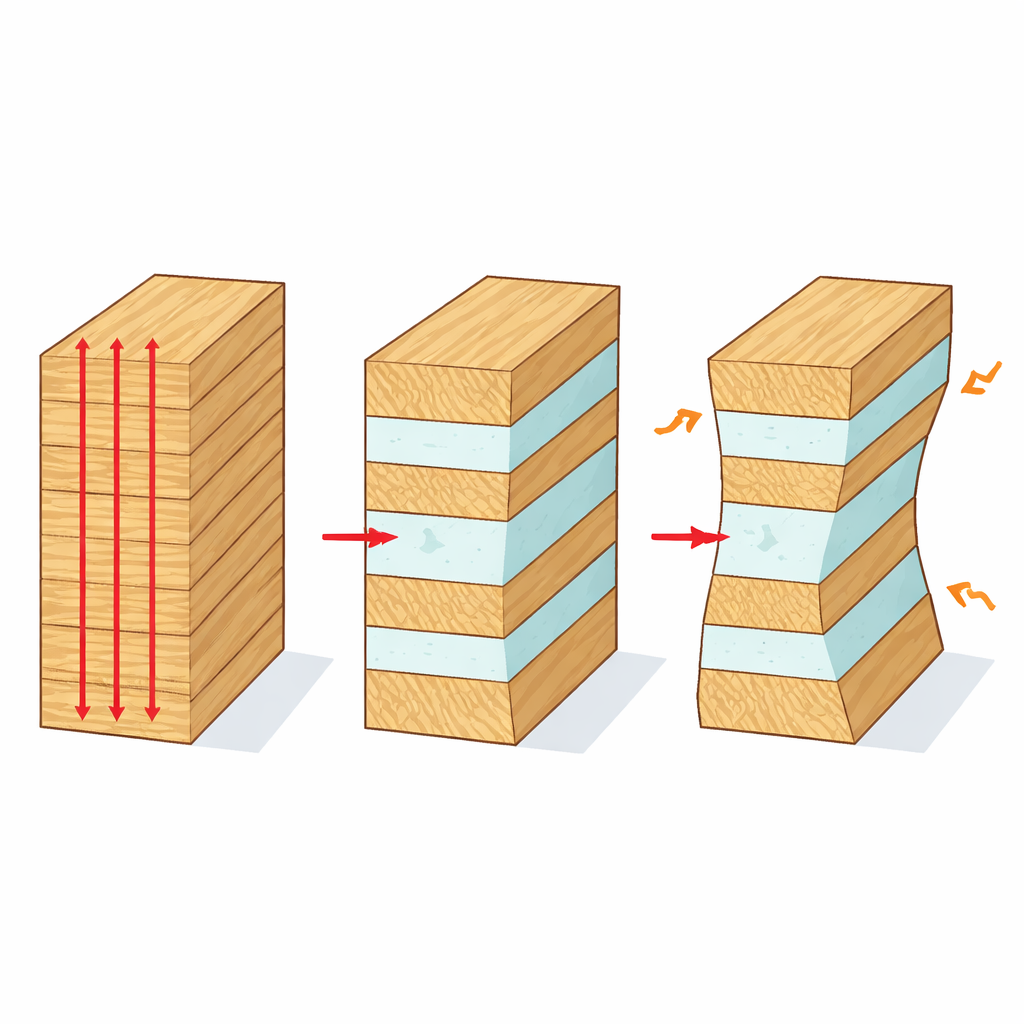
The team set out to redesign the inside of CLT panels so that insulation is built directly into their core. They created hybrid panels called P‑CLT by replacing half of the middle wooden layer with strips of polystyrene foam. Two familiar foam types were tested: expanded polystyrene (EPS), which is lightweight, and denser extruded polystyrene (XPS), often found in construction waste. In these panels, alternating strips of wood and foam run through the middle layer, sandwiched between outer wood layers. This arrangement aims to preserve a continuous wooden load path for strength while the foam strips act as a thermal barrier and a way to reuse a problematic waste material.
How the panels behaved under stress
To see how safe these hybrid panels might be as structural walls, the researchers built full‑scale wall segments and pushed them sideways until they were close to failure. Solid CLT walls carried the highest loads, while the foam‑integrated versions understandably carried less. Panels with EPS foam showed a marked drop in strength, whereas those with XPS preserved almost all of the load capacity, losing only a small fraction compared with solid CLT. Importantly, both foam‑integrated versions bent more before failing—around half again as much sideways movement as the traditional panels. That extra flexibility, known as ductility, allows walls to absorb more energy and deform in a controlled way during earthquakes instead of cracking suddenly.
Keeping heat inside the home
The same panels were then examined for how easily heat travels through them. Here, integrating foam made a clear difference. Compared with standard CLT, the EPS version reduced heat flow by about one‑sixth, and the XPS version by about one‑fifth. The team fed these measured values into computer models of a typical single‑storey house, placing it in five different climate zones across Türkiye, from humid coasts to cold inland regions. In these virtual houses, walls made from the hybrid panels—especially with XPS—cut the yearly heating energy demand by roughly 9–12% compared with a conventional brick‑walled home. Traditional CLT without added insulation, by contrast, could actually increase heating needs sharply, underlining that bare timber alone is not enough for energy‑efficient envelopes.
Balancing comfort, safety, and sustainability
Viewed together, the results show that carefully designed hybrid timber‑foam panels can strike a balance between strength and warmth. XPS‑integrated P‑CLT in particular keeps most of the structural capacity of solid CLT while offering better insulation and more forgiving, flexible behavior under sideways loads. EPS‑based panels trade more strength for cost savings and still boost thermal performance. Because these panels are light, factory‑made, and able to incorporate foam that might otherwise become waste, they offer an appealing option for both new low‑rise buildings and the upgrade of older ones. For a layperson, the takeaway is simple: by rethinking how we layer wood and insulation, we can build walls that are safer in earthquakes, cheaper to heat, and kinder to the environment—all in a single integrated system.
Citation: Lakot Alemdağ, E., İlhan, O., Akkan Çavdar, A. et al. Evaluation of structural and thermal performance of polystyrene integrated cross laminated timber panels. Sci Rep 16, 11199 (2026). https://doi.org/10.1038/s41598-026-41173-3
Keywords: cross-laminated timber, energy-efficient buildings, hybrid wood panels, polystyrene insulation, seismic performance