Clear Sky Science · en
Optimizing MAF-ENF-CO2 coordination in steel mills: system modeling and emission reduction scenarios
Why Steel and Climate Change Matter to Everyone
Steel is hidden in almost everything around us—buildings, cars, appliances, bridges, and railways. But making steel is also one of the most carbon‑intensive activities on Earth, responsible for a large share of global greenhouse gas emissions. This study looks inside a modern Chinese steel mill and asks a simple but crucial question: if we change the way materials and energy move through the plant, how much can we cut its carbon footprint without shutting it down or starting from scratch?
Following the Paths of Stuff, Power, and Smoke
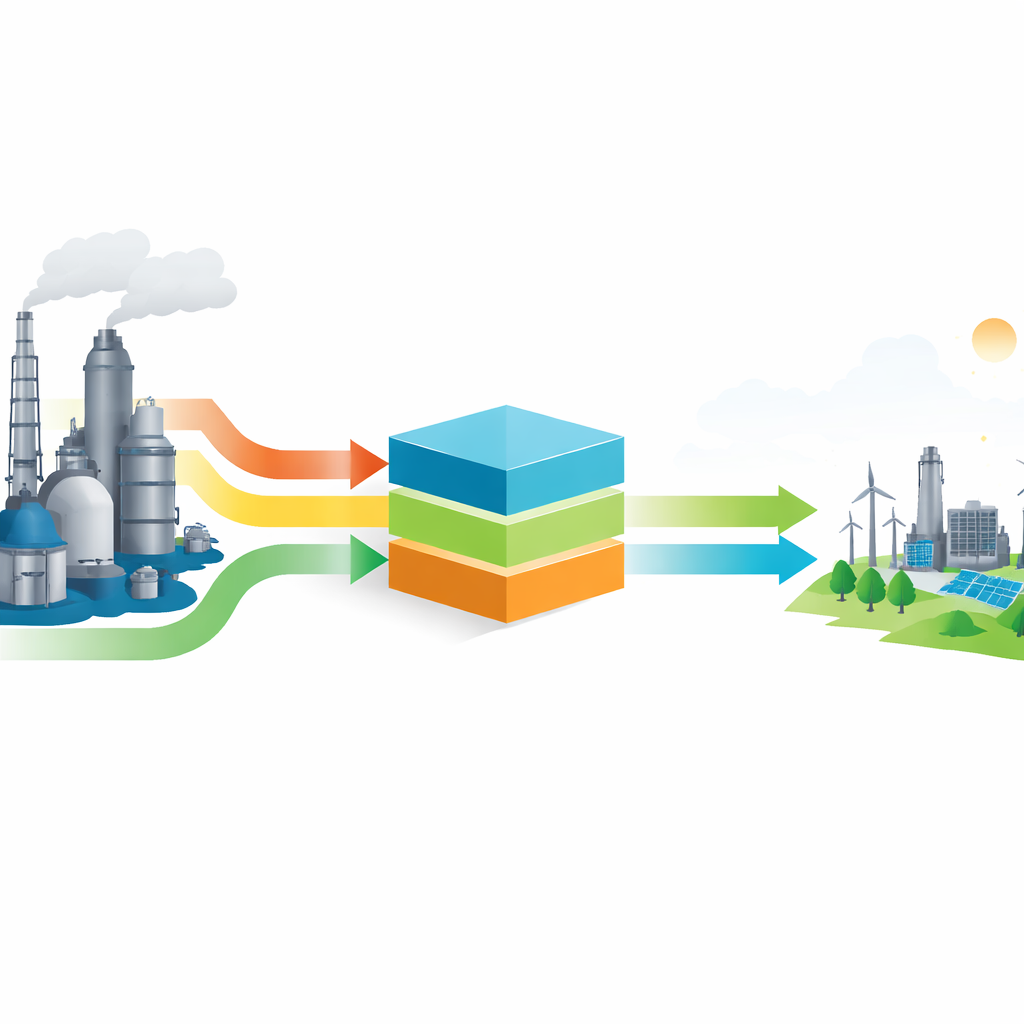
The authors build a detailed map of how iron ore, scrap metal, coal, gas, electricity, and exhaust gases flow through a typical blast‑furnace–basic oxygen furnace steelworks. They track three things at once: material flows (how raw materials and products move), energy flows (how fuels and power are used and recovered), and carbon dioxide flows (how emissions are created and where they go). By turning these three linked streams into a single mathematical framework, they can see how a tweak in one part of the plant—such as using more recycled scrap—ripples through every other step and ultimately changes total emissions.
A New Three‑Way Coordination Map
Instead of looking at emissions one piece at a time, the study treats the plant as a tightly connected network. The new “three‑dimensional” model links shop‑floor operations, mid‑level process technologies, and national climate policies into one picture. It uses matrices—large tables of numbers—to keep track of how much material enters and leaves each process, how much fuel is burned or recovered, and how much carbon dioxide each unit of energy produces. With this setup, the researchers can test many what‑if questions quickly, such as “What happens if we increase recycled scrap?” or “How far do emissions fall if the power plant switches from coal to natural gas?”
Testing Five Ways to Clean Up a Steel Plant
The team applies the model to a real integrated steel mill in China that produced about 8.9 million tons of steel in 2022 and emitted roughly 18.5 million tons of carbon dioxide—about two tons of CO₂ for every ton of steel. They then simulate five step‑by‑step improvement pathways. First, they double the share of scrap steel used in the converter to 30 percent, which alone cuts emissions by nearly 2 million tons per year. Next, they reduce the amount of steel slag—a waste product that carries away valuable metal—so less fresh iron needs to be made, further trimming emissions. A third step replaces some sintered ore with higher‑quality pellets, slightly lowering fuel use and emissions in upstream units like sintering and coking.
Turning Waste Heat and Cleaner Fuels into Climate Gains
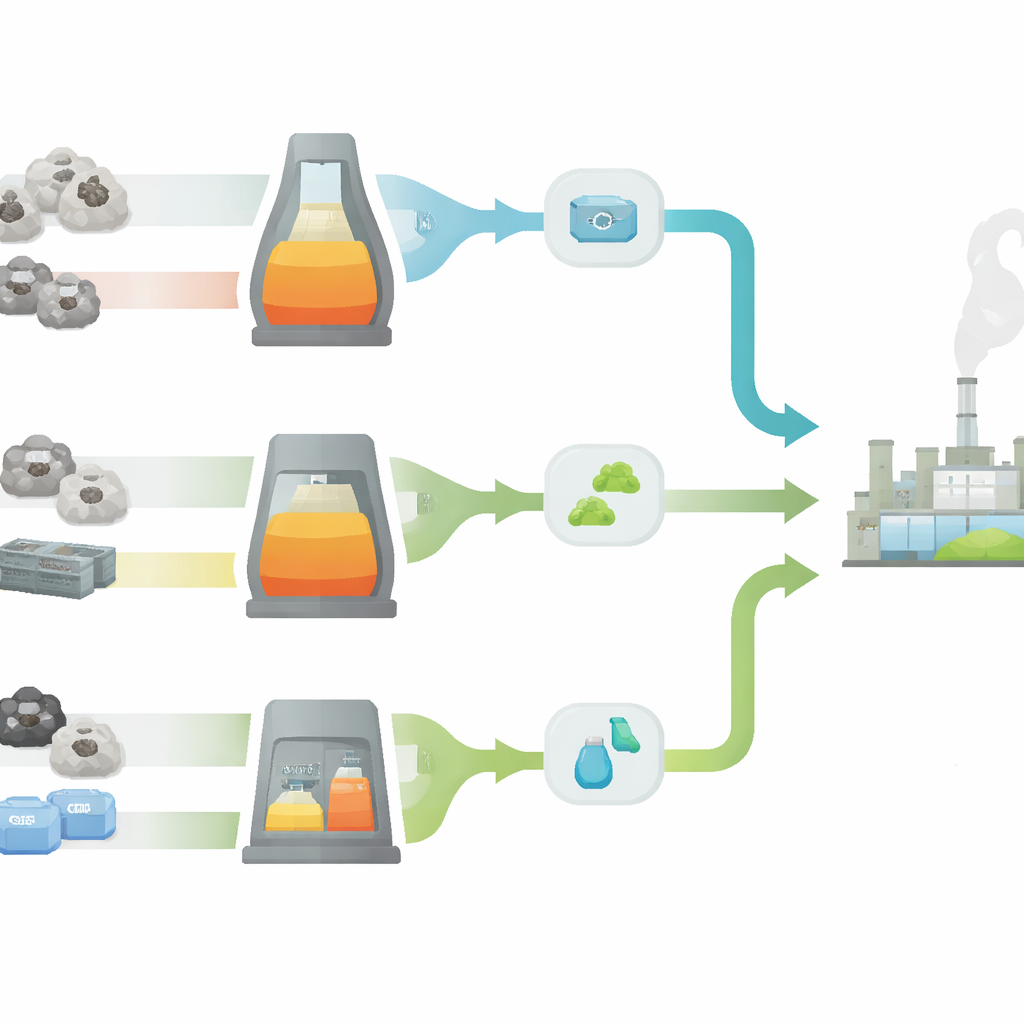
The last two scenarios focus on energy. In one, the plant stops burning surplus gases in open flares and instead pipes them to on‑site power generation and waste‑heat power units. Although this raises emissions in the power shop itself, it avoids even larger emissions that would have occurred if the plant had bought additional electricity from a coal‑heavy grid, yielding a net reduction. The final scenario replaces the mill’s coal‑fired power plant with a high‑efficiency natural gas system. Thanks to both higher efficiency and the lower carbon content of gas, this single change cuts emissions by about 4.66 million tons per year—more than any other individual measure.
What This Means for a Lower‑Carbon Future
Overall, the combined package of material changes, process tuning, and cleaner energy cuts the plant’s emissions by 6.66 million tons per year, with cleaner power and more scrap providing more than four‑fifths of the total reduction. For non‑specialists, the takeaway is that there is no single magic trick: deep cuts come from coordinating what goes into the plant, how efficiently it is turned into steel, and how the plant is powered. The model gives managers and policymakers a transparent way to see which levers matter most and in what order to pull them. It also offers a template that other energy‑hungry industries can adapt as countries move toward carbon‑peaking and carbon‑neutrality goals.
Citation: Lu, B., Hu, M., Chen, D. et al. Optimizing MAF-ENF-CO2 coordination in steel mills: system modeling and emission reduction scenarios. Sci Rep 16, 12150 (2026). https://doi.org/10.1038/s41598-026-41172-4
Keywords: steel decarbonization, industrial emissions, energy efficiency, recycled scrap steel, clean energy transition