Clear Sky Science · en
Impact of trace metals in fish waste-based organic fertilizer on growth promotion and nutritional components of spinach plant (Spinacia oleracea L.)
Turning Fish Scraps into Plant Food
Every day, fish markets and processing plants generate piles of heads, bones, and guts that often end up as smelly waste. This study asks a simple but important question: could those leftovers be safely turned into a rich plant food that helps grow more nutritious vegetables, without loading our plates with unwanted metals? Focusing on spinach—a leafy green that is both highly nutritious and very good at soaking up metals from soil—the researchers tested liquid fertilizers made from fermented carp waste to see how well they boost growth, what they do to the soil, and whether the resulting spinach is safe to eat.
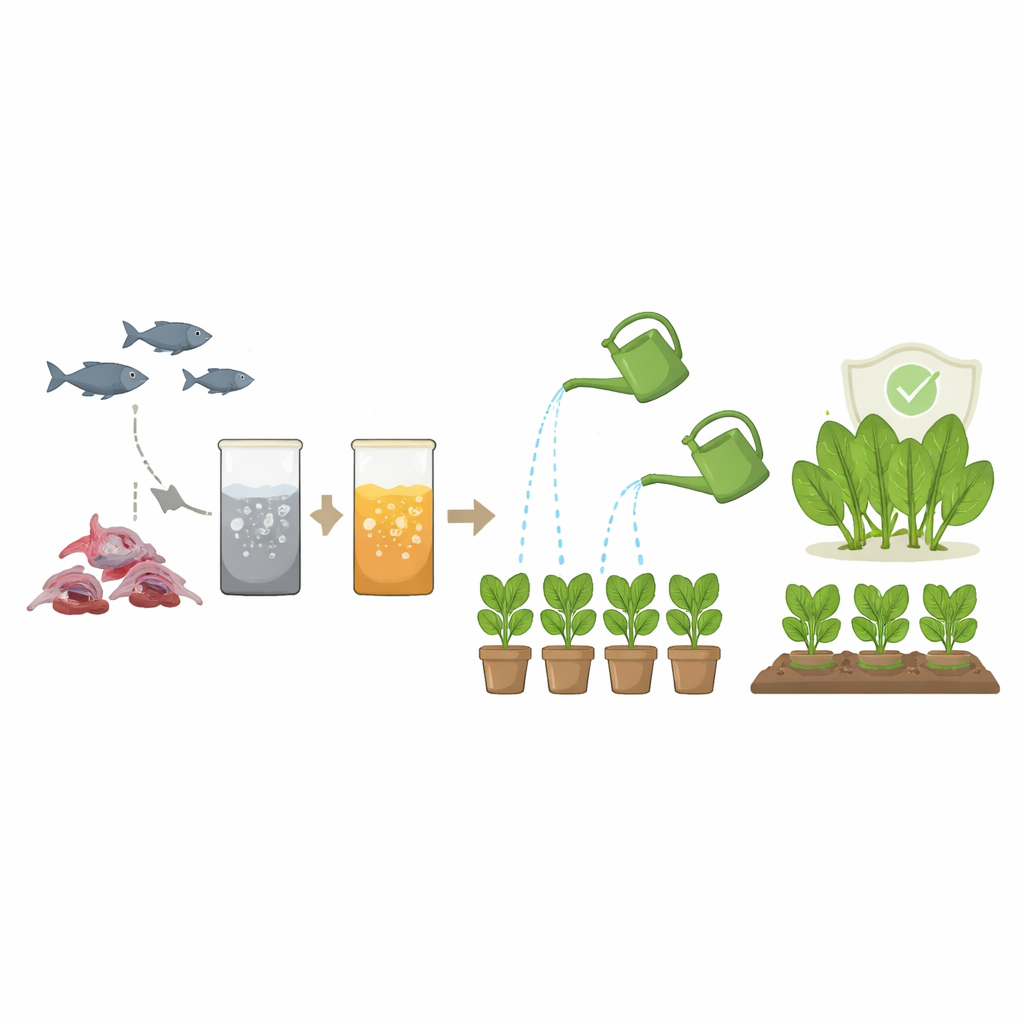
From Fish Market to Garden Bed
The team collected waste from two common carp species and mixed it with jaggery (unrefined sugar), water, and banana, then let the mixture ferment for three weeks. After filtering, they obtained liquid organic fertilizers, which were diluted and applied in different amounts to potted spinach plants over a 60‑day period. Plants received either plain water, standard chemical fertilizer (NPK), or one of several doses of the fish-based liquid. Throughout the experiment, the scientists tracked how the fertilizer brew changed over time—monitoring temperature, acidity, salts, and oxygen—as well as the nutrients and trace metals it contained.
How the Spinach Responded
Spinach grown with moderate to higher doses of fish-based fertilizer (especially 40 and 50 milliliters per plant per week) generally developed as well as plants given NPK. These organic treatments supported good seed germination, healthy shoot and root lengths, and plentiful leaves, with fresh and dry weights broadly comparable to the chemical fertilizer and even the unfertilized control soil, which was initially quite supportive. The liquid fertilizers were rich in organic matter, carbon, and nitrogen, with enough phosphorus and potassium to sustain growth, even if some values fell below textbook “ideal” ranges. Overall, the fish-based brews proved capable of nourishing spinach without obvious signs of stunted growth or stress.
Metals in Soil, Leaves, and the Dinner Plate
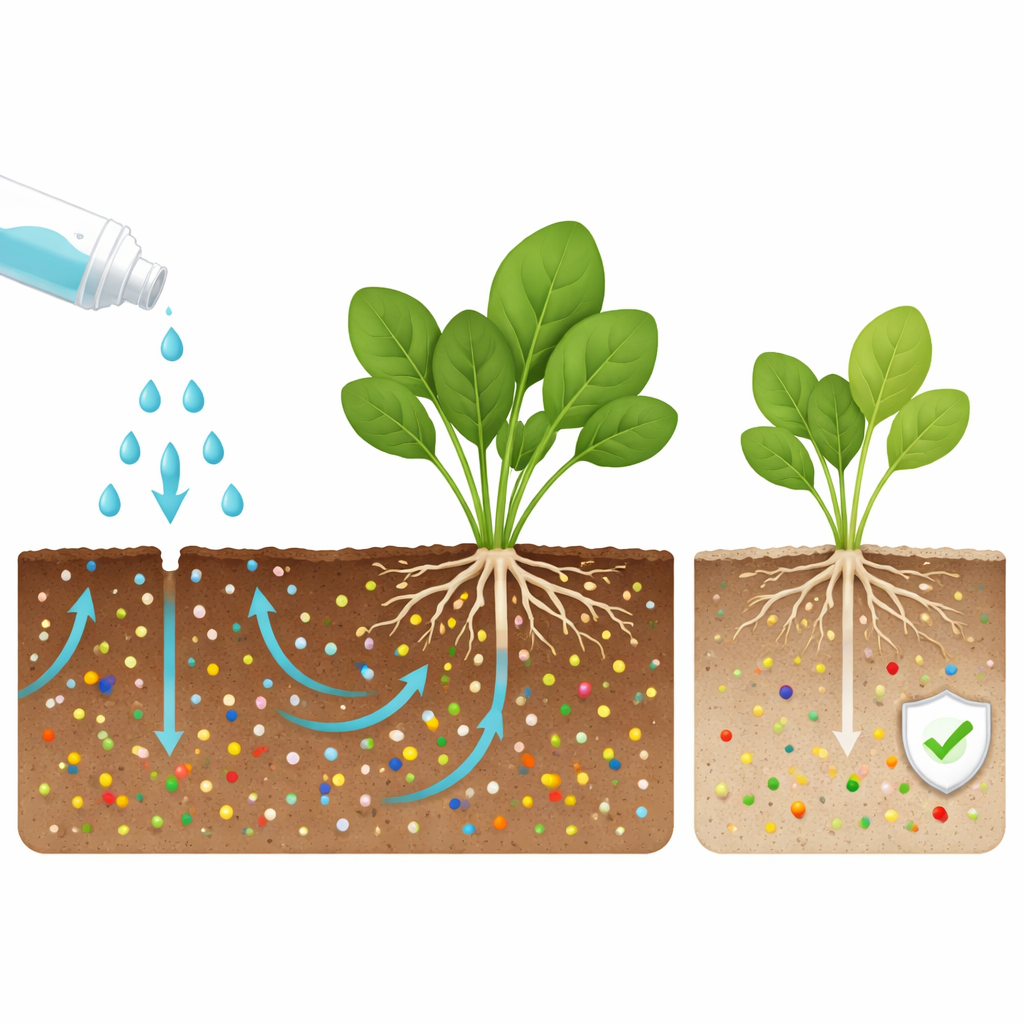
Because fish live in mineral-rich waters, their tissues naturally contain trace metals. The study therefore examined how these metals behaved once the waste was turned into fertilizer. The liquids held useful elements such as potassium, sulfur, calcium, iron, copper, and zinc, with only modest differences among the three fish formulations. In the soil, many nutrients remained below optimal levels, especially potassium and calcium, but iron and silicon were within healthy ranges. In spinach leaves, most mineral levels stayed within typical nutritional limits, though a few treatments showed elevated potassium, sulfur, phosphorus, or iron. By comparing metal levels in soil and leaves, the researchers calculated how strongly different elements moved into the plant; sulfur showed the greatest tendency to accumulate, while others such as manganese and zinc remained modest.
Checking the Hidden Health Risks
To understand what all this means for people eating the spinach, the team estimated daily metal intake, non-cancer health risks, and long-term cancer risk using standard international formulas. Across all treatments, the amounts of metals that a person would ingest by eating the spinach remained far below accepted safety thresholds. Combined risk scores for multiple metals were well under levels considered worrisome. Only chromium in one mixed-fish treatment approached the upper edge of the acceptable cancer-risk band, suggesting that routine monitoring of certain elements is wise, but not that the spinach is unsafe. Importantly, soils treated with fish fertilizers also hosted far richer microbial communities than those receiving chemical fertilizer, hinting at long-term gains in soil health.
What This Means for Farmers and Eaters
In practical terms, the study shows that fermented fish waste can be turned into a liquid fertilizer that supports spinach growth and improves leaf mineral content, while keeping trace metal exposure to consumers within safe bounds. Higher application rates tended to give better leafy growth, and the organic fertilizers sometimes matched or exceeded chemical fertilizer for nutritional enrichment, all while encouraging beneficial soil microbes. For regions facing soil degradation, high fertilizer costs, and mounting waste from fisheries, this approach offers a way to recycle local by‑products into plant food rather than pollution. The authors conclude that fish-based liquid fertilizers are promising tools for more sustainable farming, provided that metal levels continue to be checked as use scales up in real fields.
Citation: Parveen, Masood, Z., Batool, H. et al. Impact of trace metals in fish waste-based organic fertilizer on growth promotion and nutritional components of spinach plant (Spinacia oleracea L.). Sci Rep 16, 10238 (2026). https://doi.org/10.1038/s41598-026-41171-5
Keywords: fish waste fertilizer, spinach nutrition, trace metals, organic farming, soil health