Clear Sky Science · en
Social roles and emotional distress are associated with successful aging in adult childhood cancer survivors
Why this study matters for survivors and families
More children than ever are surviving cancer, but many carry health and emotional scars into adulthood. This study asks an encouraging question: despite the challenges of past treatment, how many survivors are actually doing well as they grow older, and what helps them thrive? By focusing on work, education, relationships, and emotional distress, the researchers highlight everyday factors that can tilt survivors’ aging toward strength rather than struggle.
Growing up after childhood cancer
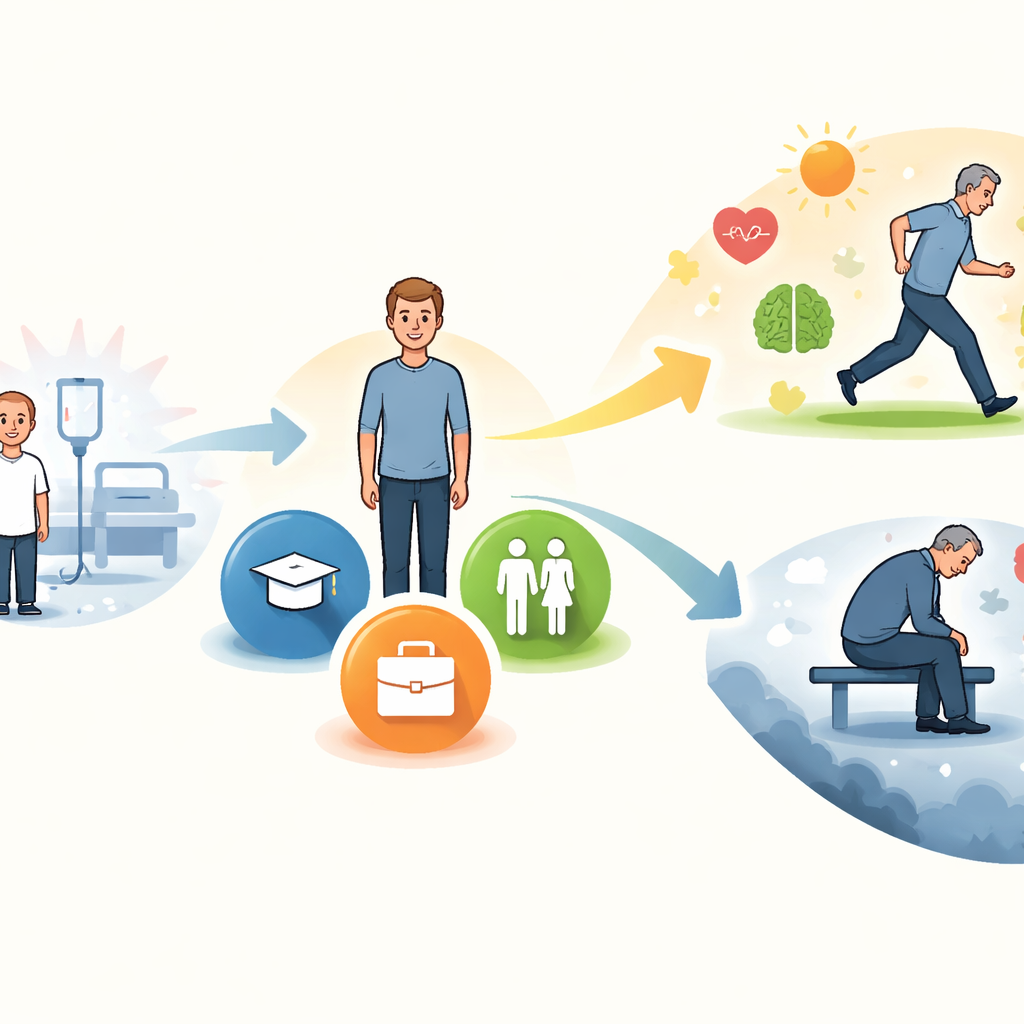
The researchers followed 1,248 people diagnosed with cancer before age 18 in Los Angeles County between 1996 and 2010. On average, they were about 27 years old and more than 14 years past their diagnosis when they completed a detailed survey. Many had gone through very intensive treatments. The survey asked about their health, mood, memory and thinking, physical activity, and whether they had reached common adult milestones such as finishing school, getting a job, or living with a partner. The goal was to understand not just what had gone wrong after cancer, but also what was going right.
What "successful aging" looks like in survivors
Rather than defining success as perfect health, the team used a flexible view of "successful aging" that fits the reality of childhood cancer survivors. A person was considered to be aging successfully if they had no more than one of the following: a serious ongoing health problem (like heart or bone issues or a second cancer), very low physical activity, noticeable problems with memory or learning, or low psychological well-being. Even though many survivors reported concerns—about one quarter had at least one chronic condition, over two thirds were not physically active, and more than four in ten did not feel they were mentally flourishing—roughly two out of three still met the threshold for successful aging under this broader definition.
Work, school, relationships, and emotional strain
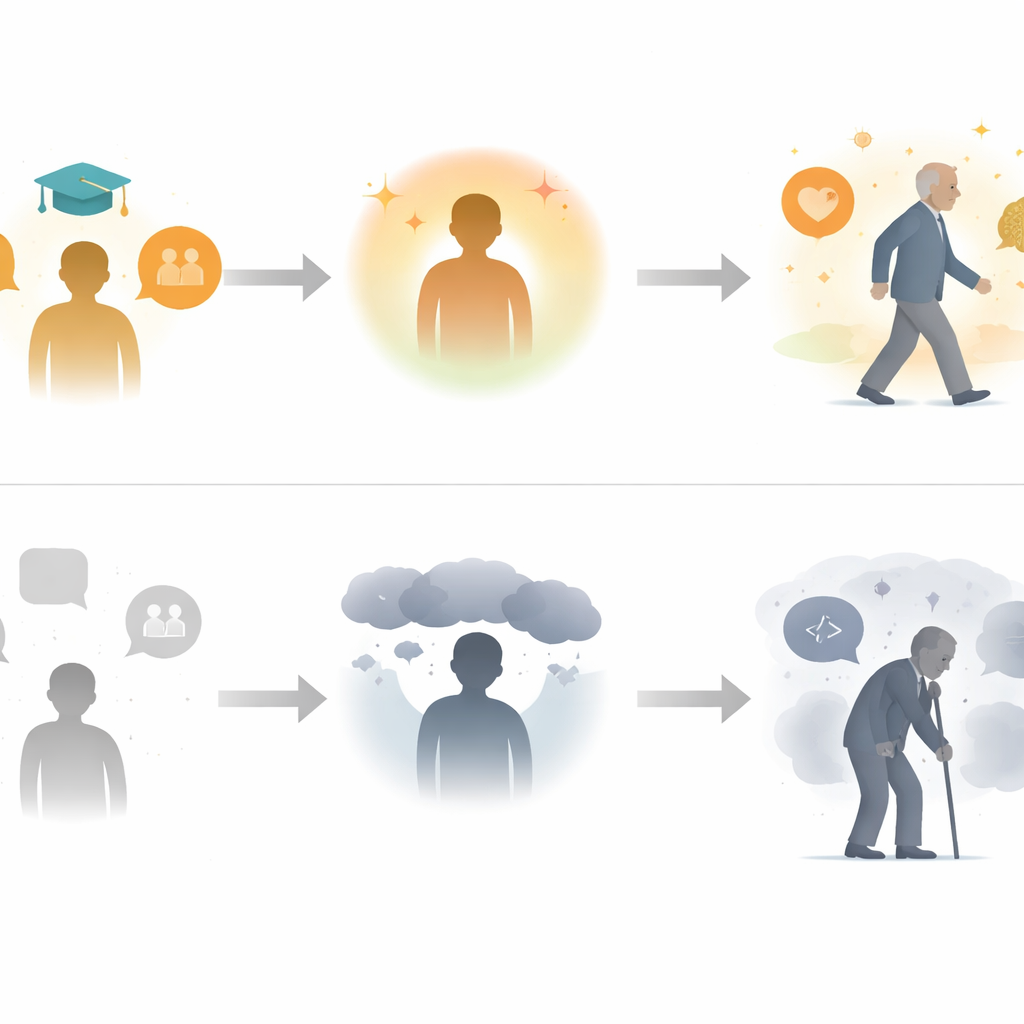
The study focused on "social roles" as a cluster of three achievements: completing more than a high school education, being employed, and being married or living with a partner. Survivors who had all three of these roles were more than three times as likely to be aging successfully as those who had none, even after accounting for treatment intensity, age, sex, race and ethnicity, and health behaviors like smoking and drinking. In contrast, survivors who reported more frequent feelings of sadness, loneliness, fear, or depression were substantially less likely to be aging successfully. Each incremental increase in emotional distress was linked to a marked drop in the odds of meeting the study’s criteria for success.
Beyond treatment intensity: the power of everyday life
Interestingly, once the researchers adjusted for social and lifestyle factors, the intensity of childhood cancer treatment by itself was no longer strongly tied to successful aging. This suggests that what happens after treatment—finishing school, entering the workforce, forming close relationships, staying active, and managing emotions—may shape survivors’ later health as much as, or even more than, the specific details of their past therapy. The authors argue that care for survivors should therefore look beyond scans and lab tests to include support for mental health, physical activity, and help in reaching key adult milestones.
What this means for survivors and care teams
To a layperson, the main takeaway is both sobering and hopeful. Many adult survivors of childhood cancer carry health burdens and emotional strain, but a majority are nonetheless aging in a broadly healthy, engaged way. Reaching educational, work, and relationship goals and keeping emotional distress in check are strongly tied to better outcomes. This means that programs that help survivors stay active, build supportive relationships, complete schooling, find stable work, and access mental health care are not just quality-of-life extras—they may be central to helping this vulnerable group grow older with resilience and dignity.
Citation: Hayek, S., Miller, K.A., Roth, M.E. et al. Social roles and emotional distress are associated with successful aging in adult childhood cancer survivors. Sci Rep 16, 10474 (2026). https://doi.org/10.1038/s41598-026-41160-8
Keywords: childhood cancer survivors, successful aging, social roles, emotional distress, survivorship care