Clear Sky Science · en
Drug target mining and in silico screening of Tibetan plant metabolites for potential alleviation of Oroya fever, a neglected tropical disease
Ancient Remedies Meet a Modern Killer
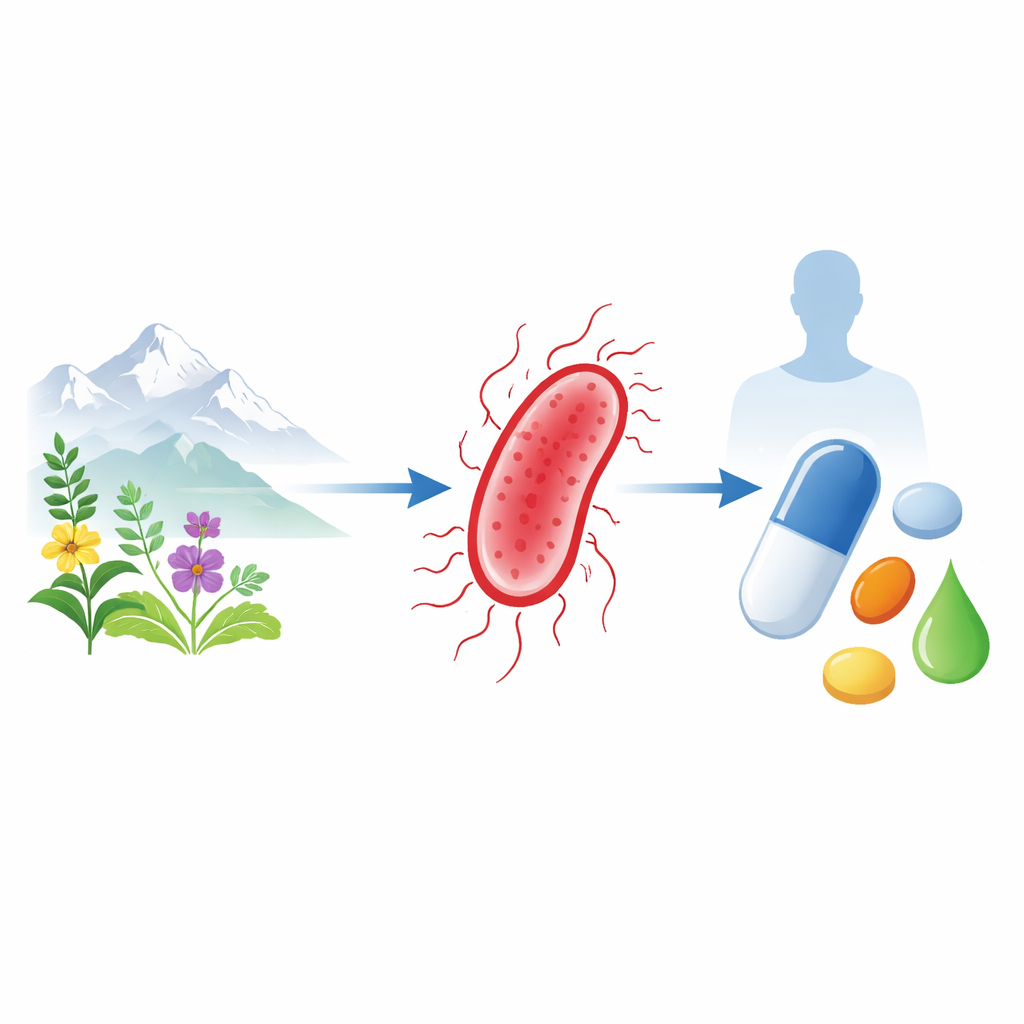
Oroya fever, also known as Carrion’s disease, is a life-threatening infection that mainly strikes people in parts of the Andes but can appear worldwide. Caused by the bacterium Bartonella bacilliformis and spread by sand flies, it can destroy red blood cells and lead to severe anemia and death if not treated quickly. Existing antibiotics are limited and drug-resistant strains are emerging. This study asks a timely question: can long-used Tibetan medicinal plants provide new, computer-identified starting points for future drugs against this neglected disease?
Why This Fever Is So Dangerous
Oroya fever has two faces. In the acute phase, the bacteria invade red blood cells and blood vessel linings, triggering massive breakdown of blood cells, high fever, weakness, and a high risk of fatal complications such as heart and lung failure. If patients survive without proper treatment, the illness can shift into a chronic skin form marked by wart-like blood vessel growths. Doctors currently rely on a handful of antibiotics, but reports of treatment failure and resistance are growing, raising concern that these drugs may not always work in the future.
Looking for a Weak Point in the Germ
The researchers first combed through the complete protein sets of 17 different Bartonella bacilliformis strains to find components the microbe cannot live without. They systematically removed proteins that resembled human proteins or friendly gut bacteria, to avoid harming patients or their helpful microbes. This “subtractive” process narrowed thousands of candidates down to a small group of essential bacterial proteins likely to be good drug targets. Among them, one enzyme stood out: riboflavin synthase, which bacteria use to make vitamin B2, a key helper molecule for energy and metabolism. Humans cannot make this vitamin and must get it from food, so a drug that blocks the bacterial enzyme should hit the pathogen while sparing human cells.
Tibetan Plants as a Digital Drug Library
Drawing on Traditional Tibetan Medicine, the team gathered 52 natural compounds reported from high-altitude medicinal plants such as juniper, meconopsis, and beard lichens (Usnea species). Using a suite of computer tools, they virtually “docked” these plant molecules into the three-dimensional structure of riboflavin synthase predicted by modern protein modeling. The simulations tested how snugly each compound might fit into the enzyme’s active pocket and how stable that interaction would be over time. Three large, sugar-decorated molecules rose to the top: two kaempferol-based flavonoids and one compound called Hirtusneanoside. Extended molecular dynamics simulations suggested that all three could sit securely in the enzyme for long periods, subtly reshaping its surface and interfering with its normal motion.
From Binding in Silico to Behavior in the Body
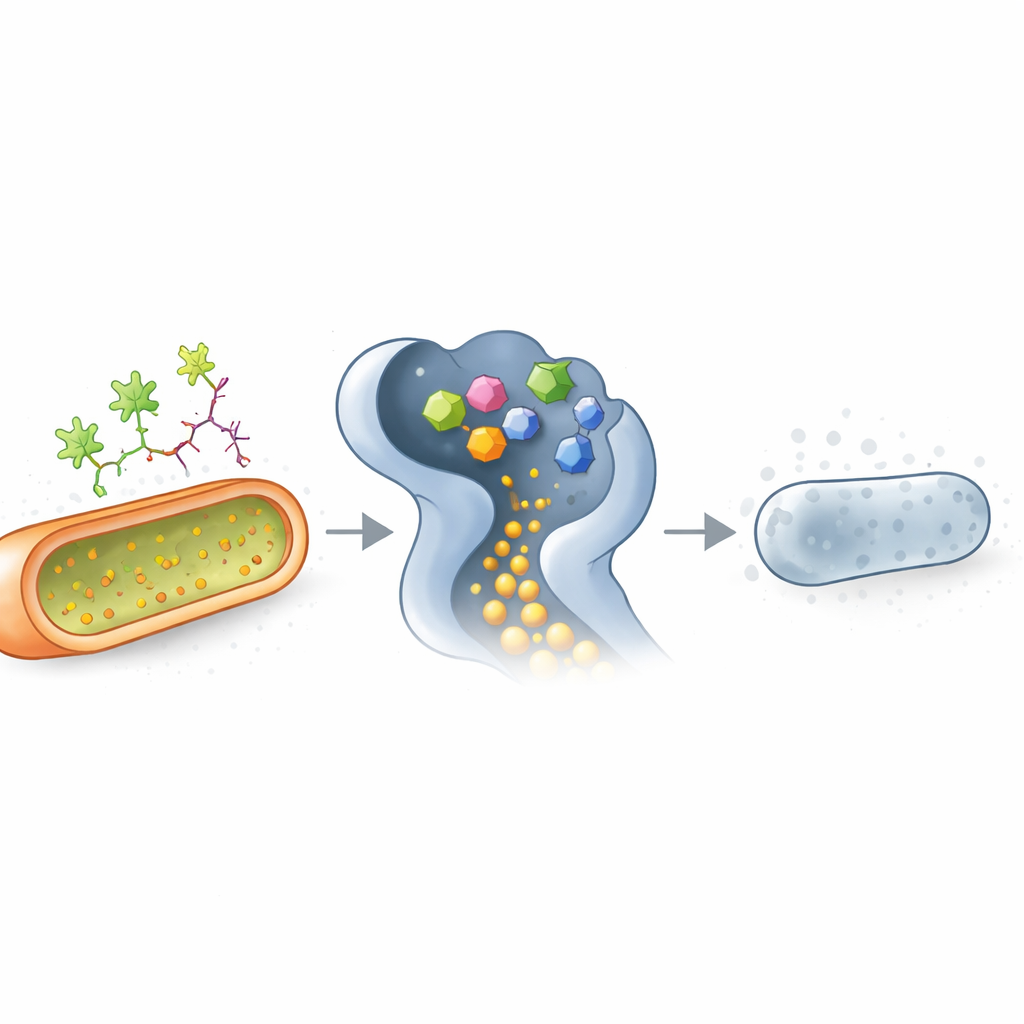
Finding a strong binder is only the first step; a useful medicine must also move safely and effectively through the human body. The authors used computer models to predict how each candidate would be absorbed, distributed, broken down, and excreted. None of the compounds showed red flags for genetic damage, heart rhythm interference, liver injury, or skin sensitization. Because they are relatively bulky molecules, their predicted brain entry was low—potentially a safety advantage. Simulated dosing in virtual populations, including pregnant people and those with kidney or liver problems, suggested that overall absorption remained similar, though exposure could rise or fall somewhat depending on organ function. To address their poor water solubility, the team also modeled packaging the compounds inside ring-shaped sugar carriers called cyclodextrins, which could help them dissolve better if they ever reach pill form.
Narrowing the Field of Future Candidates
One of the top kaempferol compounds showed a higher chance of also interacting with human receptors involved in blood pressure and nerve signaling, hinting at possible side effects. Because of this off-target potential, the authors favor the other two hits—Kaempferol 3-(6''-p-coumarylglucoside)-7-glucoside and Hirtusneanoside—as more selective starting points. Both appear able to grip the bacterial enzyme firmly while largely ignoring human proteins, and show acceptable predicted safety and pharmacokinetics despite bending traditional “drug-likeness” rules that were developed mainly for simple synthetic chemicals.
What This Means for Future Treatments
This work does not deliver an immediate cure for Oroya fever, but it lays an important foundation. By blending centuries of Tibetan herbal knowledge with state-of-the-art computational screening, the researchers highlight two promising natural molecules that could one day inspire new drugs targeting a bacterial vitamin-making enzyme that humans do not share. The next steps will require real-world laboratory experiments—testing whether these compounds truly stop Bartonella growth, confirming their safety in cells and animals, and improving their delivery. If successful, this approach could open a new route to treat a neglected yet deadly disease and showcase how traditional medicine can inform modern antimicrobial discovery.
Citation: Basharat, Z., Raza, A., Ogaly, H.A. et al. Drug target mining and in silico screening of Tibetan plant metabolites for potential alleviation of Oroya fever, a neglected tropical disease. Sci Rep 16, 12405 (2026). https://doi.org/10.1038/s41598-026-41159-1
Keywords: Oroya fever, Bartonella bacilliformis, Tibetan medicinal plants, natural product drug discovery, riboflavin synthase inhibitors