Clear Sky Science · en
Stable charged nanobubbles with distinct polarities in culture media differentially affect the viability of human iPSC-derived neurons
Tiny Bubbles With Big Consequences
At first glance, gas bubbles a thousand times smaller than a speck of dust might seem irrelevant to human health. Yet these “nanobubbles” are already used to clean wastewater and kill bacteria. This study asks a surprising question: what happens when such charged nanobubbles are placed into the delicate world of human brain cells grown in a dish? The answer could shape future approaches to regenerative medicine and safety guidelines for advanced materials.
What Makes These Bubbles Special
Nanobubbles are minuscule pockets of gas in water, less than one micrometer across. Unlike ordinary bubbles that quickly float and burst, nanobubbles can remain suspended for weeks, thanks to electrical charges on their surfaces that keep them from merging. When they eventually collapse, they can release highly reactive molecules that damage biological material. Until now, scientists struggled to keep nanobubbles both stable and strongly charged in the complex soups used to grow human cells, especially at the gentle, neutral pH that cells require.
Building Stable Bubbles Around Brain Cells
The researchers developed a patented “charge activation plate” that creates nanobubbles directly inside commercial culture media for human induced pluripotent stem cell–derived neural progenitor cells (NPCs) and their descendant neurons. They produced two types of media: one enriched in positively charged nanobubbles, the other in negatively charged ones, both with bubbles well under a micrometer in size and carrying strong electrical charges. Careful measurements showed that these charged bubbles remained stable for at least a month, far longer than previous attempts, while media without added nanobubbles contained only a few weakly charged particles.
Watching Cells Live and Die
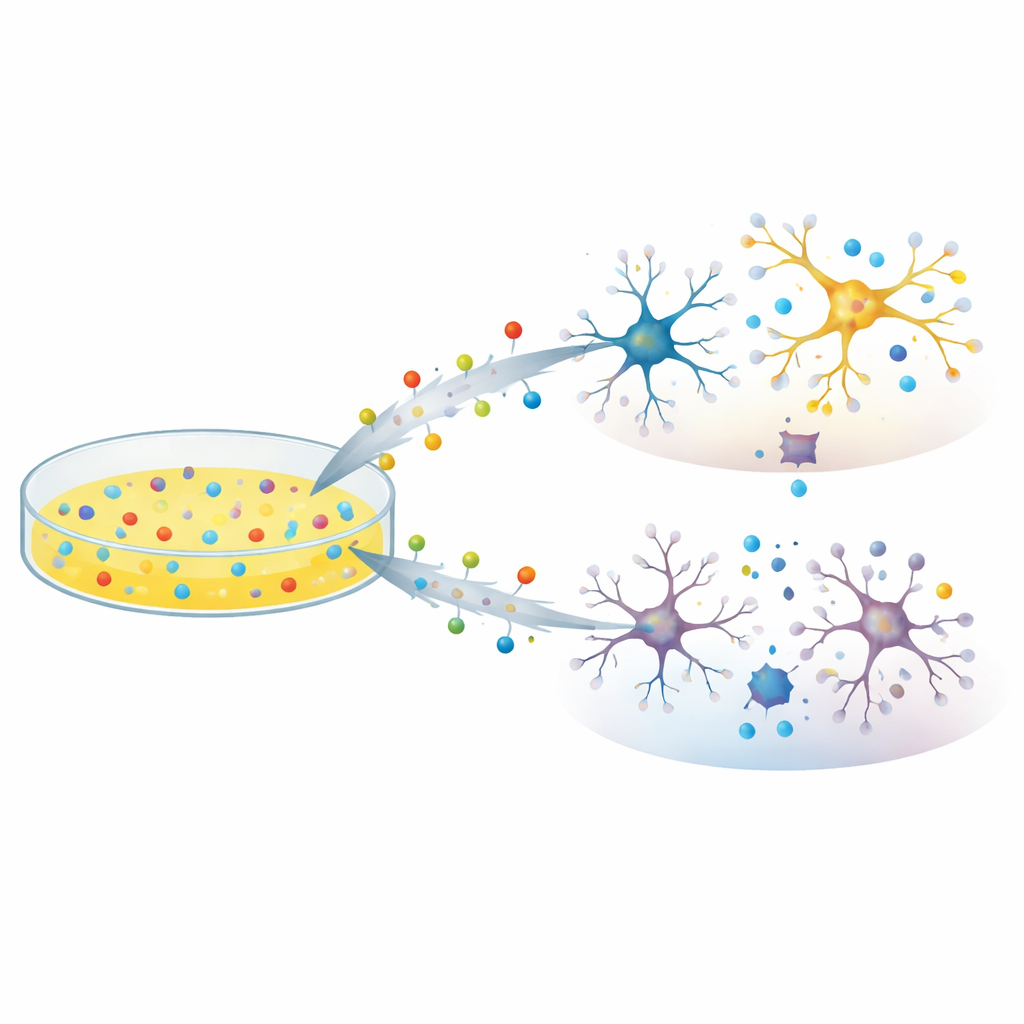
With stable nanobubble media in hand, the team grew human NPCs and then replaced their usual medium with either positively or negatively charged nanobubble media. They monitored the cells for three days using phase-contrast and fluorescence microscopy, staining cell nuclei and applying a live/dead assay. Custom computer vision software scanned overlapping regions of each image to count surviving cells objectively. In normal medium without nanobubbles, NPCs steadily multiplied. In nanobubble-containing media, the picture changed dramatically: cell numbers fell over time, and the drop was consistently steeper when the bubbles were positively charged.
Different Impacts on Young and Mature Brain Cells
The researchers next turned to more mature forebrain neurons derived from the same human stem cells. They confirmed the neurons’ identity with established protein markers and then exposed them to positively charged nanobubble media similar to that used for NPCs. Neurons did lose some viability, but far less than their progenitor counterparts, and even a medium with higher bubble charge did not cause a dramatic additional decline. This contrast suggests that fast-dividing NPCs, which actively take up material from their surroundings, may internalize more nanobubbles and thus suffer more damage than fully differentiated neurons, whose internalization processes are slower.
Why Charge Matters
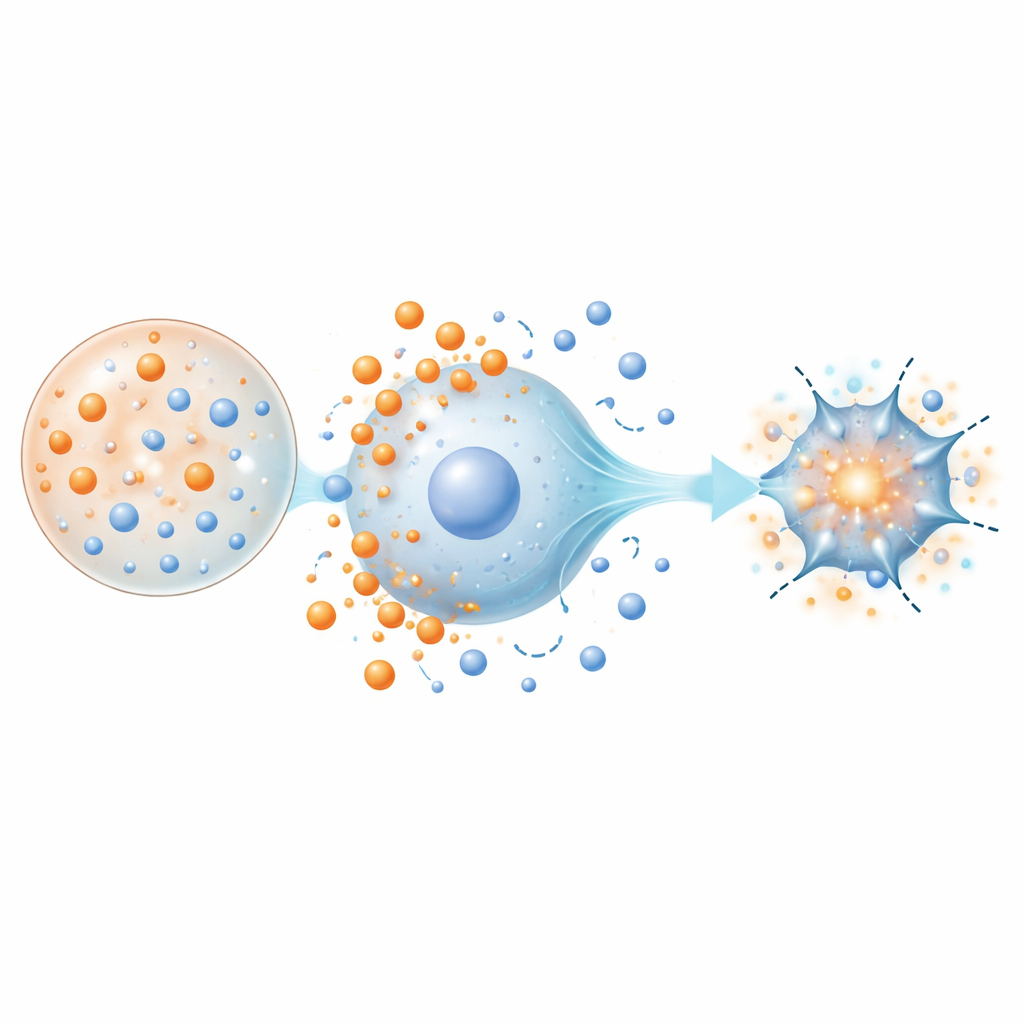
Why do positively charged bubbles appear more harmful than negatively charged ones? One plausible explanation lies in basic electrostatics: cell membranes carry an overall negative charge, so positively charged bubbles are more strongly attracted and may cling to the surface or be taken up more readily. They may also produce more damaging reactive molecules when they collapse, although that remains to be tested directly. Negatively charged bubbles, in contrast, are likely repelled to some degree and so interact less intensely with cells.
What This Means for Future Medicine
To a lay observer, the central message is that not all tiny bubbles—and not even all nanobubbles—are created equal. This work shows that charged nanobubbles can be made stable in the same liquids used to grow human brain cells and that they can selectively kill young, rapidly dividing neural cells, especially when the bubbles are positively charged. In the long run, this behavior might be harnessed to remove unwanted cells in stem-cell-based therapies or, conversely, must be carefully controlled to avoid harming the very cells meant for repair. The study provides a foundation for exploring both the risks and the potential medical uses of these invisible but powerful bubbles.
Citation: Liu, Y., Ohdaira, T., Kitakata, E. et al. Stable charged nanobubbles with distinct polarities in culture media differentially affect the viability of human iPSC-derived neurons. Sci Rep 16, 12310 (2026). https://doi.org/10.1038/s41598-026-41156-4
Keywords: nanobubbles, stem cell neurons, cell viability, surface charge, regenerative medicine