Clear Sky Science · en
N-Glycoengineering of insect cells for tri-antennary N-glycan biosynthesis
Why tiny sugar branches on proteins matter
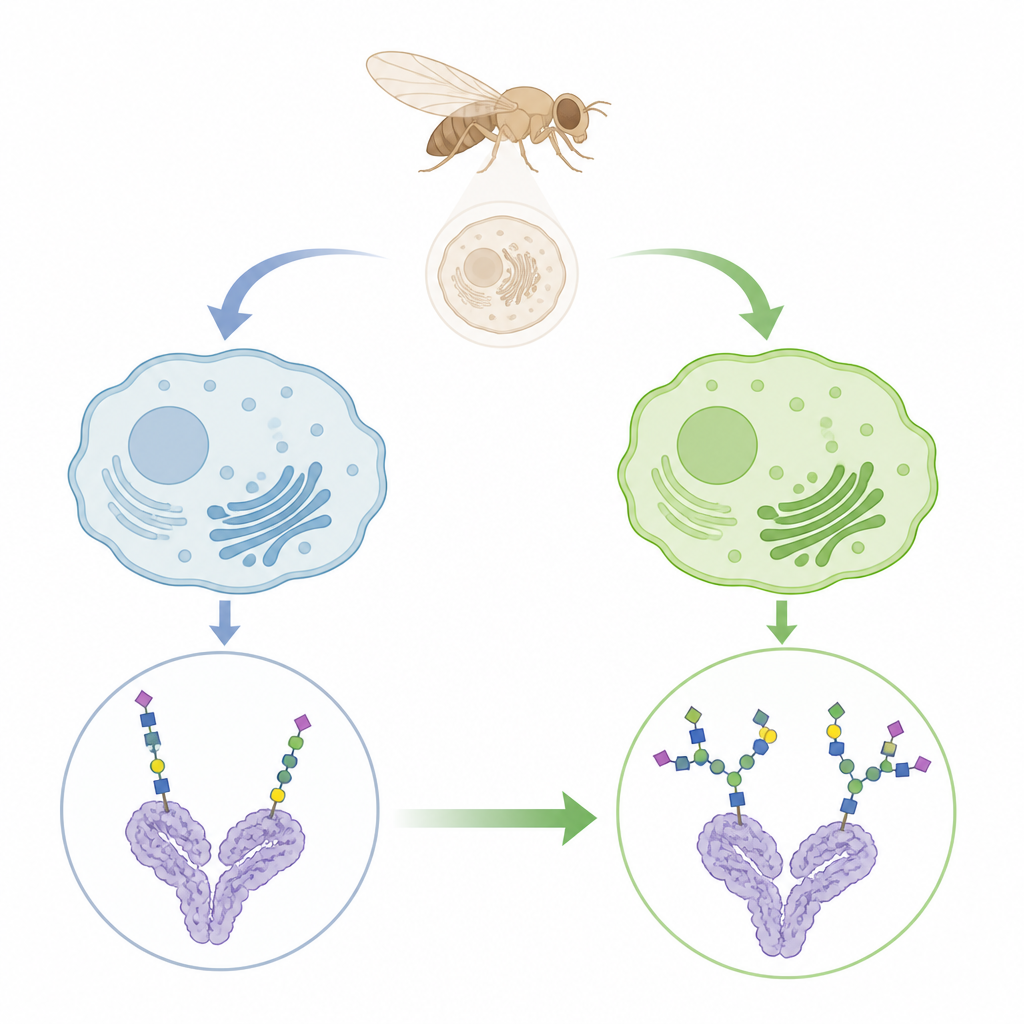
Many modern medicines are complex proteins that need the right “sugar coats” to work properly and stay in the body long enough to be effective. Inexpensive insect cells are already used as miniature factories to make such proteins, but the sugars they naturally add differ from those found in humans. This study explores how to rewire insect cells so they can build more human-like, highly branched sugar structures, which could make insect-made medicines safer and more useful.
Turning insect cell factories into better helpers
Drug makers like insect cells because they grow quickly, are relatively easy to handle, and can attach sugars to proteins in ways that resemble human cells. However, insect cells usually add simpler sugar chains that can shorten a medicine’s lifetime in the bloodstream or even trigger unwanted immune reactions. In humans, many therapeutic proteins carry more elaborate, three-branched sugar chains that help control how the body recognizes, clears, and responds to them. The researchers set out to teach insect cells to build these three-branched structures, aiming to close the gap between low-cost insect production and the fine “sugar tuning” normally seen in human cells.
Searching insects for the missing tool
Building a three-branched sugar chain on a protein requires a key enzyme that adds an extra sugar branch at a specific step. The team first looked in the silkworm genome and found a candidate enzyme that resembled the human version known to perform this job. They produced this silkworm enzyme in cultured insect cells and tested many reaction conditions, but it consistently failed to add the extra branch. This showed that, although silkworms carry a similar-looking gene, their version does not perform the needed chemical step under the tested conditions.
Borrowing a human enzyme and boosting its partners
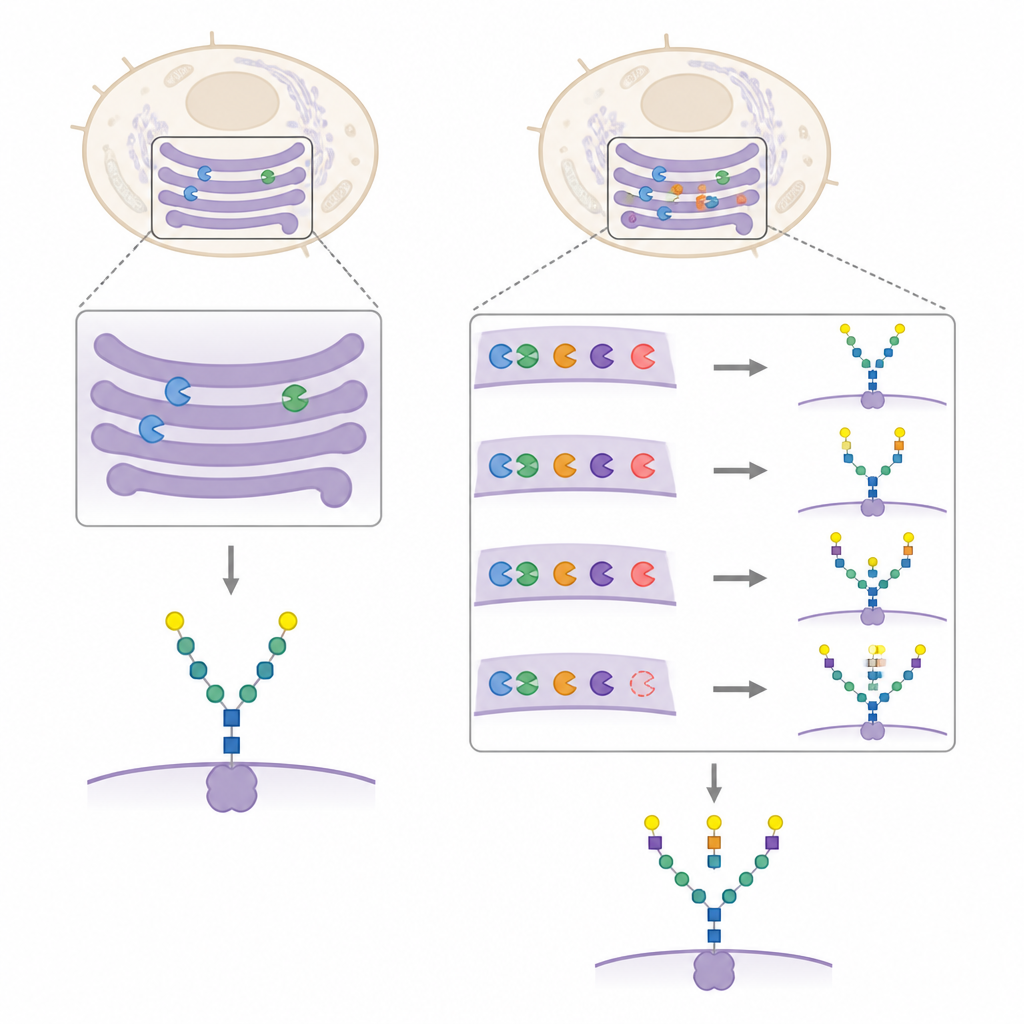
Because the silkworm enzyme did not work, the scientists introduced the human version of the branching enzyme into insect cells. This human enzyme was active and could make a small amount of the desired three-branched sugars, proving that the basic cell machinery could support the new step. Still, the yield was very low. The team reasoned that the cell needed more of the earlier “builder” enzymes that prepare the sugar chain for the final branch. They therefore overproduced two silkworm enzymes that add earlier branches, alone and in combination with the human enzyme. When all three enzymes were present together, the insect cells produced far more of the three-branched sugar chains, showing that a coordinated boost of multiple steps is necessary.
Fighting against unwanted sugar trimming
While some enzymes were building extra branches, others inside the insect cells were quietly cutting them off. The researchers found that natural “trimming” enzymes in these cells clip off certain sugar units, converting complex chains back into simpler forms. Experiments with purified sugar chains and cell extracts showed that these trimming enzymes readily attack the intermediate two-branched structures but are less effective against the fully formed three-branched chains. This means that to get high levels of the desired sugars, it is not enough to add new building enzymes; it is also important to reduce or remove the enzymes that undo their work.
What this means for future medicines
Overall, the study shows that insect cells can be redesigned to build more human-like, three-branched sugar coats on proteins, but only when several conditions are met. The right combination of added enzymes must be supplied to build up the branching step by step, and the cell’s own trimming enzymes may need to be suppressed or knocked out. These insights offer a roadmap for turning insect cells and even live silkworms into improved production platforms for therapeutic proteins that more closely match the sugar patterns of human medicines.
Citation: Kajiura, H., Nishiguchi, N., Sawada-Choi, R.L.S. et al. N-Glycoengineering of insect cells for tri-antennary N-glycan biosynthesis. Sci Rep 16, 15012 (2026). https://doi.org/10.1038/s41598-026-41152-8
Keywords: insect cell expression, protein glycosylation, N-glycan engineering, biopharmaceutical production, silkworm biotechnology