Clear Sky Science · en
Evaluating morpho-physio-biochemical and yield performance of six commercial potato cultivars under a semi-arid agroecosystem
Why hardy potatoes matter for dry places
As climate change brings hotter days, harsher sunlight, and poorer soils to many farming regions, one basic question becomes urgent: which potato varieties can still produce a good harvest under these tough conditions? This study from Pakistan’s semi-arid plains put six widely grown commercial potato types to the test, asking which ones not only survive but actually thrive while using water and fertilizer more efficiently.
Testing potatoes in a tough neighborhood
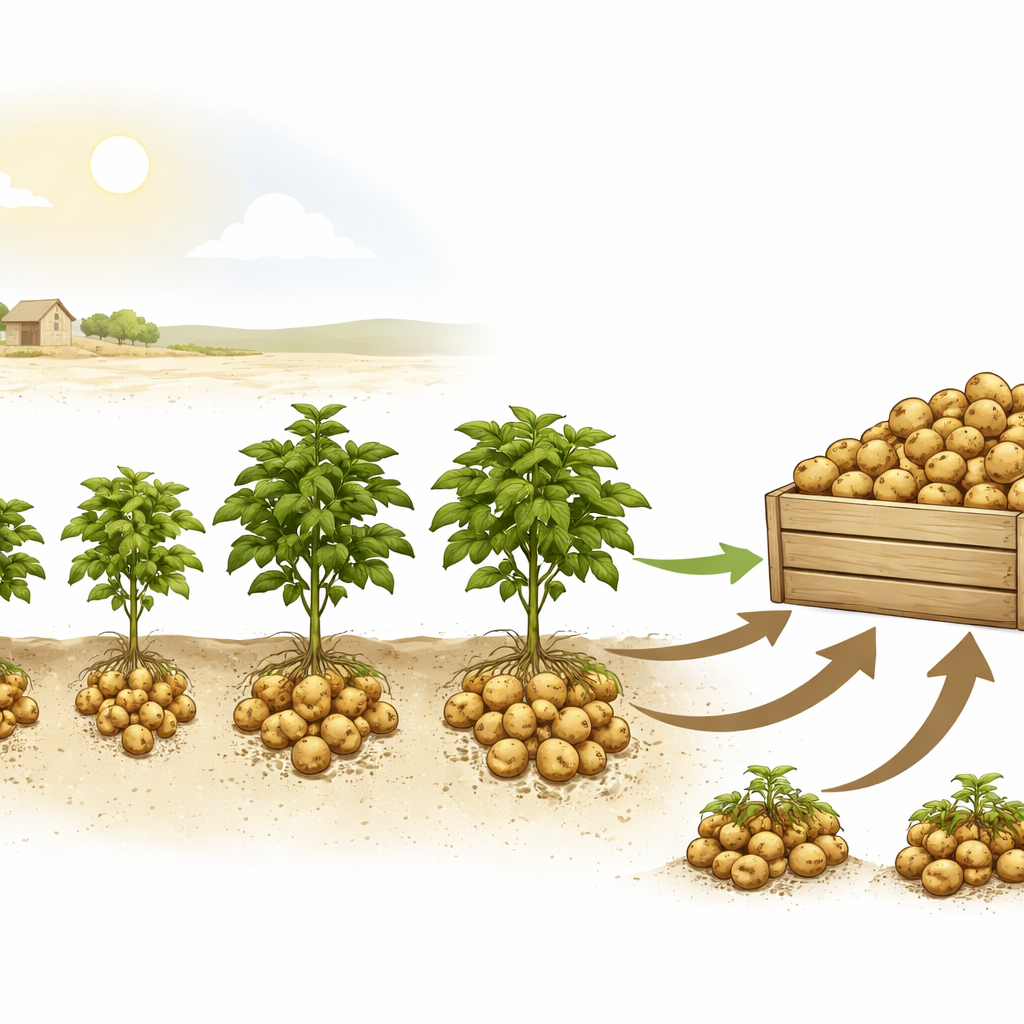
The researchers ran two full growing seasons of field trials in Bahawalpur, a hot, dry region with sandy, low-fertility soil and moderately salty irrigation water. They planted six commercial cultivars—Sante, Musica, Sadaf, Lady Rosetta, Berna, and Kuroda—in replicated plots, managing them much like local farmers do. During the cool-dry season, temperatures still often climbed above the comfort zone for potatoes, rainfall remained scarce, and sunshine was intense for 7–9 hours a day. This real-world stress test mimicked the challenges farmers face when they try to grow a temperate crop in a semi-arid environment.
Looking beyond just tonnage
Rather than measuring yield alone, the team built a broad picture of each cultivar’s performance. They tracked how quickly plants emerged, how tall they grew, how many stems and branches they produced, and how much leaf area they developed—traits that determine how much sunlight the crop can capture. After harvest, they counted the number of tubers per plant, weighed them, measured their size and density, and calculated marketable yield. To understand what was happening inside the leaves, they used a portable optical device to assess how well each plant’s light-harvesting machinery converted sunshine into useful energy versus wasting it as heat, and how much green pigment the leaves contained.
Following the trail of nutrients
The study also zoomed in on how efficiently plants took up nitrogen and phosphorus, two fertilizers that are vital for growth but costly for farmers and the environment. The scientists dried and ground leaves and tubers from each plot, then analyzed how much of these nutrients the plants had absorbed. By comparing total uptake with the amount of fertilizer applied, they calculated “uptake efficiency”—how many kilograms of nutrient ended up in the crop for every kilogram supplied. This step was key to identifying varieties that deliver high yields without demanding excessive inputs, a cornerstone of sustainable farming in resource-limited regions.
Clear winners and clear strugglers
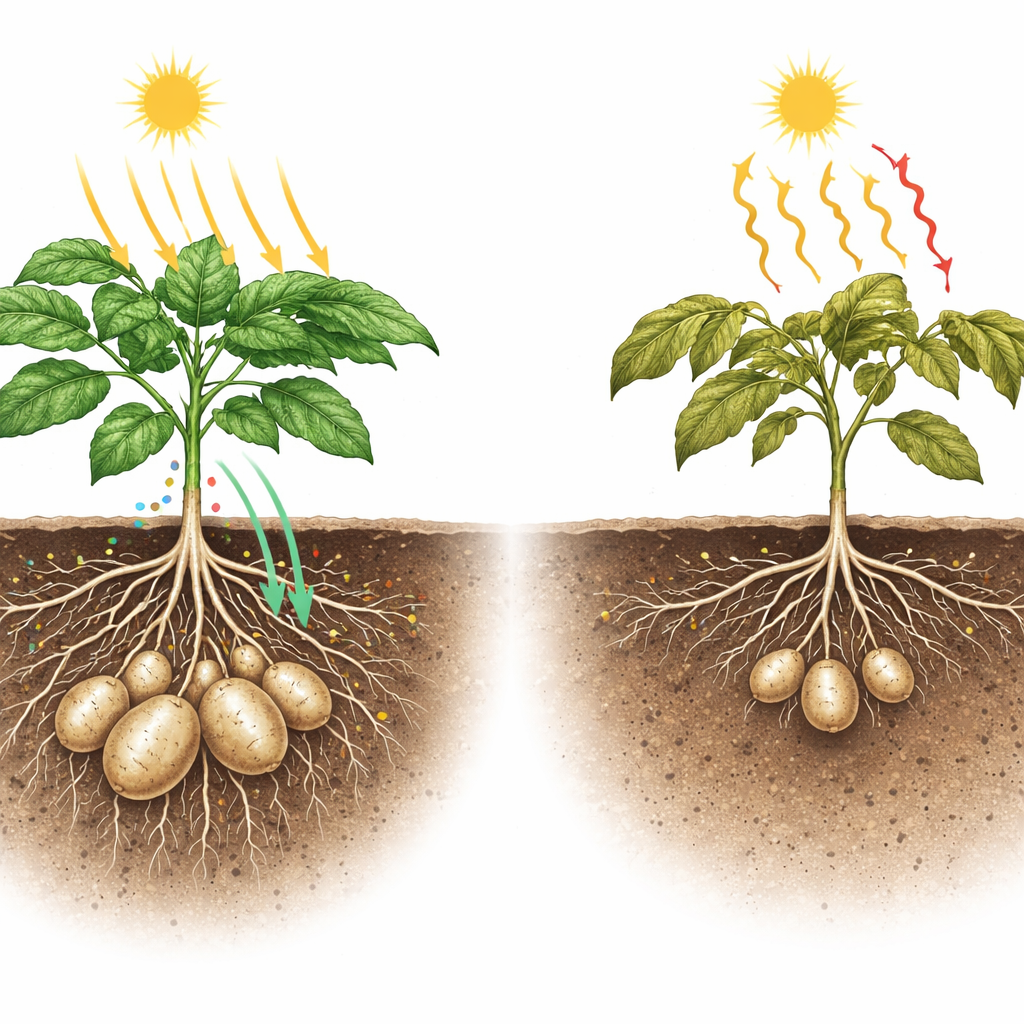
Across nearly every measure, one cultivar, Sadaf, stood out. It produced taller plants with more stems and branches, larger leaf canopies, and the fastest crop growth. Its tuber yields were 25–80% higher than those of the other varieties, and it delivered a much larger share of marketable potatoes. Inside its leaves, Sadaf showed a more efficient light engine: cooler leaf temperatures, thicker leaves, stronger electron flow through the photosynthetic system, and higher “quantum yield,” meaning more of the captured sunlight was turned into usable chemical energy instead of being lost. Sadaf also absorbed markedly more nitrogen and phosphorus and used them more efficiently. Musica emerged as a solid runner-up, combining stable yields with good light-use and nutrient-use traits. In contrast, Sante and Berna carried clear signs of stress—hotter, thinner leaves, greater energy loss as heat, lower nutrient uptake efficiency—and ended up with weaker growth and smaller harvests.
What this means for food security
By comparing dozens of growth, light-use, and nutrient-use traits together, the researchers could cluster the six cultivars into resilient and vulnerable groups. Sadaf and Musica formed a “high-performance” cluster with strong photosynthetic machinery and efficient use of fertilizers, while Sante and Berna grouped with stress-linked features and lower productivity. For farmers and breeders, the message is straightforward: in semi-arid regions with poor, salty soils, choosing cultivars like Sadaf and Musica can deliver more potatoes from the same land, water, and fertilizer. In practical terms, that means better food security and lower production costs, without pushing the environment as hard, in some of the world’s most challenging farming landscapes.
Citation: Abbas, S.M., Ijaz, R., Nafees, M. et al. Evaluating morpho-physio-biochemical and yield performance of six commercial potato cultivars under a semi-arid agroecosystem. Sci Rep 16, 12122 (2026). https://doi.org/10.1038/s41598-026-41139-5
Keywords: potato cultivars, semi-arid agriculture, stress-tolerant crops, nutrient use efficiency, photosynthetic performance