Clear Sky Science · en
Optimized scheduling of integrated energy systems: a multi-dimensional electricity, hydrogen, ammonia, heat synergy approach using the LSDBO-WOA algorithm
Why storing clean energy in new ways matters
Wind turbines and solar panels are spreading fast, but the electricity they make does not always arrive when people need it. This mismatch wastes clean power and forces grids to lean on fossil fuels. This study explores a new way to smooth out those ups and downs by using liquid ammonia as a kind of multi‑purpose energy glue, tying together electricity, hydrogen, heat, and fuel so that more renewable energy can be captured, stored, and used when it is most valuable.
A park-sized clean energy ecosystem
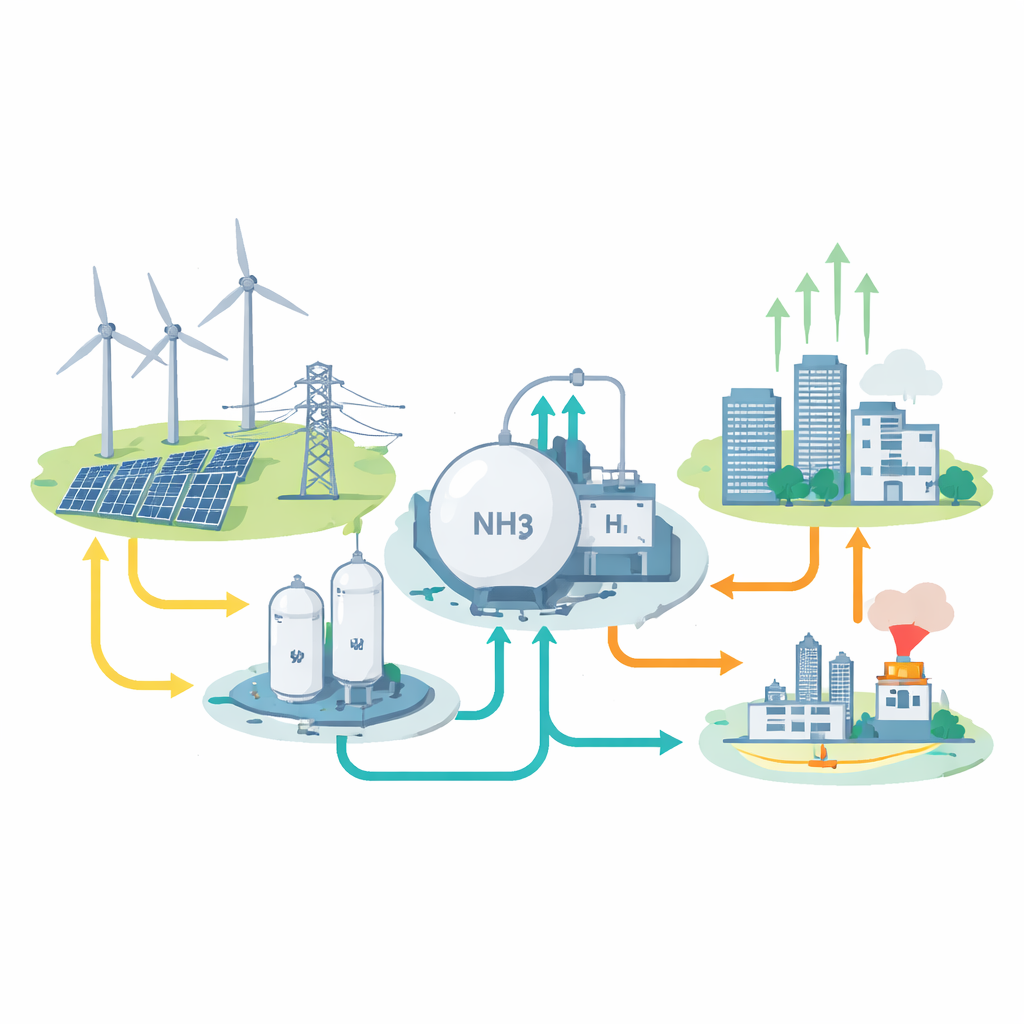
The researchers design a virtual energy park that combines wind, solar, the main power grid, and natural gas with a network of advanced devices. At the heart of the system sits a tank of liquid ammonia, treated as a long‑term energy store. Surplus renewable electricity first makes hydrogen from water, then joins nitrogen from the air to form ammonia. Later, that ammonia can be turned back into hydrogen, burned together with natural gas in a gas turbine, or fed to special fuel cells. Heat that would normally be wasted—from turbines, fuel cells, and chemical reactions—is captured and reused for district heating or for extra power generation, so that very little input energy is thrown away.
Planning the right mix of equipment
Designing such an intricate setup is like planning a small city: the number and size of each component must be chosen so the system runs cheaply, cleanly, and reliably. The authors build a two‑layer planning and control model. The upper layer decides capacities and long‑term design, seeking four goals at once: lower yearly cost, lower carbon emissions, higher overall efficiency, and less wasted renewable energy. The lower layer then simulates day‑to‑day operation under uncertain wind, sun, and demand, adjusting how hard each device works and estimating actual running costs. Information flows back and forth between the layers until a good balance among these goals emerges.
A smarter search for better designs
Because the design space is huge and tangled, the team uses a custom search algorithm rather than simple trial and error. They blend two nature‑inspired methods—one modeled on dung beetle foraging and the other on whale hunting—into a hybrid known as LSDBO‑WOA. This hybrid shuffles through many possible system designs, zooming out to explore widely and zooming in to refine promising candidates. When tested against popular multi‑objective optimizers, LSDBO‑WOA finds solution sets that lie closer to the ideal balance of cost, emissions, efficiency, and renewable use, at the price of somewhat longer run times on a standard laptop.
What happens when more ammonia is blended in
The study then asks how strongly ammonia should be used in the gas turbine fuel mix. Scenarios range from no ammonia at all to a fairly high blend. As the share of ammonia rises, the system’s ability to soak up renewable electricity improves, and overall energy efficiency climbs from about 84% to nearly 98%. Operating costs generally fall, but not in a straight line: making and handling more ammonia adds its own expense. Carbon emissions drop most—by around 7.3% compared with the baseline—when ammonia provides about 15% of the gas turbine fuel. Beyond that point, extra blending yields smaller benefits and can even push emissions slightly back up once all side effects are counted.
Managing uncertainty in a messy real world
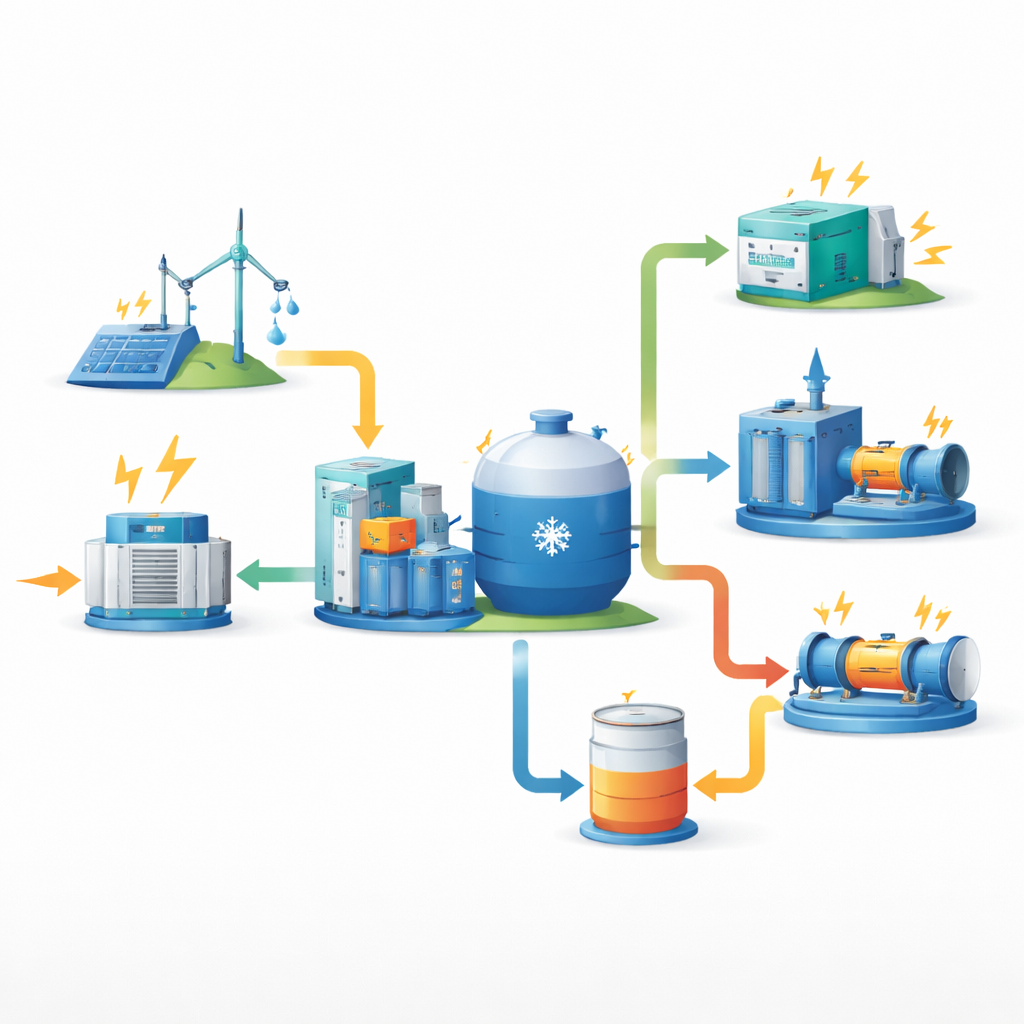
Real‑world weather and energy use are never perfectly predictable, so the authors compare three ways to handle uncertainty in their scheduling layer. A probability‑based method, which assumes forecast errors follow known patterns, keeps both cost and emissions relatively low but accepts more occasional waste of renewable energy. More defensive methods that guard against worst‑case swings do cut waste further, yet they demand higher spending and lead to more emissions overall. For a well‑monitored campus‑scale system with decent historical data, the study suggests that a moderately cautious probability‑based approach offers the best compromise between risk, cost, and climate impact.
What this means for future clean energy parks
Put in everyday terms, the work shows that turning excess wind and solar power into liquid ammonia—and then flexibly turning that ammonia back into power, hydrogen, or heat—can make a local energy system more self‑reliant, efficient, and climate‑friendly. With the right equipment mix and a carefully tuned scheduling strategy, the modeled system uses almost all of the energy it brings in while trimming emissions and costs. Although practical issues like ammonia safety and future equipment prices still need careful attention, the study points toward a promising recipe for clean energy hubs that can support deep cuts in carbon emissions without sacrificing reliability.
Citation: Tu, N., Yang, J., Yan, X. et al. Optimized scheduling of integrated energy systems: a multi-dimensional electricity, hydrogen, ammonia, heat synergy approach using the LSDBO-WOA algorithm. Sci Rep 16, 13130 (2026). https://doi.org/10.1038/s41598-026-41136-8
Keywords: integrated energy systems, ammonia energy storage, renewable energy scheduling, low carbon power, multi energy optimization