Clear Sky Science · en
Association of plasma C1q/TNF-related protein 9 levels with disease severity and prognosis in patients with coronary atherosclerotic heart disease
Why this blood protein matters for your heart
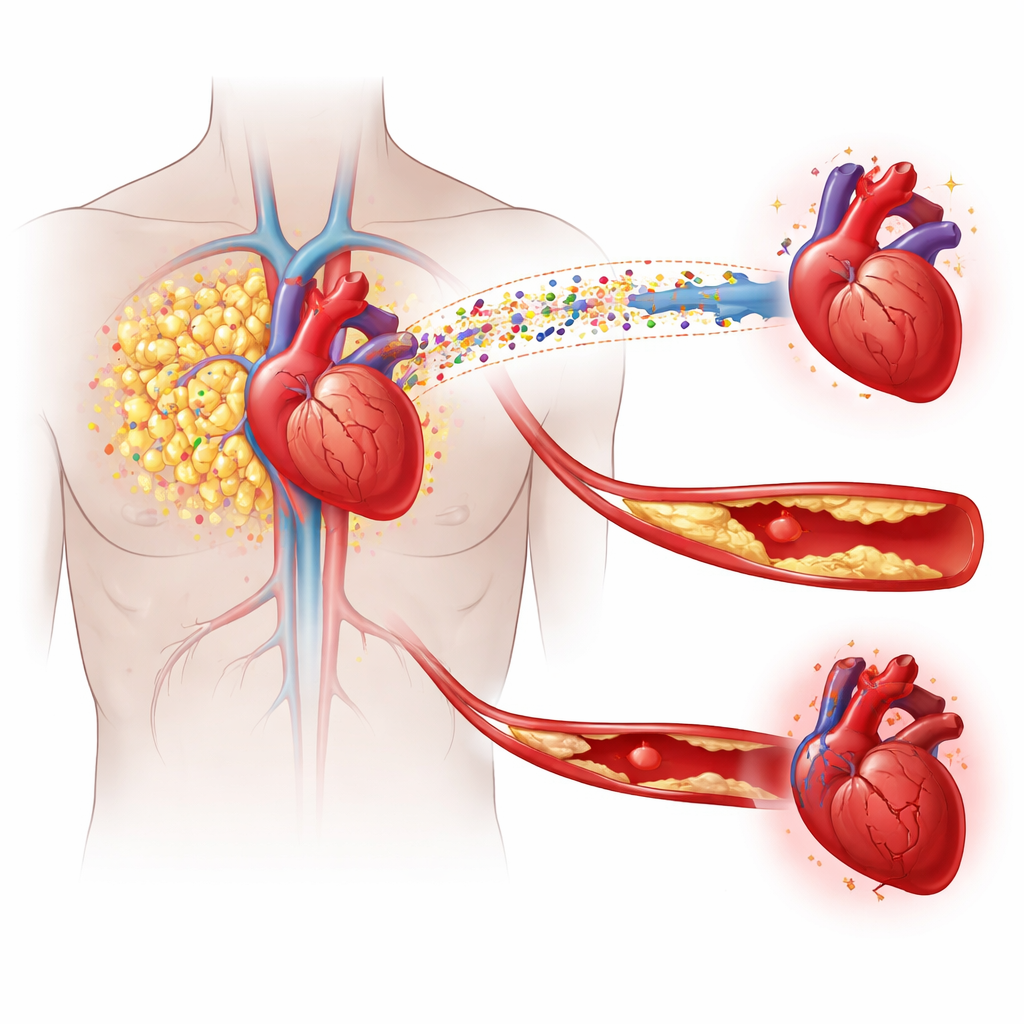
Coronary artery disease is the worldwide front‑runner when it comes to causing heart attacks and early death. Doctors already track cholesterol, blood pressure and blood sugar, but these do not fully explain why some people develop more severe artery blockages or fare worse after treatment. This study focuses on a lesser‑known blood protein called CTRP9, made mostly by fat around the heart, to see whether its level in the bloodstream can signal how advanced a person’s coronary artery disease is and how likely they are to suffer serious heart problems in the near future.
A closer look at heart arteries
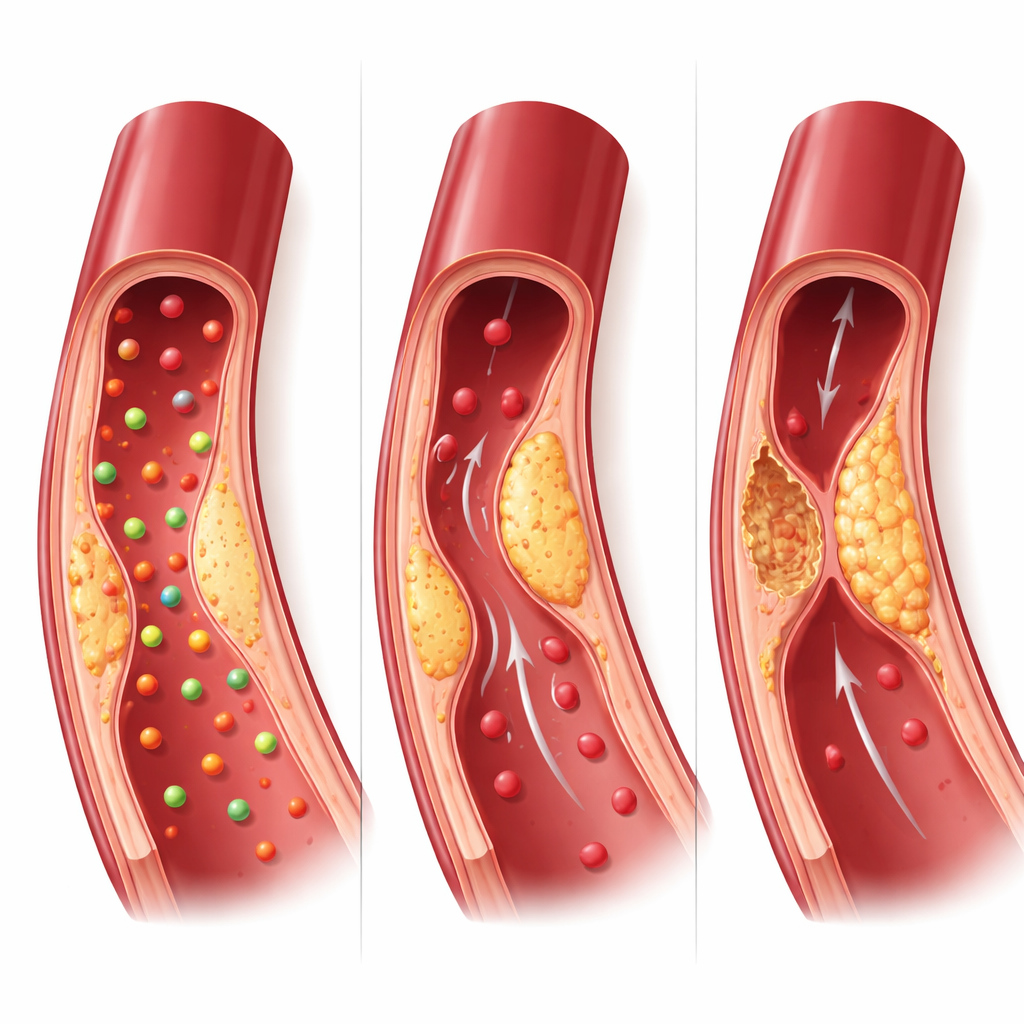
In coronary artery disease, fatty plaques build up inside the vessels that feed the heart, gradually narrowing them and sometimes triggering clots that cause heart attacks or strokes. The researchers enrolled 302 people who were undergoing imaging tests of their heart arteries because of suspected stable coronary disease. Using a standard scoring system called the SYNTAX score, they rated how simple or complex each person’s artery blockages were, then grouped patients into those with mild disease and those with moderate‑to‑severe disease. Everyone also provided a fasting blood sample, which was used to measure CTRP9 along with traditional risk markers such as cholesterol, blood sugar and kidney function.
A protective signal in the bloodstream
The team found a striking pattern: people with more advanced artery blockages had much lower levels of CTRP9 in their blood than those with milder disease. When they compared CTRP9 to other measurements, higher levels of the protein went hand‑in‑hand with healthier profiles—more "good" HDL cholesterol, but less "bad" LDL cholesterol, triglycerides, uric acid and fasting blood sugar. Most notably, as CTRP9 levels rose, the SYNTAX score fell, meaning the arteries tended to be less clogged and less structurally complex. Statistical models that accounted for age, diabetes and other factors still identified CTRP9 as an independent protective factor: lower levels were strongly linked to more severe artery damage.
Following patients over time
To test whether CTRP9 also foretells future trouble, the researchers followed participants for up to 21 months, tracking major adverse cardiovascular events—a combined measure that included cardiac death, heart attack, repeat procedures to open blocked arteries, heart failure admissions and strokes. Nearly one in three patients experienced such an event during this period. When the investigators divided the group at a CTRP9 level of about 267 nanograms per milliliter, those below this threshold suffered many more bad outcomes than those above it. Even after adjusting for diabetes, blood fats, clotting markers and heart pumping function, each small drop in CTRP9 was linked to a measurable rise in risk, and CTRP9 remained one of the strongest predictors of who would run into serious heart trouble.
How CTRP9 may help protect arteries
Earlier laboratory work suggests why this protein might matter so much. CTRP9 appears to calm inflammation inside blood vessels, improve the way the inner vessel lining works and boost the body’s defenses against harmful oxygen‑related molecules. It may also make fatty plaques in the arteries more stable and less likely to rupture, enhance the growth of helpful tiny blood vessels around blocked areas, and improve how the body handles fats and sugars. In animal studies, adding CTRP9 before or after a heart attack can shrink the area of damage and help the heart pump better. The new clinical data in this study fit neatly with these laboratory findings: people with less CTRP9 circulating in their blood tended to have more fragile arteries and worse outcomes.
What this could mean for patients
For patients and clinicians, the study points to CTRP9 as a promising new blood marker that might help flag who is at highest risk among people with coronary artery disease. A simple blood test could potentially complement standard measures like cholesterol and imaging scores, helping doctors decide who needs closer monitoring or more intensive treatment. The work does not prove that raising CTRP9 will by itself prevent heart attacks, and it was done at a single center with a modest number of patients, so larger and longer studies are needed. Still, the findings suggest that this quiet protein from heart‑side fat tissue carries an important message about artery health and could one day guide more personalized care for people living with coronary artery disease.
Citation: Shang, S., Jia, L. & Lin, X. Association of plasma C1q/TNF-related protein 9 levels with disease severity and prognosis in patients with coronary atherosclerotic heart disease. Sci Rep 16, 10463 (2026). https://doi.org/10.1038/s41598-026-41135-9
Keywords: coronary artery disease, biomarkers, CTRP9, heart attack risk, atherosclerosis