Clear Sky Science · en
The small-cage induced sedentariness in male young rats: evidence from energy expenditure and glucose uptake
Why Shrinking a Rat’s Living Space Matters for Human Health
Sitting for long stretches of the day has been linked to problems such as diabetes, weak muscles, and poor overall health. But to truly understand how prolonged sitting harms the body, scientists need reliable animal models that mimic human sedentariness, not just immobility from injury or surgery. This study asked a simple but powerful question: if you house young male rats in very small cages so they can barely move, does their metabolism change in ways that mirror what happens to sedentary people?
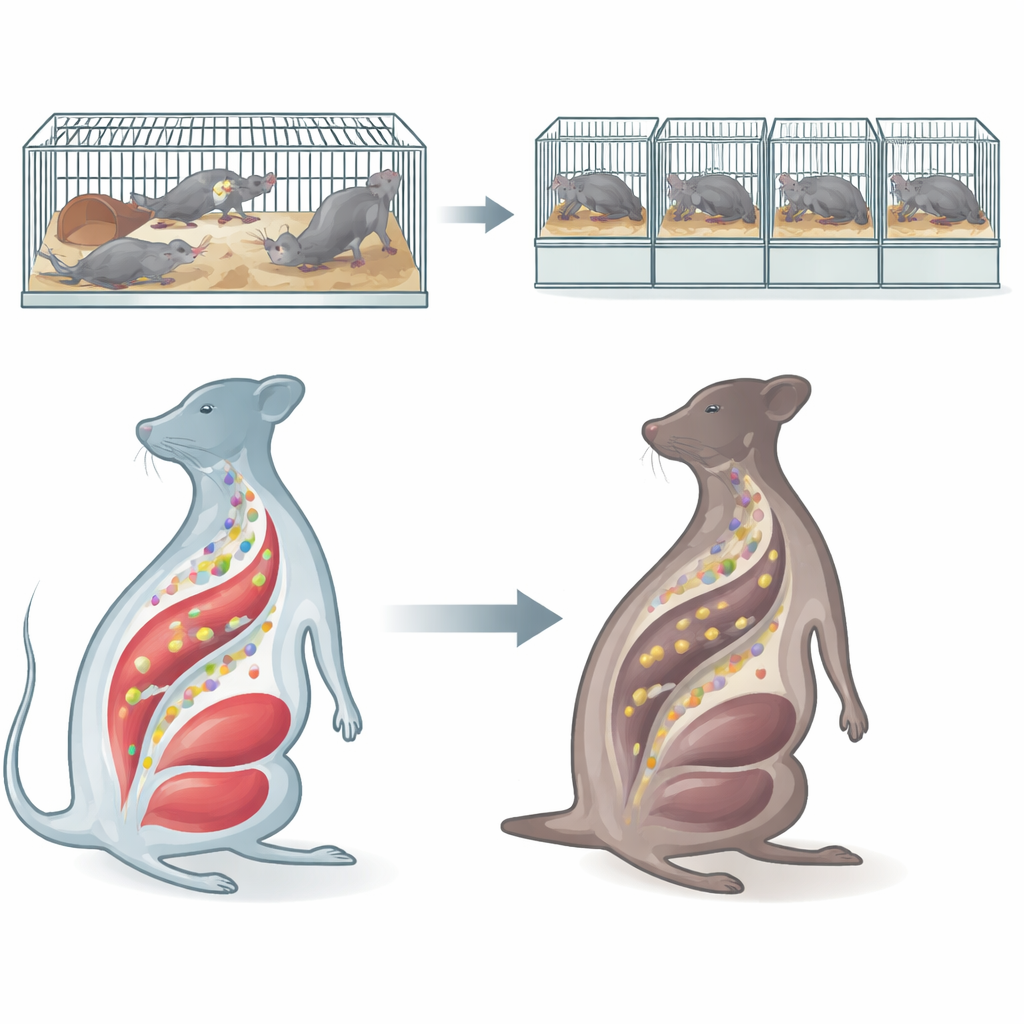
From Room to Move to Life in a Shoebox
The researchers worked with young male Sprague–Dawley rats and split them into two groups. One group lived in standard cages, with enough space to move around and interact in small groups. The other group lived alone in narrow Plexiglas cages with a floor area less than one-third the size of the normal cages, designed to sharply restrict movement while still allowing easy access to food and water. Both groups experienced the same light–dark cycle, temperature, and diet, so the main difference was how much room they had to move.
Measuring How Little They Really Moved
To confirm that the small cages truly created a sedentary lifestyle, the team monitored each rat’s energy use over a full day using a special metabolic system that tracks oxygen use and carbon dioxide production. From this, they calculated a value called METs, which compares activity energy use to resting level; in humans, sedentary behavior is defined as 1.5 METs or less while sitting or lying down. After eight weeks, rats in the small cages stayed below this 1.5 MET cutoff across 24 hours, meaning they met the formal definition of sedentary. By contrast, rats in normal cages showed fluctuating energy use and exceeded the 1.5 MET level more than half the time, reflecting periods of active movement.
What Sedentary Living Did to Sugar and Muscle
Once sedentariness was confirmed, the researchers examined how the rats handled blood sugar and how their muscles fared. Surprisingly, despite moving less, rats in small cages weighed less than controls after just two weeks. Yet their blood chemistry told a more worrying story: fasting blood sugar levels stayed higher at both four and eight weeks, and by eight weeks their long-term sugar marker (glycated hemoglobin) and insulin levels were also elevated. Tests that challenged the animals with a dose of sugar by mouth showed that sedentary rats cleared sugar from their blood more slowly, with a larger overall “sugar load” over two hours than controls. However, when the rats were given insulin directly, the pattern over time did not differ much between groups, suggesting that early problems might lie in how the body handles incoming sugar rather than in a dramatic change in insulin sensitivity alone.
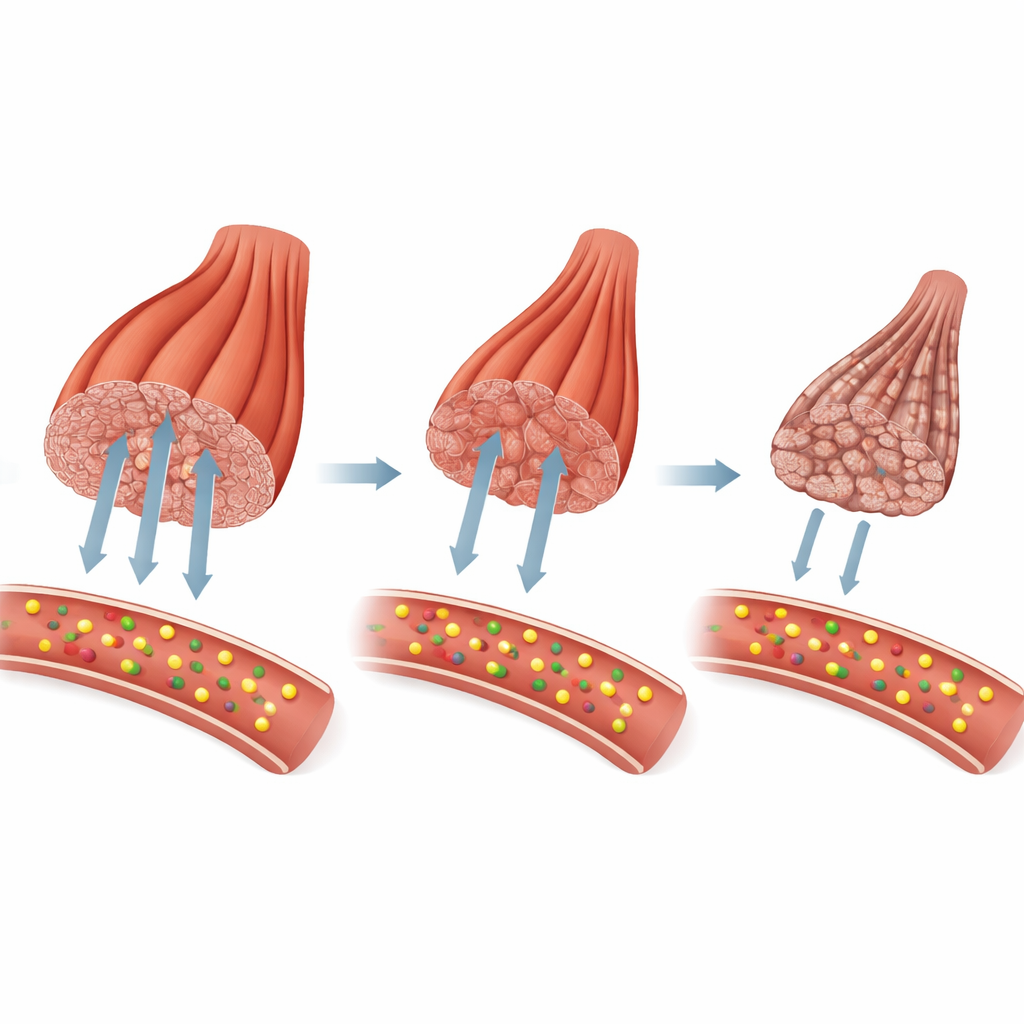
Muscles Losing Structure and Fuel
The team also inspected the rats’ leg muscles, which are heavily involved in movement and sugar use. When muscle mass was adjusted for body weight, sedentary rats had smaller gastrocnemius and soleus muscles than controls after eight weeks. The main calf muscle also stored less glycogen, the form in which muscles keep sugar on hand. Under the microscope, muscle fibers in sedentary rats appeared more loosely packed and disorganized compared to the tight, orderly pattern seen in the control animals. Together, these changes suggest that reduced movement gradually eats away at both muscle structure and its ability to act as a healthy sink for blood sugar.
What This Means for Understanding Too Much Sitting
The study shows that simply shrinking an animal’s living space can reliably create a truly sedentary state—one that meets the strict energy-use threshold used in human studies. Over just eight weeks, this low-movement lifestyle led to higher blood sugar, altered long-term sugar control, and weaker, less orderly leg muscles in young rats. For a lay reader, the takeaway is clear: when the body is given less room and fewer reasons to move, its ability to handle sugar and maintain strong muscles quickly declines. This small-cage rat model now offers researchers a powerful tool to probe, in detail, how everyday sedentariness—like hours spent sitting at a desk or on a couch—can quietly undermine metabolic health over time.
Citation: Liang, L.M., Zhang, X.X., Chi, H. et al. The small-cage induced sedentariness in male young rats: evidence from energy expenditure and glucose uptake. Sci Rep 16, 12488 (2026). https://doi.org/10.1038/s41598-026-41134-w
Keywords: sedentary behavior, energy expenditure, glucose metabolism, muscle health, rat model