Clear Sky Science · en
Novel green UPLC method with life cycle assessment for determination of favipiravir and molnupiravir drugs and environmental water samples
Why the Pills We Take End Up in Our Water
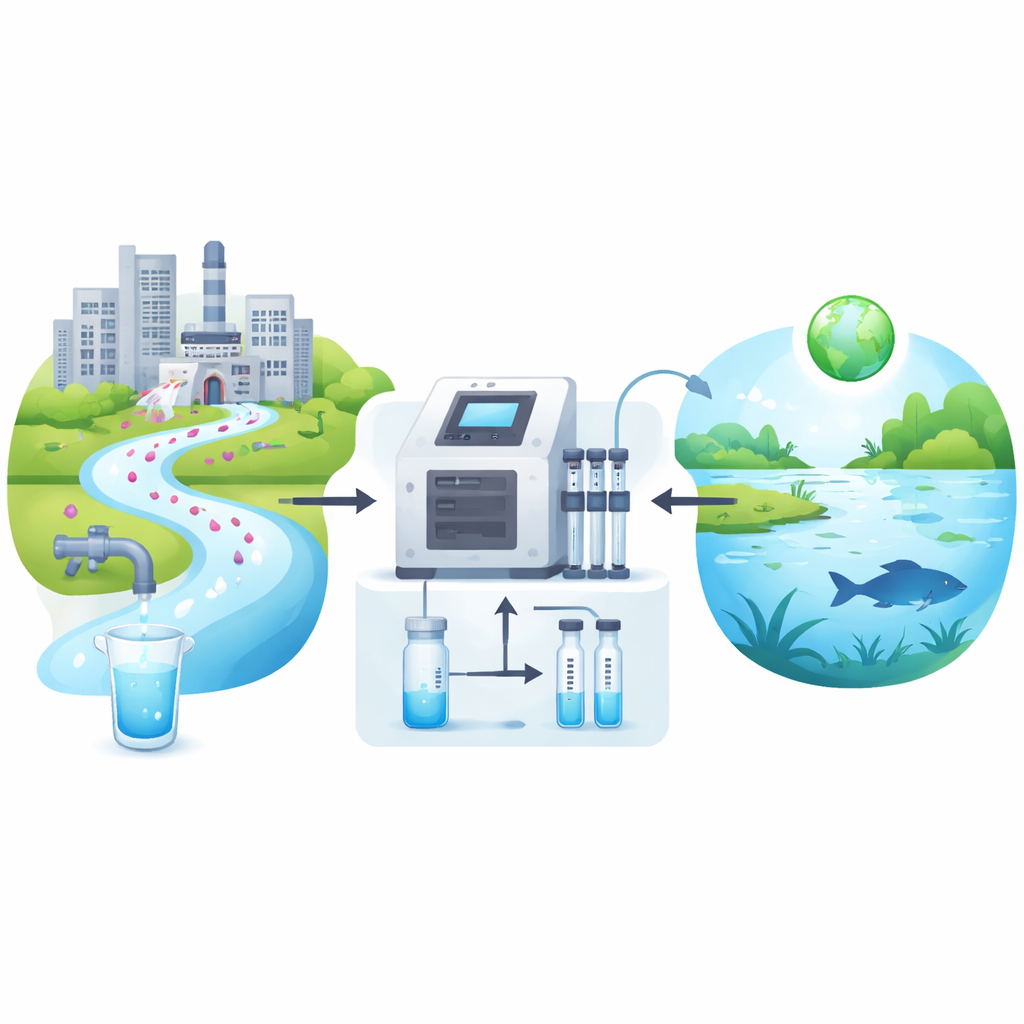
Antiviral drugs such as favipiravir and molnupiravir helped doctors fight COVID-19, but after doing their job in the body, these medicines do not simply vanish. They can pass through people and factories into rivers, tap water, and wastewater. This study explains how scientists created a fast, sensitive, and more environmentally friendly way to track these two drugs in medicines and in real water samples, while also carefully counting the method’s own environmental footprint.
Medicines That Linger Beyond Treatment
Favipiravir and molnupiravir work by disrupting how viruses copy their genetic material, and they are often given together to treat COVID-19 and other viral illnesses. Because they are not fully broken down in the body, traces of these drugs can move from toilets and factory drains into the wider water system. Even at low levels, such residues may harm aquatic life, re-enter drinking water, or encourage viruses to evolve resistance. Yet few analytical techniques can measure both drugs at once in complex water samples, and even fewer are designed with the environment in mind.
A Faster Test with a Lighter Footprint
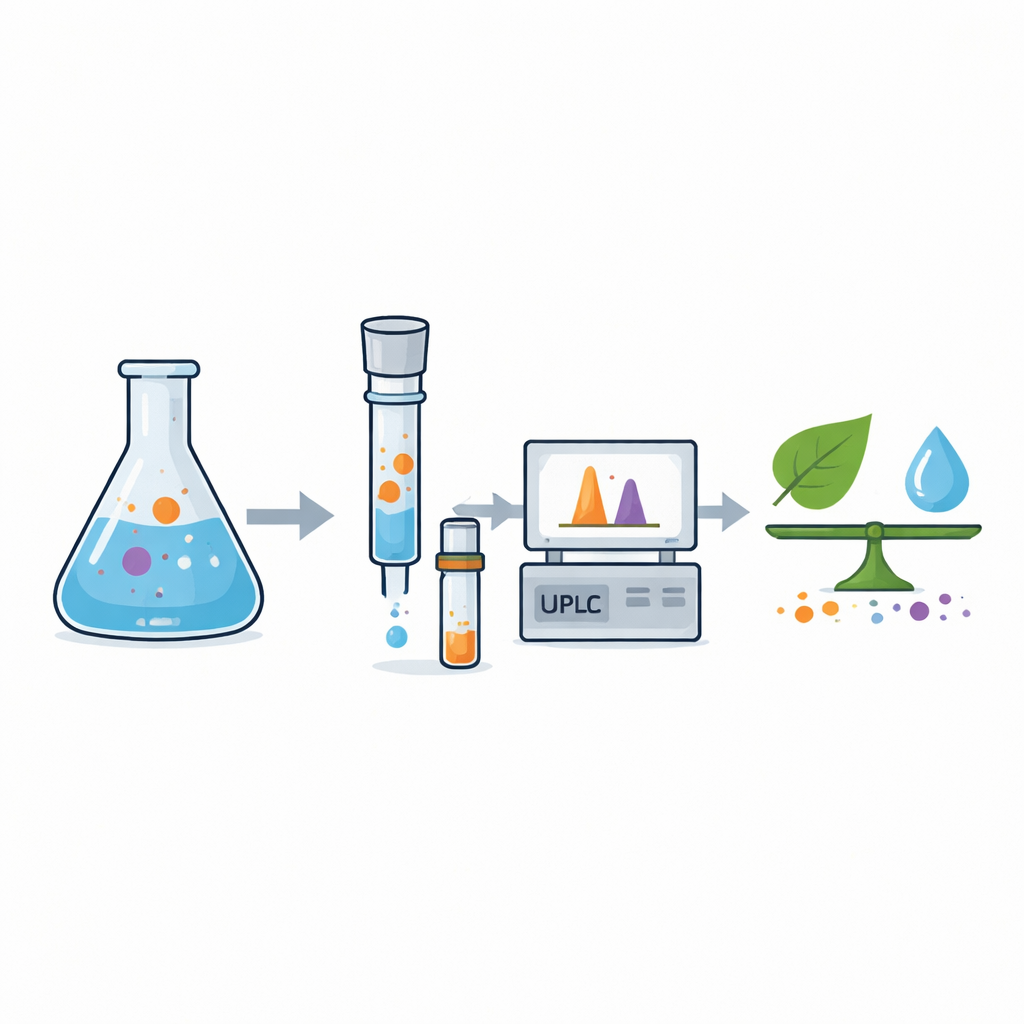
The researchers developed a laboratory workflow that couples solid-phase extraction—a way to pull target molecules out of dirty water—with ultra-performance liquid chromatography, a high-speed separation technique. They tuned the process so that both drugs form sharp, separate signals in less than five minutes while using small amounts of solvent and energy. Water-rich mixtures based mainly on phosphate buffer and modest portions of methanol replaced more hazardous solvents such as acetonitrile. The result is a compact test that can detect favipiravir and molnupiravir at very low concentrations, with excellent accuracy and repeatability in both pharmaceutical products and spiked samples of tap water, river water, and pharmaceutical wastewater.
Making the Lab Method Itself More Sustainable
Rather than assuming that a low-solvent method is automatically “green,” the team put the entire workflow under an environmental microscope. They optimized the extraction step to use smaller solvent volumes, explored greener solvents like ethanol and water, evaluated reuse of cartridges and vials, and shortened run times to cut electricity use. They then scored the method with several green-chemistry tools that rate factors such as chemical hazard, waste generation, practicality, and innovation. These assessments gave high marks: strong “greenness” scores, very good overall “whiteness” (a balance of performance and sustainability), and confirmation that the main weaknesses lie in remaining solvent use and waste.
Following the Method from Cradle to Grave
To go beyond checklists, the scientists carried out a full life cycle assessment, tracking environmental impacts from the production of solvents and consumables, to instrument electricity consumption, to the disposal of used cartridges and chemical waste. Using established environmental indicators, they found that the new method substantially reduces energy demand, hazardous waste volume, and upstream solvent impacts compared with a more traditional acetonitrile-based HPLC setup. The biggest remaining contributors to impact were human toxicity and smog-forming emissions linked to methanol and ethyl acetate in the extraction step, pointing the way toward future improvements through greener extraction and solvent recycling.
What This Means for Water and Public Health
When the team tested real water samples from taps, the Nile River, and a pharmaceutical wastewater source, levels of favipiravir and molnupiravir were below detection limits, suggesting no immediate concern at those locations. However, the method proved highly reliable when the same waters were spiked with known amounts of the drugs, showing it is ready for routine monitoring near factories or discharge points where contamination is more likely. In simple terms, the study delivers a sensitive “early warning” test for antiviral residues while showing how to make that test itself much kinder to the environment. It offers a practical template for laboratories and regulators who want to keep an eye on emerging drug pollutants without adding unnecessarily to the planet’s chemical and energy burden.
Citation: Kelani, K.M., Elsherbiny, M.S., Eid, S.M. et al. Novel green UPLC method with life cycle assessment for determination of favipiravir and molnupiravir drugs and environmental water samples. Sci Rep 16, 11110 (2026). https://doi.org/10.1038/s41598-026-41131-z
Keywords: antiviral residues, water monitoring, green analytical chemistry, UPLC solid-phase extraction, life cycle assessment