Clear Sky Science · en
Exploring the role of technological innovation and renewable energy in environmental sustainability across Asian economies
Why this study matters for everyday life
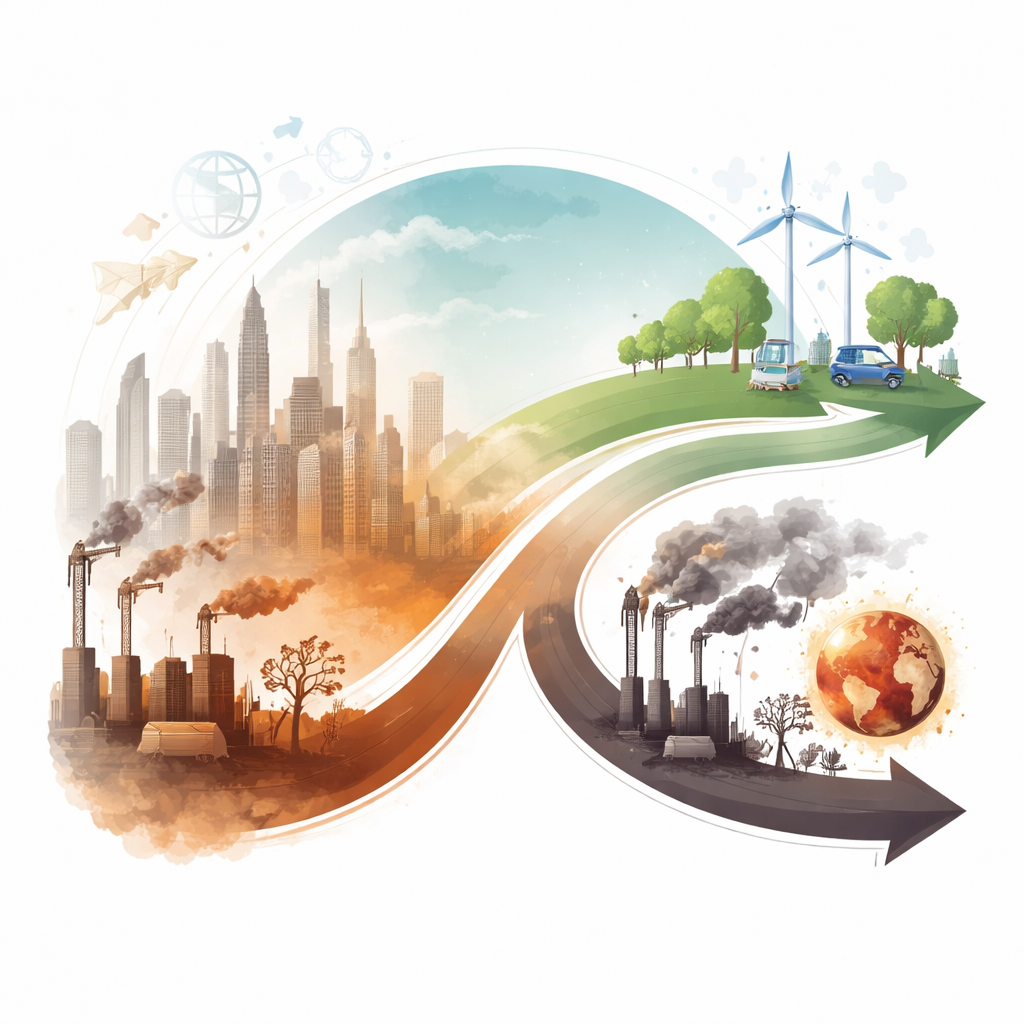
Asia is home to some of the world’s fastest‑growing economies and biggest carbon emitters. What happens there will heavily influence global climate, energy prices, and the air people breathe far beyond the region. This study looks at how three powerful forces—economic growth, new technology, and the shift from fossil fuels to renewable energy—are working together to shape pollution levels across 33 Asian countries between 2000 and 2022. It asks a simple but crucial question: can Asia keep growing while its carbon emissions go down?
Growth, pollution, and the turning point
The authors frame their work around a well‑known idea in environmental economics called the Environmental Kuznets Curve. In plain terms, it suggests that when countries are poor and begin to industrialize, pollution usually rises. But after incomes reach a certain level, cleaner technologies, stricter rules, and changing public attitudes can cause pollution to fall even as the economy keeps expanding. Using detailed data on carbon emissions, income, trade openness, resource use, renewable energy, and patents, the study tests whether this pattern holds in Asia. They find that it largely does: economic growth at first pushes emissions up, but after a threshold, richer Asian economies tend to become cleaner.
How clean energy and new ideas cut emissions
Beyond growth alone, the study zooms in on two levers that policymakers can directly influence: renewable energy and technological innovation. Renewable sources—such as wind, solar, and modern bioenergy—replace coal, oil, and gas in the energy mix. Technological innovation, captured mainly through patent data, reflects new ideas and tools that can make factories, power plants, and cities more efficient and less wasteful. Using an advanced statistical method that tracks both short‑term swings and long‑term trends across countries, the authors find that higher use of renewable energy and stronger innovation both clearly reduce carbon emissions over time. Each percentage increase in renewable energy shares is linked to a noticeable drop in emissions, and countries that generate and apply more new technologies tend to pollute less for each unit of economic output.
The double‑edged sword of globalization and natural wealth
Globalization—the growing flow of trade, investment, and information—turns out to be a mixed story. On one hand, it can spread cleaner technologies and efficiency‑boosting practices; on the other, it can shift dirty industries to places with weaker environmental rules. In this Asian sample, the statistical results suggest that greater global integration is often associated with higher emissions unless it is guided by strong environmental policies. Natural resource rents, which measure how much of a country’s income comes from oil, gas, minerals, and other raw materials, also play a complex role. Resource‑rich economies can easily fall into a pattern of digging and burning more, but the study finds hints that when these resources are managed alongside modern technologies, they do not necessarily doom a country to ever‑rising pollution.
When technology amplifies the benefits of clean energy
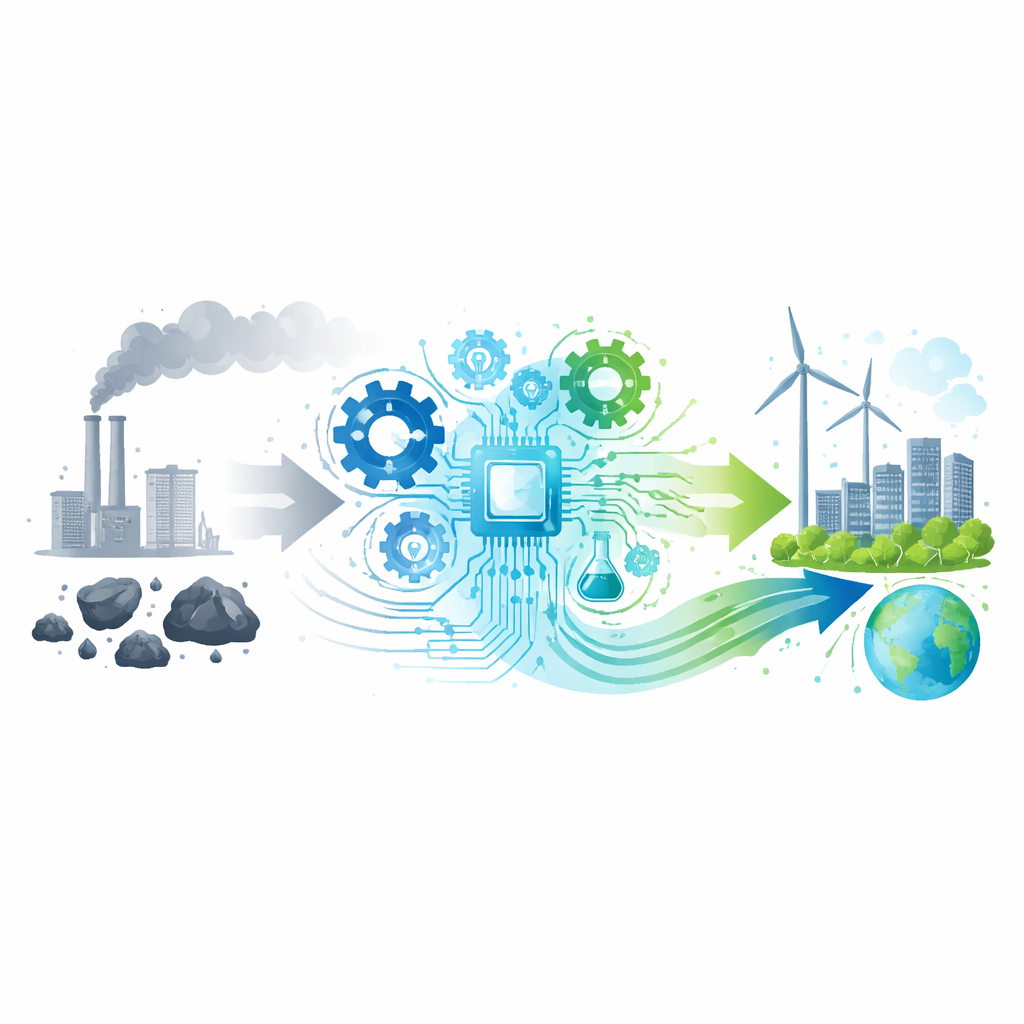
A key contribution of the paper is showing that innovation does not just help on its own; it also strengthens the impact of renewables and better resource management. The authors build interaction terms that track what happens when renewable energy and natural resource use are combined with high levels of technological advancement. The data reveal that in countries where innovation is more dynamic, adding renewables leads to larger cuts in emissions than in less innovative peers. Similarly, smarter technologies help resource‑dependent economies squeeze more value from their oil, gas, or minerals while releasing less carbon. In other words, it is not only what kind of energy or resources a country uses, but also how cleverly it uses them.
What this means for Asia’s climate future
For a non‑specialist reader, the bottom line is straightforward: the study argues that Asia can grow richer without locking itself into ever‑worsening climate damage—but only if governments actively steer their economies toward innovation and clean energy. Economic growth on its own tends to raise emissions, especially in earlier stages of development. Yet the findings show that investing in new technologies, expanding renewable power, and guiding globalization with strong environmental safeguards can bend that curve downward. Policymakers are urged to support research and development, scale up wind and solar infrastructure, encourage resource‑efficient cities and industries, and tighten rules on dirty technologies. Done together, these steps can help Asian countries decouple prosperity from pollution, aligning their economic ambitions with a safer climate for everyone.
Citation: Zhang, L., Xiang, R., Yang, Q. et al. Exploring the role of technological innovation and renewable energy in environmental sustainability across Asian economies. Sci Rep 16, 14010 (2026). https://doi.org/10.1038/s41598-026-41128-8
Keywords: renewable energy, technological innovation, carbon emissions, Asian economies, environmental sustainability