Clear Sky Science · en
FBXO22 targets ubiquitination and degradation of c-Cbl in leukemia
Why this blood cancer study matters
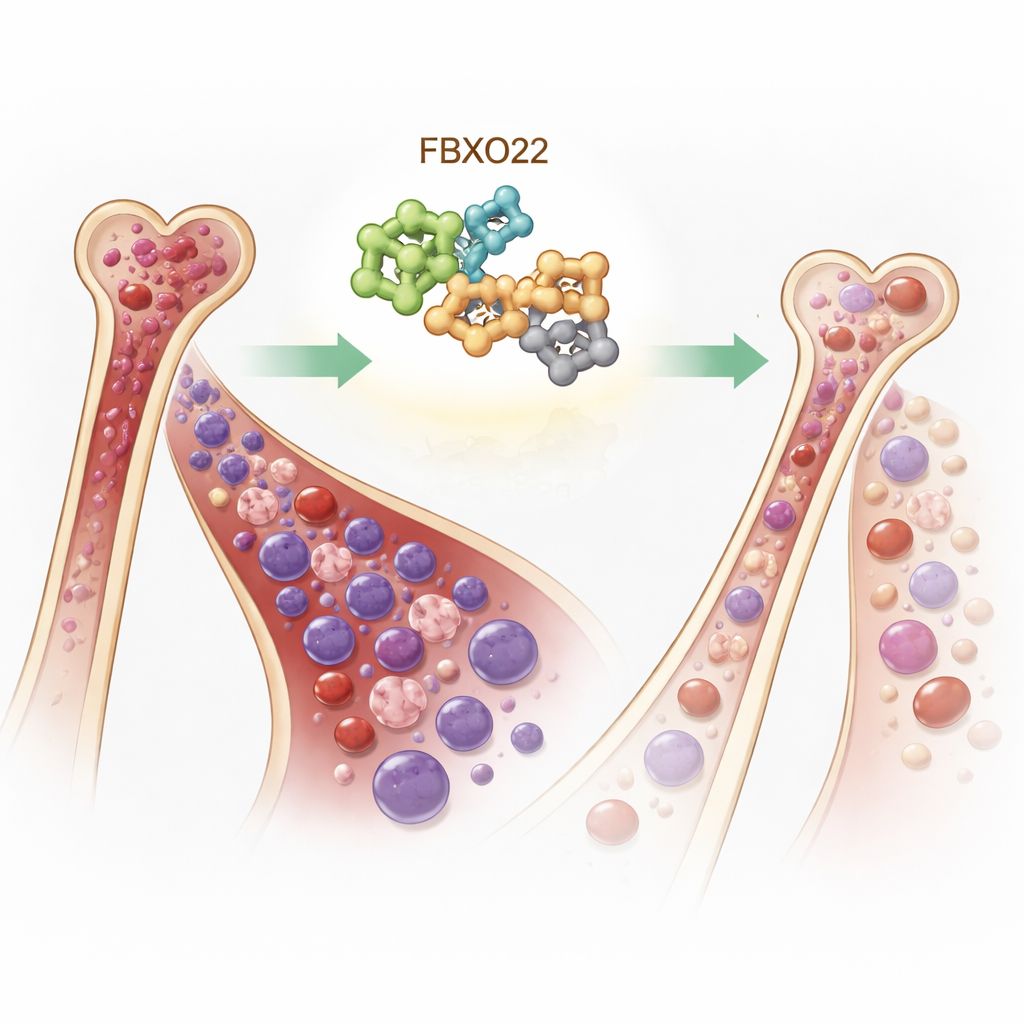
Leukemia is a cancer of the blood and bone marrow that remains difficult to cure, especially when standard treatments fail. This study explores a natural "brake" inside leukemia cells themselves: a protein called FBXO22 that can help slow cancer cell growth and encourage these cells to mature and die when they should. By uncovering how FBXO22 reins in another protein, c-Cbl, the researchers reveal a new molecular pathway that could eventually inspire more targeted leukemia therapies.
A closer look at runaway blood cells
Leukemia begins when immature blood-forming cells in the bone marrow gain the ability to multiply without control, stop maturing, and resist dying. These abnormal cells crowd out healthy blood cells and spread through the body. Although many genes and proteins have been linked to leukemia, the detailed chain of events that drives this runaway growth is still being pieced together. The team focused on two proteins, FBXO22 and c-Cbl, both involved in tagging other proteins for destruction, to understand whether they act as friends or foes in leukemia.
The cell’s built-in trash system
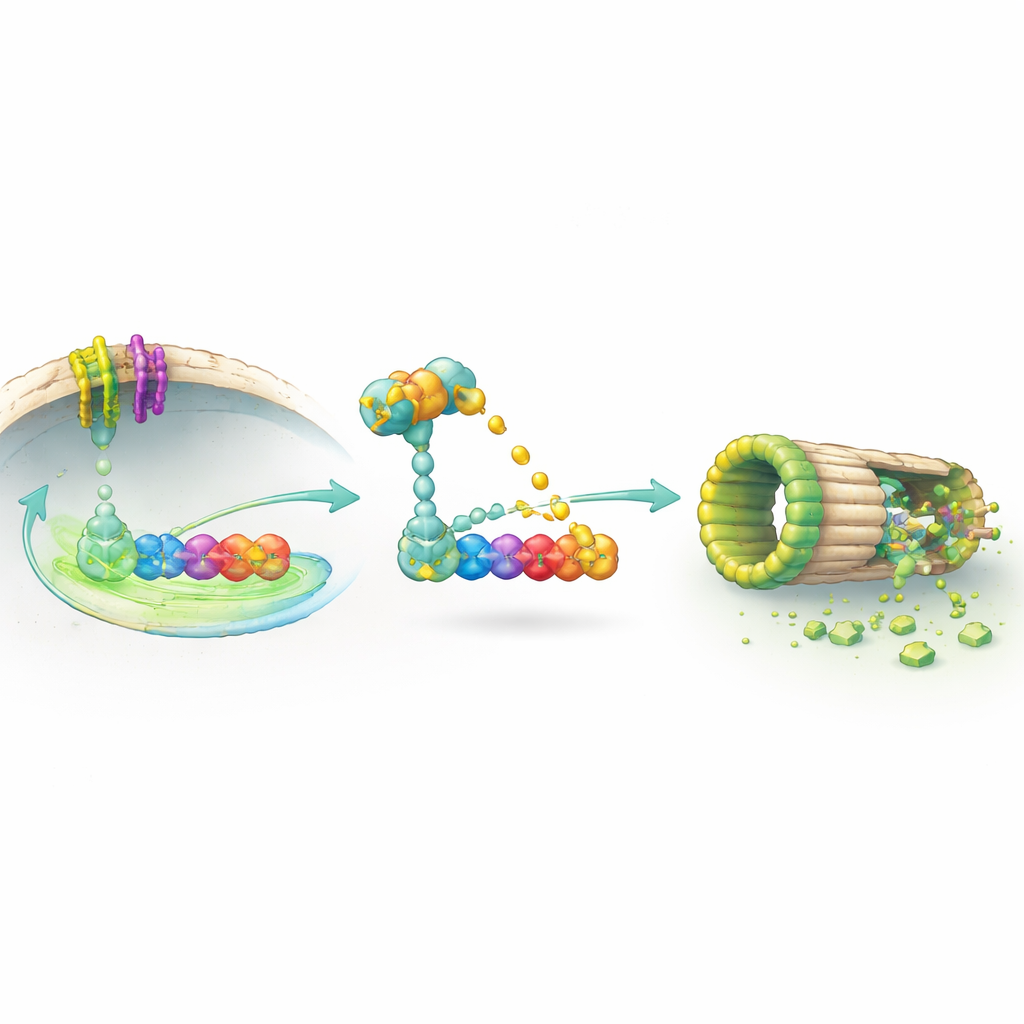
Our cells constantly mark used or harmful proteins for disposal through a process called ubiquitination, which feeds them into a cellular "shredder". Proteins like FBXO22 and c-Cbl help decide which molecules get this tag. FBXO22 belongs to a family of proteins that recognize specific targets and mark them for breakdown. c-Cbl can sometimes act as a brake on cell signaling, but in other cancers it behaves more like a gas pedal, helping growth pathways stay switched on. Because the role of c-Cbl in leukemia was unclear, the researchers tested how changing the levels of FBXO22 and c-Cbl affects leukemia cells grown in the lab and in mice.
Slowing cancer growth and nudging cells to mature
In leukemia cell lines, boosting FBXO22 slowed down cell division, pushed cells to pause earlier in their growth cycle, and increased markers of programmed cell death. At the same time, the cells showed higher levels of proteins linked to normal blood cell maturation and more signs that they were differentiating toward a more mature state. Reducing c-Cbl had remarkably similar effects: leukemia cells grew more slowly, were more likely to undergo cell death, and showed stronger signals of differentiation. By contrast, forcing cells to make extra c-Cbl did the opposite—speeding up growth, helping cells survive, and blocking their ability to mature.
A protein tag that turns off a bad influence
Diving deeper, the scientists discovered that FBXO22 physically binds to c-Cbl and marks it with ubiquitin tags, targeting it for destruction. When FBXO22 was increased, the amount of c-Cbl protein dropped, even though the cell was still making the same amount of c-Cbl RNA, indicating that regulation happened after the gene was read. When leukemia cells were engineered to overproduce both FBXO22 and c-Cbl at the same time, the protective effects of FBXO22 were partially cancelled: cell growth picked up again, cell death decreased, and differentiation markers fell. This "rescue" experiment strongly suggests that FBXO22 exerts its tumor-suppressing power mainly by cutting down c-Cbl.
Testing the pathway in living animals
To see if these findings hold up in a living body, the researchers transplanted human leukemia cells into mice. Mice receiving cells with extra FBXO22, or with reduced c-Cbl, developed fewer and smaller tumors, and their livers and spleens were less swollen—signs of a lighter leukemia burden. Tumor tissue from these animals contained lower levels of c-Cbl and higher levels of a surface marker associated with more mature myeloid cells. Together, these in vivo results support the idea that dialing up FBXO22 or dialing down c-Cbl can restrain leukemia progression beyond the petri dish.
What this means for future leukemia treatment
This work paints FBXO22 as a helpful internal defender against leukemia: by tagging c-Cbl for destruction, it slows cancer cell growth and encourages the cells to grow up and die rather than multiply endlessly. While the study was done mainly in cell lines and a mouse model, and more research in patient samples is needed, the FBXO22–c-Cbl axis now stands out as a promising target. In the long run, drugs that boost FBXO22 activity or mimic its ability to disarm c-Cbl could add a new weapon to the fight against blood cancers.
Citation: Li, J., Ma, L., Wang, J. et al. FBXO22 targets ubiquitination and degradation of c-Cbl in leukemia. Sci Rep 16, 11190 (2026). https://doi.org/10.1038/s41598-026-41123-z
Keywords: leukemia, FBXO22, c-Cbl, ubiquitination, tumor suppressor