Clear Sky Science · en
Streptomyces tyrfis sp. nov., an actinobacterium isolated from Thai peat swamp forest soil and its promising secondary metabolites
New Medicines from Hidden Forest Microbes
Deep in a peat swamp forest in southern Thailand, scientists have uncovered a new soil-dwelling microbe that makes a cocktail of powerful natural chemicals. These molecules can slow the growth of the tuberculosis germ and damage certain cancer cells in the lab. At a time when antibiotic resistance and hard‑to‑treat cancers are major threats, this discovery shows how little‑explored ecosystems can still surprise us with promising leads for future drugs.
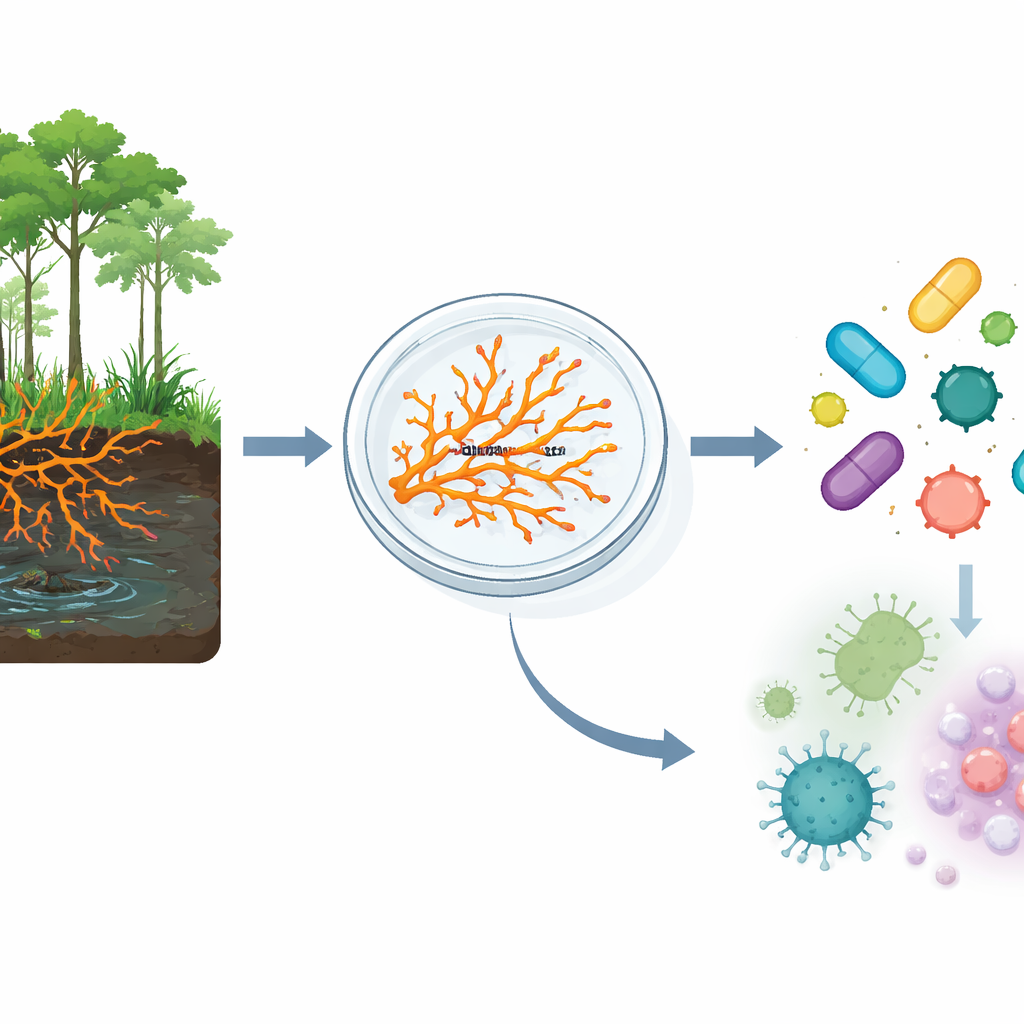
A Special Forest with Unusual Soils
Peat swamp forests are wet, acidic environments built from layers of slowly decaying plant material. Because the waterlogged soil has little oxygen, only specially adapted organisms can thrive there. Previous work in Thai peat swamps had already revealed several rare bacteria that make medically interesting substances. The team behind this study set out to search these forests more systematically, looking for new strains of Streptomyces—a group of filament‑forming bacteria famous for producing many of the world’s antibiotics.
Finding and Naming a New Bacterial Species
From soil collected in the Sirindhorn Peat Swamp Forest in Narathiwat Province, the researchers isolated a strain they called PTD5‑9. Under the microscope, it formed branching filaments and spiral chains of tiny spores, typical of Streptomyces. The team grew it on many different culture media and compared its appearance, growth conditions, and chemistry with those of known relatives. They then decoded its genetic material, using modern whole‑genome analysis to compare its DNA with closely related species. Although one common gene (the 16S rRNA gene) looked very similar to that of known species, the overall genome similarity fell well below accepted cutoffs, showing that PTD5‑9 represents a distinct species. The authors therefore proposed the name Streptomyces tyrfis, referring to its peatland origin.
A Factory for Diverse Natural Compounds
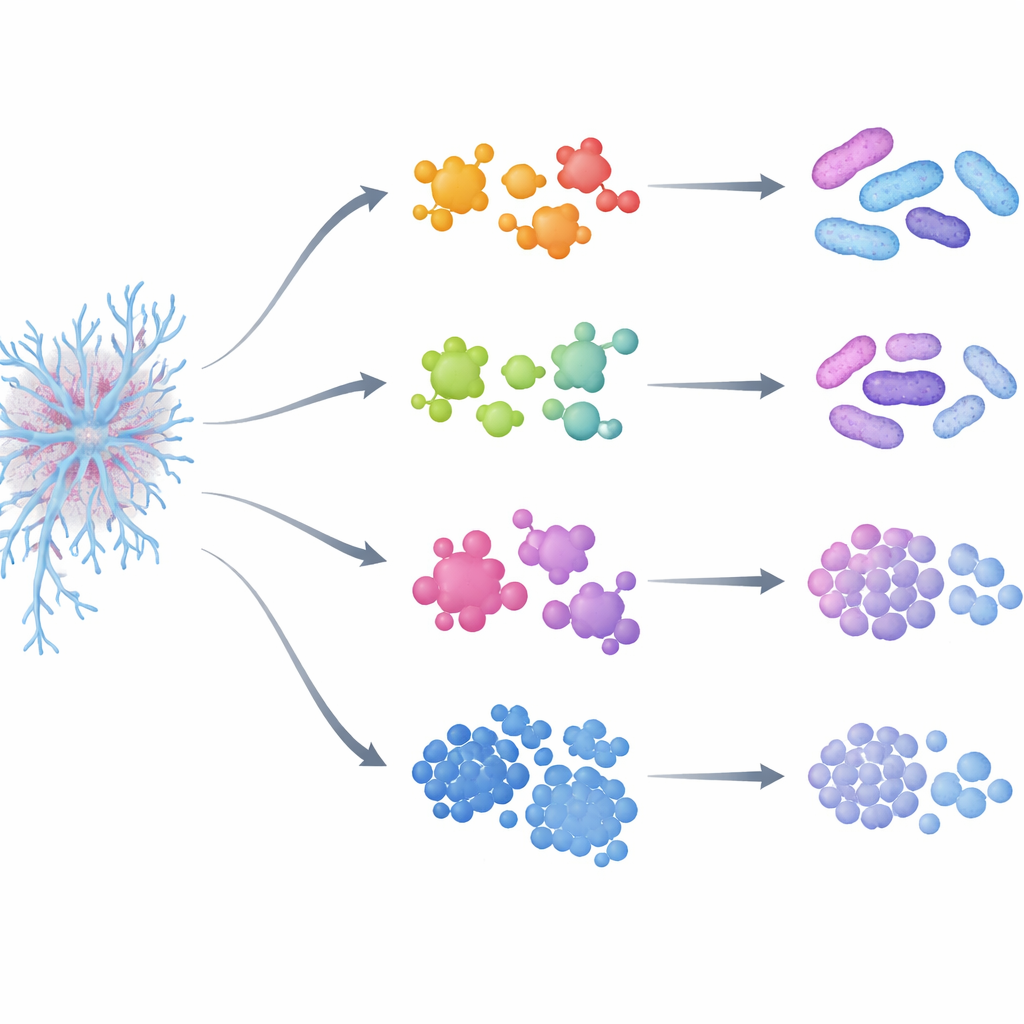
The genome of S. tyrfis contains many clusters of genes that act as blueprints for making complex natural products. To see what the bacterium actually produces, the scientists grew it in large flasks, extracted the chemicals it released into the broth, and separated them using chromatography. Detailed analysis with nuclear magnetic resonance and mass spectrometry revealed ten known compounds. Four belonged to a group often associated with antibiotics that affect protein production, while five others were members of the angucyclinone family, a class of ring‑shaped molecules already known for their strong biological activity. One compound, a form of phenatic acid A, showed an opposite optical rotation to the version previously reported, indicating a mirror‑image form of the same molecule.
Testing for Germ‑Killing and Cancer‑Fighting Power
Because some of the isolated compounds were obtained in larger amounts, the team could test four of them for biological activity. In laboratory dishes, these molecules inhibited growth of the tuberculosis bacterium at very low concentrations—down to just a few micrograms per milliliter. Several also slowed a drug‑resistant malaria parasite, although at higher doses. Against common bacteria such as Escherichia coli, the compounds showed little effect, but two of them inhibited the food‑poisoning germ Bacillus cereus. When the scientists exposed human cancer cell lines to the angucyclinone‑type compounds, they found strong toxicity toward small‑cell lung cancer and breast cancer cells. However, these substances could also harm non‑cancerous cells, showing that they are potent but would need careful refinement to become safe medicines.
Why This Discovery Matters
By combining classic microbiology with genome sequencing and chemical testing, this study demonstrates that peat swamp forests are a rich but underused source of new microbial species and natural molecules. The newly named Streptomyces tyrfis not only broadens our picture of bacterial life in extreme environments but also provides a suite of bioactive compounds that hit important disease targets such as tuberculosis and cancer. While many steps remain before any of these molecules could become drugs, they offer valuable starting points for future research and underline the importance of conserving and exploring Earth’s remaining wild habitats.
Citation: Kottip, P., Klanbut, K., Fukasem, P. et al. Streptomyces tyrfis sp. nov., an actinobacterium isolated from Thai peat swamp forest soil and its promising secondary metabolites. Sci Rep 16, 10317 (2026). https://doi.org/10.1038/s41598-026-41121-1
Keywords: Streptomyces, peat swamp soil, natural products, antibiotic discovery, tuberculosis