Clear Sky Science · en
Effect of eight weeks of interval training on insulin signaling and neurodegeneration in the hippocampus of Methamphetamine-treated rats
Why this research matters for everyday life
Methamphetamine abuse is often discussed in terms of crime and addiction, but less attention is paid to how this drug quietly harms the brain and changes behavior. This study in rats explores a hopeful question: can a simple, structured exercise program help the brain recover from methamphetamine’s damaging effects? By focusing on a brain area critical for memory and emotion, the hippocampus, the researchers show how interval-style treadmill running may protect brain cells, calm anxiety-like behavior, and repair key chemical signaling pathways involved in diseases like Alzheimer’s. 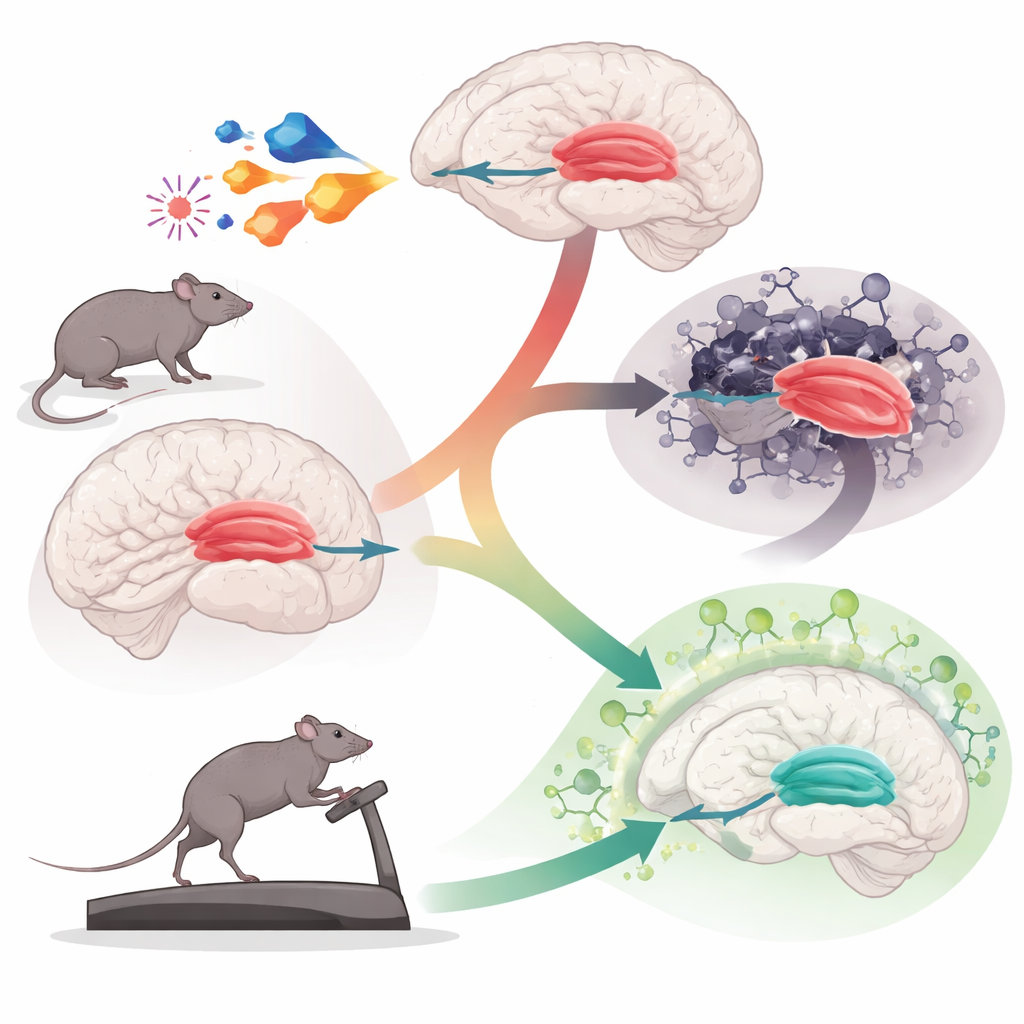
The problem with a powerful street drug
Methamphetamine is a highly addictive stimulant widely used by young people. Beyond its short-term rush, it can trigger a slow-moving storm inside the brain. The drug promotes oxidative stress, inflammation, overheating, and programmed cell death, especially in regions tied to memory and mood. Recent work has also linked methamphetamine to faults in the brain’s response to insulin, a hormone better known for controlling blood sugar. When insulin signaling in the brain falters, learning and memory can suffer, and changes similar to those seen in Alzheimer’s disease can emerge, including buildup of harmful proteins such as amyloid precursor protein and different forms of tau.
A closer look at the brain’s memory hub
The hippocampus is rich in insulin receptors that normally trigger a protective chain of events inside nerve cells. When this system works, it activates molecules like IRS-1 and Akt that support cell survival and healthy communication. When it fails, another molecule, GSK-3β, can become overactive and drive the production and modification of amyloid and tau proteins linked to neurodegeneration. In this study, 32 male rats were split into four groups: a healthy saline group, two methamphetamine-only groups (one tested soon after use and one after a withdrawal period), and a group that received methamphetamine but then performed eight weeks of moderate-intensity interval treadmill training. This design let the researchers compare the immediate damage from the drug, the effects of waiting without treatment, and the impact of adding structured exercise.
What the rats’ behavior revealed
To gauge how the animals felt and moved, the team used two standard behavioral tests. In the open field test, rats are placed in a box and their movement, exploratory rearing, and self-grooming—often a sign of stress—are recorded. In the elevated plus maze, rats choose between open, exposed arms and enclosed, protected ones, giving a snapshot of anxiety-like behavior. Rats that received methamphetamine without training traveled less, moved more slowly, reared less, and groomed more, all pointing to lower activity and higher anxiety-like responses. They also avoided the open arms of the maze. In contrast, rats that completed the interval running program showed fewer stress-related grooming bouts and entered the open arms more often, suggesting that exercise eased some of the drug-induced anxiety and restored exploratory drive. 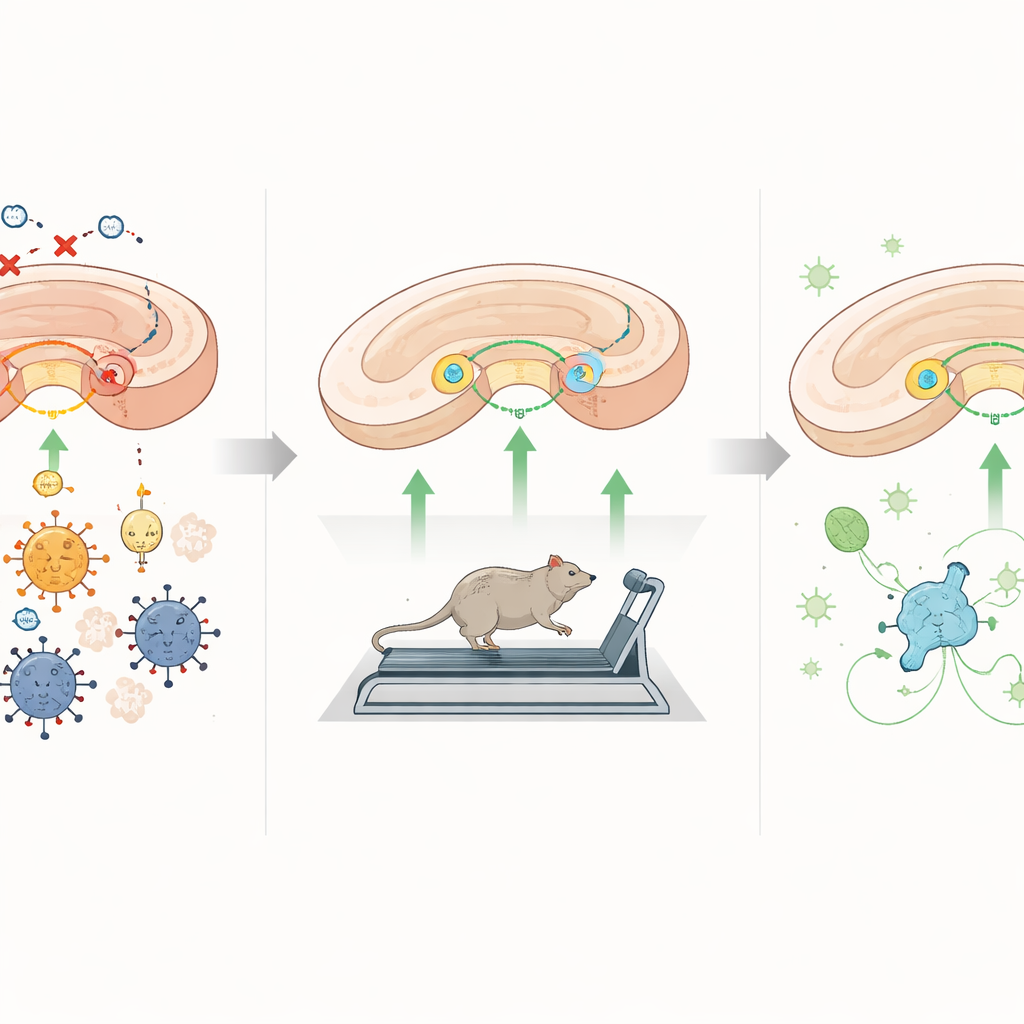
Inside the cells: chemical signals and dying neurons
Beneath these outward behaviors, methamphetamine profoundly altered the rats’ hippocampal biology. Drug exposure lowered the activity of IRS-1 and Akt, key players in insulin signaling, and boosted GSK-3β, amyloid precursor protein, tau, phosphorylated tau, and caspase‑3, a marker of cell death. Microscopic examination of hippocampal slices confirmed that methamphetamine increased the number of damaged or dying neurons in a critical subregion called CA1. Interval training reversed several of these trends: it raised IRS-1 and Akt levels and reduced amyloid precursor protein and phosphorylated tau, while also cutting back the extent of neuronal degeneration. Although not every harmful marker was fully normalized, the overall pattern pointed toward a brain that was more resilient and less prone to methamphetamine-triggered degeneration.
What this could mean for people
Together, these findings suggest that a well-designed interval exercise program can partially shield the brain from methamphetamine’s toxic legacy—improving anxiety-like behavior, supporting healthier insulin signaling, and limiting neuron loss in the hippocampus. While rats on treadmills are not people in real-world recovery, the basic message is both simple and powerful: regular, moderate-intensity interval exercise may serve as a low-cost, accessible tool to help protect brain health in the context of stimulant use and possibly lower the risk of later-life memory problems. Future clinical studies will be needed to define the best exercise “dose” for humans, but this work offers a biological blueprint for how movement can help mend a brain under chemical assault.
Citation: Shafiei, A., Haghighi, A.H., Asadi-Shekaari, M. et al. Effect of eight weeks of interval training on insulin signaling and neurodegeneration in the hippocampus of Methamphetamine-treated rats. Sci Rep 16, 11325 (2026). https://doi.org/10.1038/s41598-026-41118-w
Keywords: methamphetamine, hippocampus, interval training, neurodegeneration, insulin signaling