Clear Sky Science · en
Lycium barbarum polysaccharide inhibits Hcy-induced vascular smooth muscle cells migration and invasion via upregulation of KLF4
Why this matters for your heart
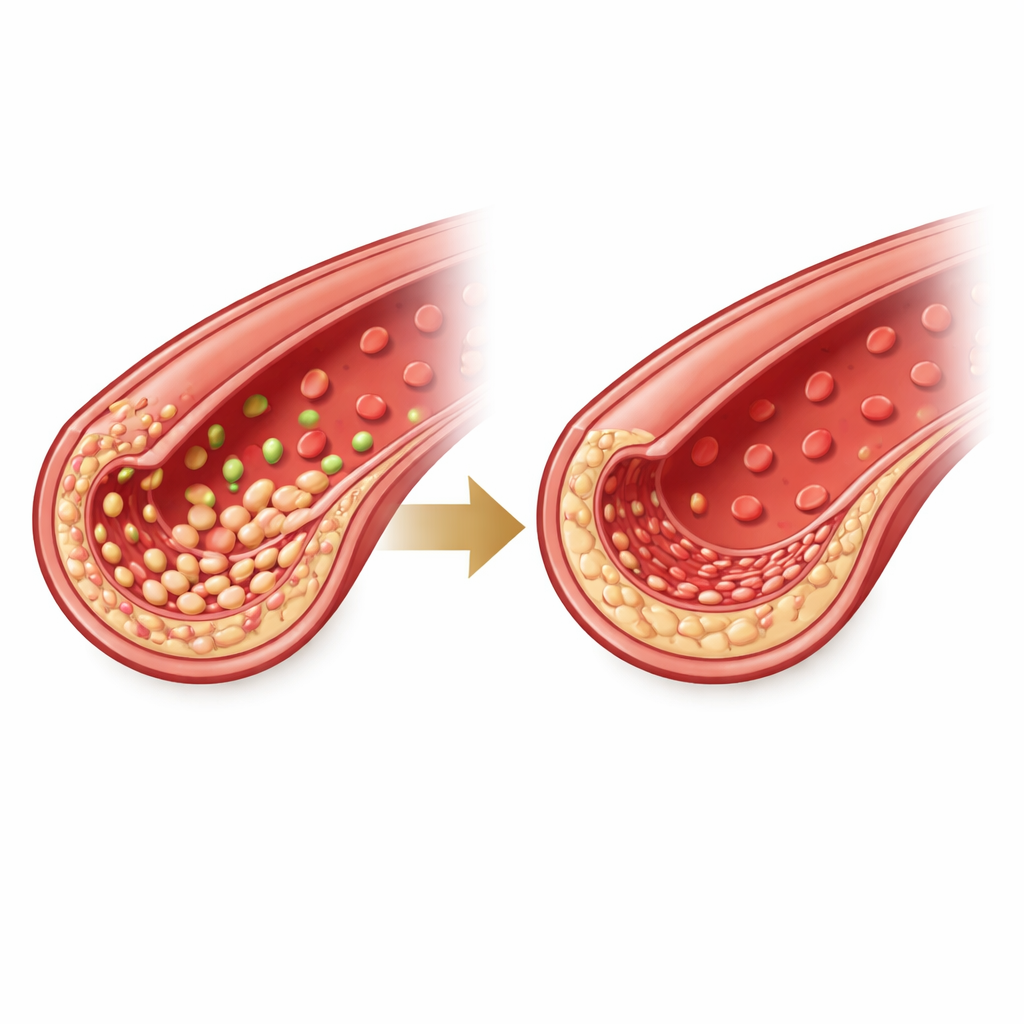
Atherosclerosis—the gradual thickening and hardening of arteries—is a root cause of heart attacks and strokes. Many people know about cholesterol, but far fewer have heard of homocysteine, a blood molecule that can quietly damage blood vessels. This study explores whether a natural compound from goji berries, called Lycium barbarum polysaccharide (LBP), can counteract homocysteine’s harmful effects on key cells in artery walls, potentially pointing to new ways to protect cardiovascular health.
When artery wall cells go on the move
Inside our arteries, a layer of vascular smooth muscle cells acts like a structural support sleeve, helping keep blood flow stable and vessel walls resilient. In atherosclerosis, these cells can change their behavior: instead of staying put, they migrate and invade toward the inner lining of the vessel, where they contribute to plaque growth and artery narrowing. High levels of homocysteine, a by-product of protein metabolism, are known to worsen this process, but the detailed reasons have remained unclear. The authors focused on this early and crucial step—cell migration and invasion—rather than only on later, more obvious changes in plaque structure.
A protective signal switch inside the cell
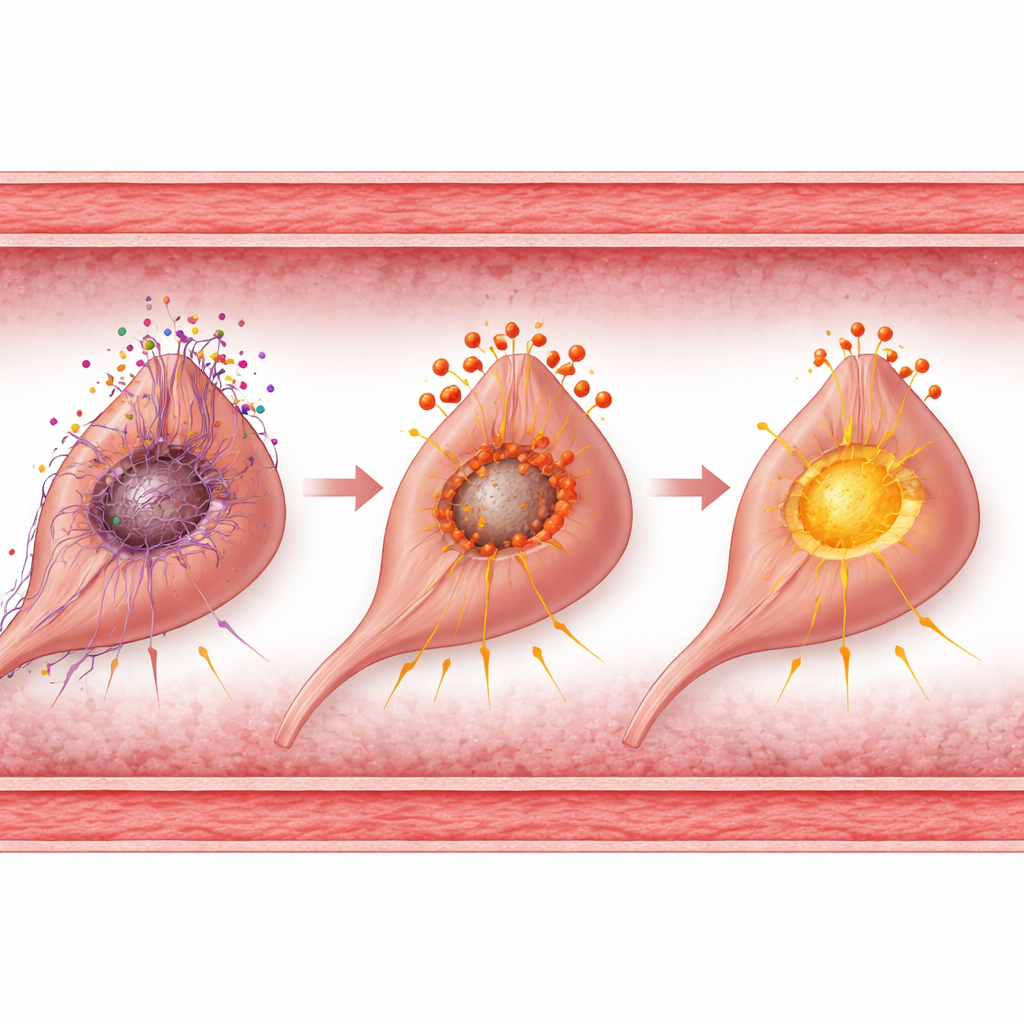
The research centers on a protein called KLF4, which acts like a control switch for many genes inside smooth muscle cells. Earlier work suggested that KLF4 can restrain cell growth and movement in various tissues. Here, the team asked whether homocysteine pushes smooth muscle cells to migrate by turning this switch down, and whether LBP can turn it back up. Using human vascular smooth muscle cells grown in the lab, they exposed the cells to homocysteine and measured both how far the cells moved and how much KLF4 protein they produced. Homocysteine strongly increased cell migration and invasion while clearly reducing KLF4 levels, linking a loss of this protective switch to more aggressive cell behavior.
Goji berry compound reins in runaway cells
To test LBP’s protective potential, the scientists added different doses of this goji berry polysaccharide to homocysteine-treated cells. They used wound-like “scratch” tests and a Transwell system, where cells must move through a porous barrier, to measure motility. Across these experiments, LBP reduced how many smooth muscle cells migrated and invaded, and it restored KLF4 protein levels that homocysteine had driven down. An intermediate dose (600 mg/L) offered the best balance, producing the strongest rise in KLF4 together with the largest drop in cell movement, so this dose was used for more detailed studies.
Probing how the signal switch is controlled
To confirm that KLF4 itself was the key player, the researchers used two additional drugs: one that blocks KLF4 activity and another that boosts it. When they inhibited KLF4 in the presence of homocysteine, smooth muscle cells migrated and invaded even more, supporting the idea that losing KLF4 removes a brake on harmful behavior. Activating KLF4, by contrast, reduced cell movement in a way similar to LBP. Most strikingly, combining LBP with the KLF4 activator produced the strongest drop in migration and invasion and the highest KLF4 levels seen in the study. This pattern shows that LBP’s protective effect depends heavily on its ability to raise KLF4 inside vascular smooth muscle cells.
What this could mean for future heart protection
In simple terms, the study suggests that high homocysteine levels push artery wall cells to leave their proper place and invade areas where they fuel plaque buildup, largely by dialing down a protective control protein, KLF4. The goji berry compound LBP appears to flip that control back on, calming the cells and limiting their harmful movement. While these findings come from carefully controlled cell experiments rather than human trials, they highlight a promising molecular pathway—and a natural substance—that might one day help prevent or slow atherosclerosis, especially in people with elevated homocysteine.
Citation: Ma, X., Wang, X., Mo, T. et al. Lycium barbarum polysaccharide inhibits Hcy-induced vascular smooth muscle cells migration and invasion via upregulation of KLF4. Sci Rep 16, 9966 (2026). https://doi.org/10.1038/s41598-026-41087-0
Keywords: atherosclerosis, homocysteine, vascular smooth muscle cells, goji berry polysaccharides, KLF4 signaling