Clear Sky Science · en
Green synthesis and characterization of Annona squamosa seed chemical constituents derived silver nanoparticles against Tuta absoluta (Meyrick, 1917) larvae, non-target effect, and confirmed through molecular docking
Turning Fruit Seeds into Pest Fighters
Tomatoes are a staple in kitchens around the world, yet a tiny leaf-mining moth can wipe out nearly an entire crop. Farmers often turn to powerful chemical sprays to save their fields, but these can harm the environment, beneficial soil life, and even our food. This study explores a different path: using natural chemicals from custard apple seeds to create ultra-small silver particles that kill the tomato leaf miner while sparing friendly earthworms. It shows how waste from a common fruit might be turned into a smart, greener tool for protecting food supplies.
A Tomato Pest That Won’t Go Away
The tomato leaf miner, Tuta absoluta, is a small moth whose larvae tunnel through tomato leaves, stems, and fruits, causing losses that can reach 80–100% in badly hit fields. It has spread from South America across Europe, Africa, and Asia, including Thailand, and has already evolved resistance to many standard insecticides. As a result, growers are trapped between using more chemicals—often with diminishing returns—and the risk of devastating crop damage. This situation has pushed scientists to search for alternatives that can protect harvests without polluting soil and water or killing beneficial organisms.
Building Tiny Silver Weapons from a Tropical Tree
In this study, researchers turned to Annona squamosa, the custard apple tree, whose seeds are rich in natural compounds already known to affect insects. They prepared an extract of the seeds using hexane, then mixed it with a silver nitrate solution and gently heated and stirred the mixture. As the reaction proceeded, the liquid shifted from light brown to dark brownish black, a visual signal that silver ions had been transformed into solid silver nanoparticles. A suite of lab techniques confirmed what the eye suggested: light absorption tests showed a sharp signal typical of silver nanoparticles, X-ray measurements revealed a crystalline silver structure, and electron microscope images showed mostly spherical particles about 25–48 nanometers across—far smaller than a bacterium, and well coated by plant chemicals that help stabilize them. 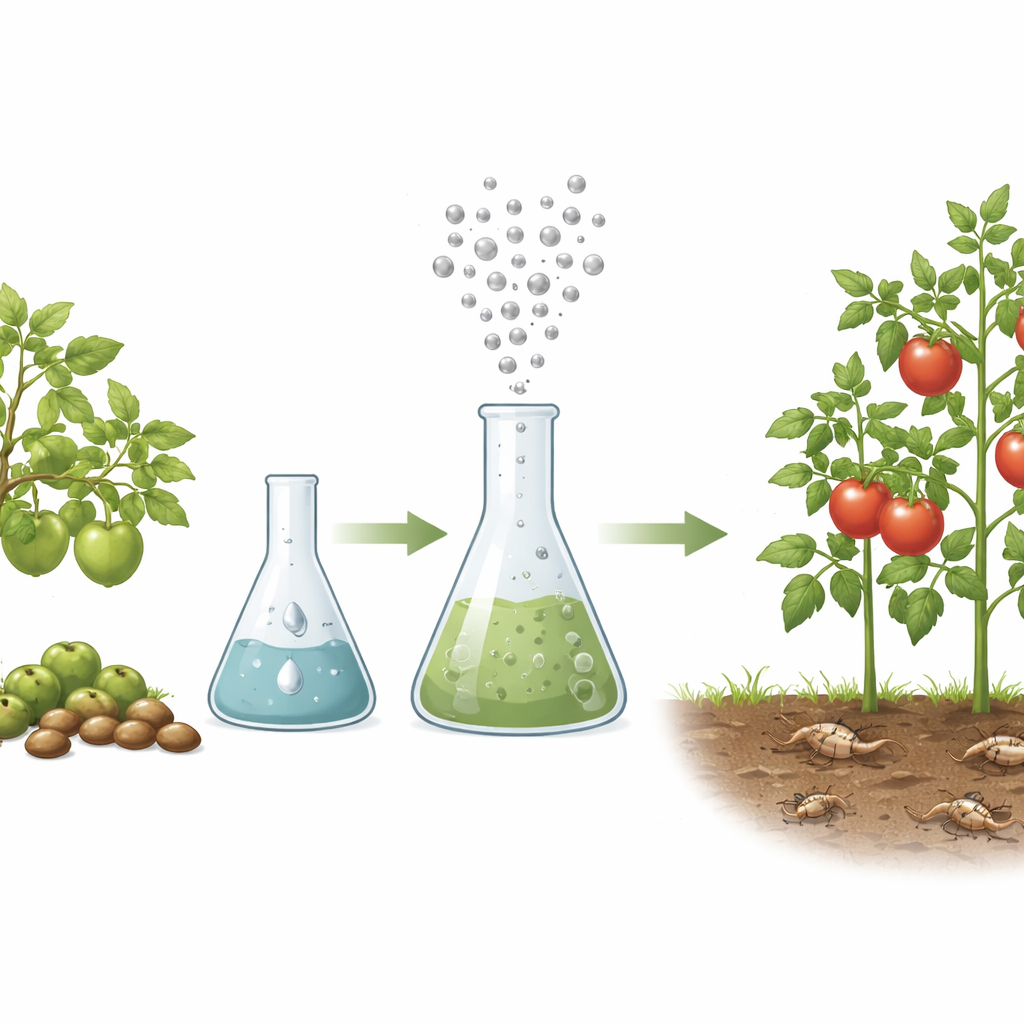
Striking at the Pest, Sparing the Soil
The team then tested how well these plant-made silver nanoparticles could kill tomato leaf miner larvae. When third-stage larvae on tomato leaves were treated with increasing doses, mortality rose steeply with both dose and time, reaching about 97% death after 48 hours at the highest test concentration. Inside the surviving larvae, two key enzyme systems—catalase and glutathione S-transferase—became much more active, a sign that the insects were under strong oxidative stress and trying to detoxify harmful molecules. In parallel tests, adult earthworms (Eudrilus eugeniae), important “engineers” of healthy soil, were exposed to the same nanoparticles. After 48 hours, only about 17% of the worms had died, compared with almost complete mortality in worms treated with a common synthetic insecticide, imidacloprid. This contrast suggests that the new particles can strongly affect the target pest while being far gentler on non-target soil life. 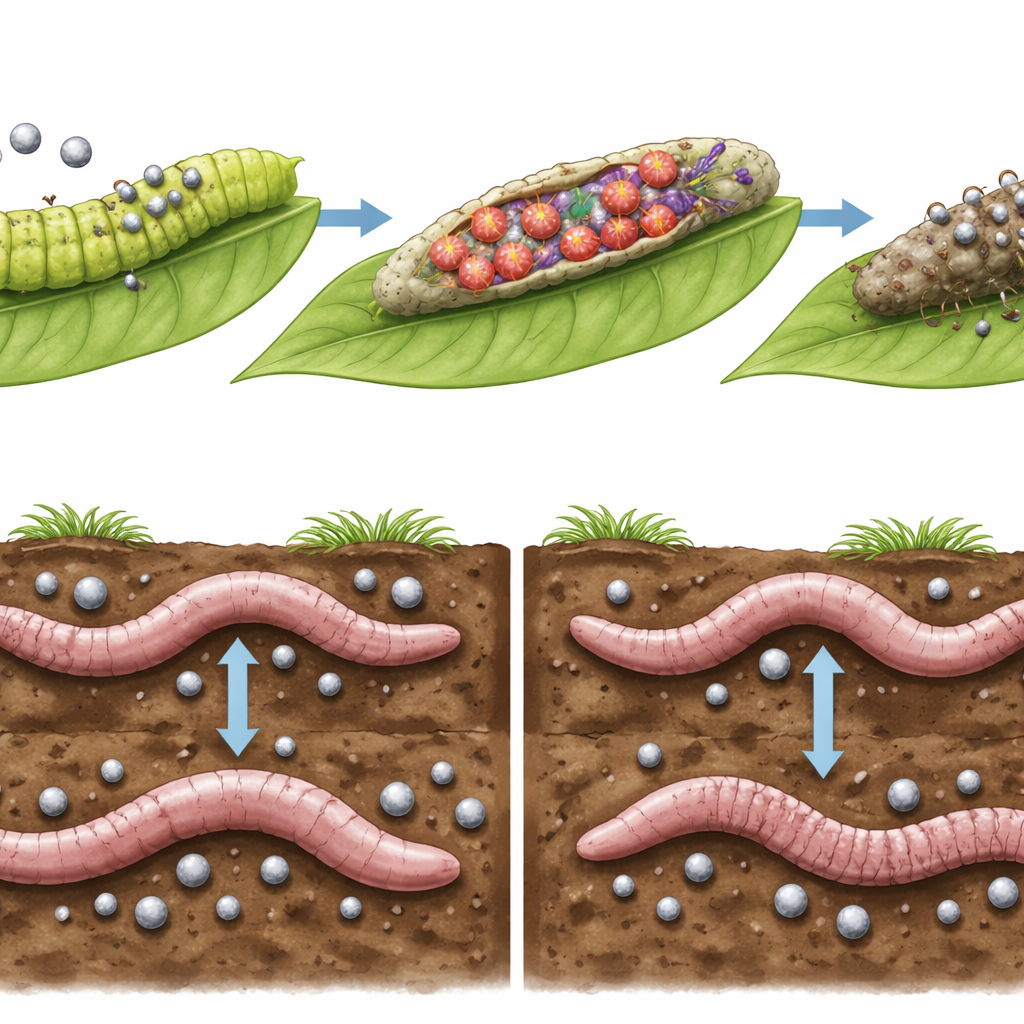
Peeking into the Molecular Battleground
To better understand how the seed chemicals might help knock out the pest, the researchers used computer modeling to study how two fatty acid–based molecules from custard apple seeds might bind to acetylcholinesterase, an enzyme that helps insects’ nerve cells turn signals off. The simulations showed that both molecules can fit snugly into key pockets on the enzyme’s surface and form many stabilizing interactions, suggesting that they could interfere with normal nerve function. Combined with the oxidative stress triggered by the silver nanoparticles themselves, this dual action offers a plausible explanation for the high larval mortality: the insects may be hit both in their cells’ internal chemistry and in their nervous system.
What This Could Mean for Future Farming
Taken together, the findings show that silver nanoparticles crafted using custard apple seed extracts can deliver powerful, fast-acting control of a major tomato pest, while causing only modest harm to an important soil organism under laboratory conditions. The work suggests that agricultural waste—from seeds that are usually discarded—could be turned into a key ingredient of safer “nano-pesticides” that support higher yields with less reliance on conventional chemicals. Before such products reach farms, scientists will still need to refine the formulations, test them in real fields, and study long-term impacts on ecosystems. But this study provides a concrete example of how nanotechnology and plant chemistry can be combined to protect crops and soils at the same time.
Citation: Swathy, K., Vivekanandhan, P., Siripan, T. et al. Green synthesis and characterization of Annona squamosa seed chemical constituents derived silver nanoparticles against Tuta absoluta (Meyrick, 1917) larvae, non-target effect, and confirmed through molecular docking. Sci Rep 16, 11336 (2026). https://doi.org/10.1038/s41598-026-41086-1
Keywords: tomato leaf miner, green nanotechnology, plant-based insecticides, silver nanoparticles, custard apple seeds