Clear Sky Science · en
A neuroimaging functional connectivity signature of emotional conflict monitoring predicting cognitive decline in type 2 diabetes
Why this matters for people living with diabetes
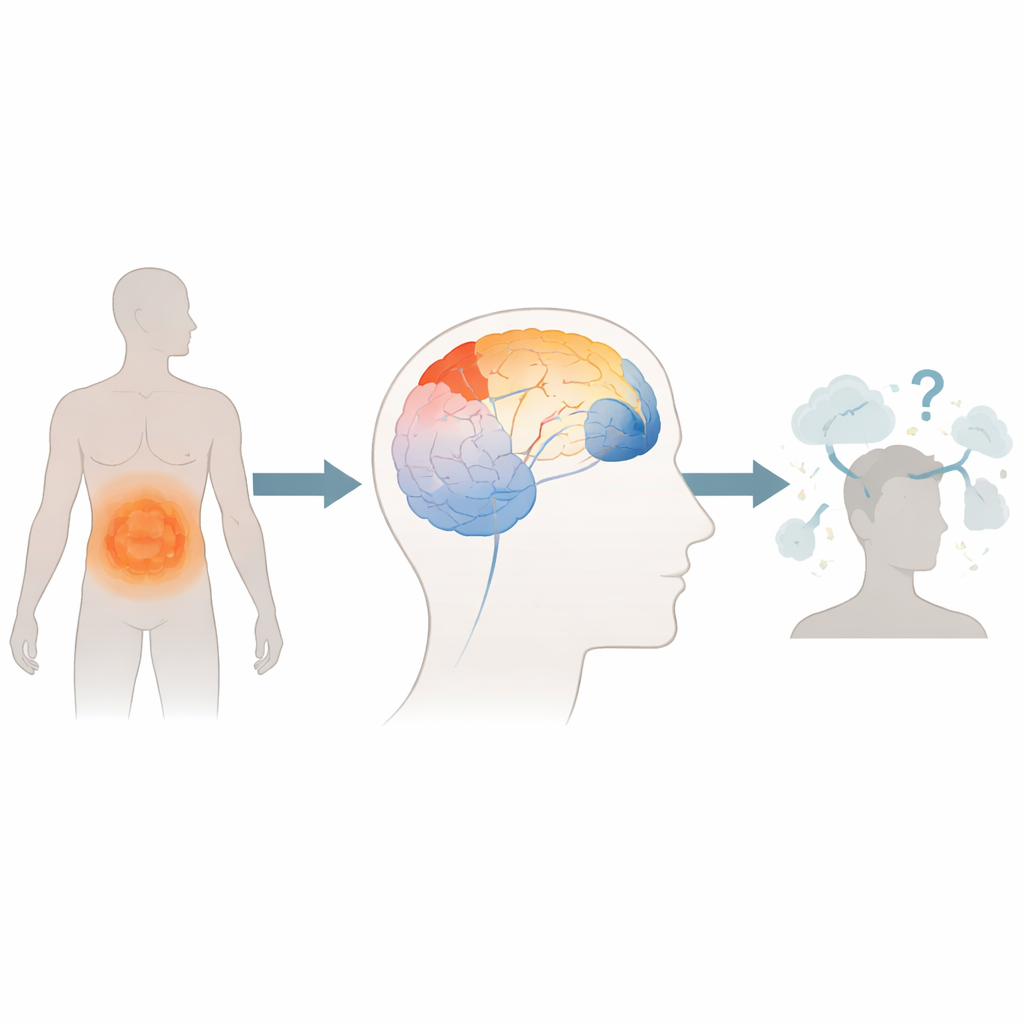
Many people know that type 2 diabetes can harm the heart, eyes, and kidneys, but fewer realize it can also quietly affect the brain. Subtle thinking and memory problems may appear years before dementia, yet doctors still lack simple ways to spot who is most at risk. This study asks a timely question: can patterns of brain activity, combined with modern artificial intelligence, reveal early warning signs of cognitive trouble in people with type 2 diabetes?
Looking inside the brain during emotional confusion
To explore this, researchers recruited 40 middle-aged adults with type 2 diabetes and 30 similar adults without diabetes. Everyone completed a series of thinking and mood tests and then lay in a brain scanner while performing an “emotional Stroop” task. In this task, volunteers saw faces showing happiness or fear, overlaid with emotional words that sometimes matched and sometimes conflicted with the expression. They had to quickly decide whether the face looked happy or fearful while ignoring the distracting word. This setup creates emotional conflict, forcing the brain to work harder to focus and filter out irrelevant information.
Key brain hubs that manage conflict
The team focused on a set of brain regions known to help with mental control, especially when emotions run high. These areas included parts of the frontal lobes and cingulate cortex, as well as a region linked to memory and internal awareness. Earlier large-scale studies showed that these regions form a common network that helps people stay on task despite distracting or upsetting information, across many different mental health conditions. Here, the researchers measured how strongly these regions talked to one another—known as functional connectivity—while participants handled emotional conflict during the task.
Teaching an artificial network to read brain signals
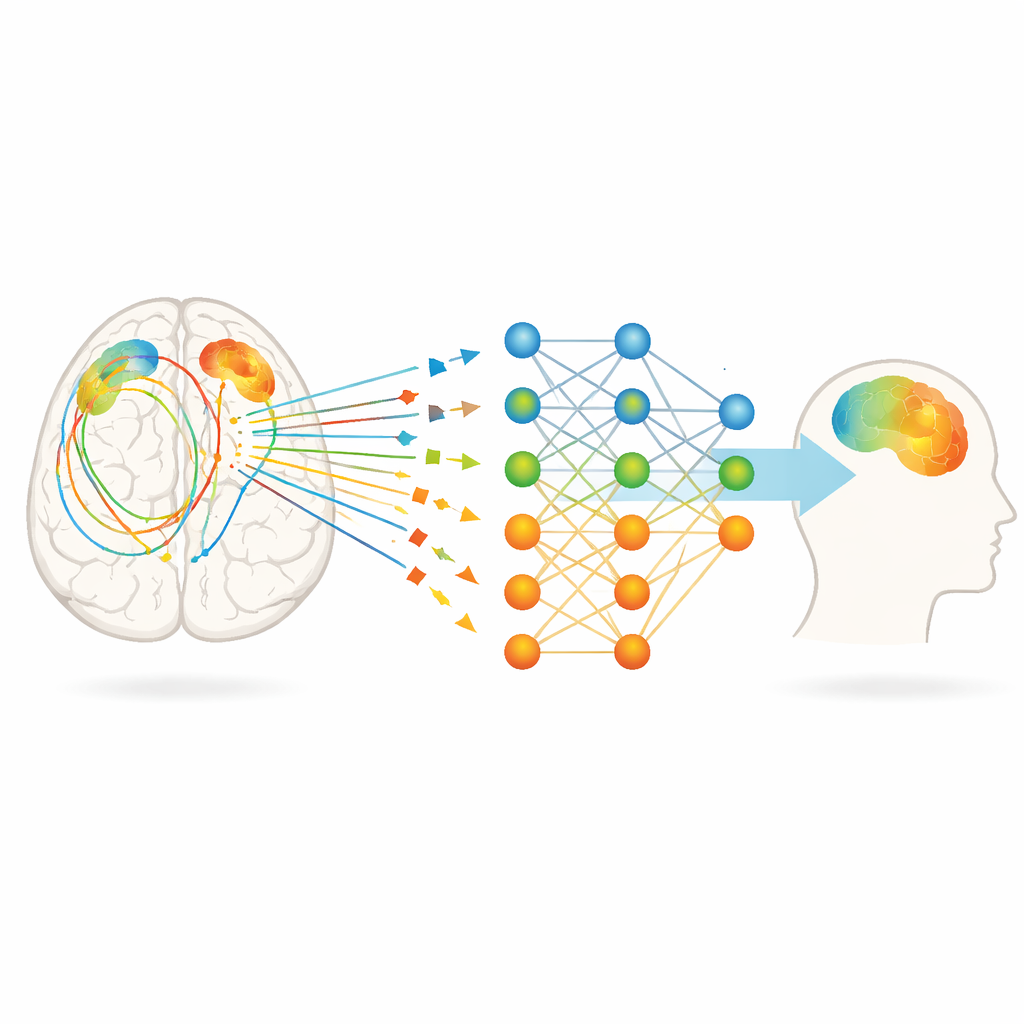
Instead of simply comparing average brain activity between groups, the scientists took a more individualized approach. They fed each diabetes patient’s data into a computer model called a fully connected network, a type of artificial neural network used in machine learning. For each person, the model received five pieces of information: how much the emotional conflict slowed their responses, plus four measures of connection strength between a key conflict-monitoring region and other control and memory areas. The model’s job was to predict that individual’s score on the Montreal Cognitive Assessment, a standard screening test of overall thinking ability. Using a careful tenfold cross-validation scheme, the model was repeatedly trained on most of the patients and tested on the remaining few, until everyone had a predicted score.
Brain wiring patterns linked to thinking ability
The artificial network learned to match brain connectivity patterns with real-world cognitive scores surprisingly well. In the training data, predicted scores closely tracked actual scores, and even in previously unseen patients the predictions showed a meaningful, though more modest, connection to reality. The most informative features came from links involving the anterior cingulate cortex, a region that helps monitor conflict and signal when more mental effort is needed. Altered communication between this hub and other control and memory areas appeared to be particularly important for identifying patients with lower cognitive performance. These findings suggest that diabetes-related changes in how emotional and control networks interact may quietly undermine thinking and memory long before severe problems surface.
What this could mean for everyday care
For now, this work is an early proof of concept, limited by a modest sample size and by focusing on a single time point rather than long-term changes. Still, it points toward a future in which detailed brain scans and smart algorithms might help clinicians flag diabetes patients who are especially vulnerable to cognitive decline, allowing earlier lifestyle changes or treatments. The authors also note that simpler versions of the emotional conflict task, combined with standard paper-and-pencil tools like the traditional Stroop test, might one day offer low-cost ways to capture some of the same warning signals even outside MRI scanners. In plain terms, the study suggests that the way the brain juggles emotions and attention in diabetes could act as an early “brain check engine” light, hinting at who may need extra support to keep their thinking sharp.
Citation: Cheng, Y., Wei, L., Chen, YH. et al. A neuroimaging functional connectivity signature of emotional conflict monitoring predicting cognitive decline in type 2 diabetes. Sci Rep 16, 10436 (2026). https://doi.org/10.1038/s41598-026-41082-5
Keywords: type 2 diabetes, cognitive decline, brain connectivity, emotional Stroop, machine learning