Clear Sky Science · en
Effects of dietary vitamin D supplementation on bone microarchitecture, mineralization, and mechanical properties in Wistar rat animal model
Why this study matters for growing bones
Vitamin D is often called the “sunshine vitamin” because our bodies make it from sunlight, and it is widely promoted for strong bones. Yet it is surprisingly unclear how much extra vitamin D actually helps growing skeletons once basic needs are met, or whether higher doses simply do nothing—or even cause subtle harm. This study in young rats tackles a question with clear echoes for both human health and animal care: during the late teenage–like growth spurt, does giving more vitamin D really build better, tougher bones, and does it work the same way in males and females?
Testing low, medium, and high vitamin D
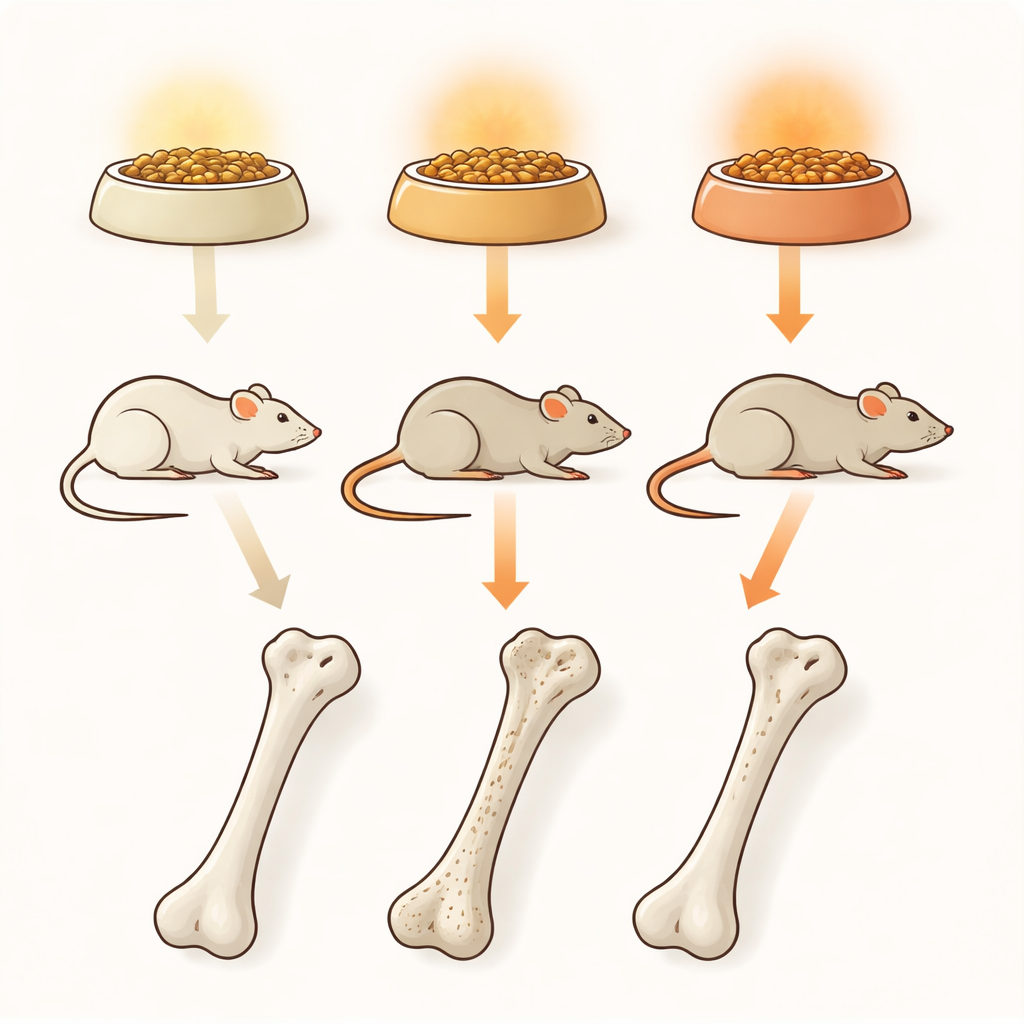
Researchers followed male and female Wistar rats from the equivalent of late adolescence into young adulthood. The animals were fed one of three diets: no added vitamin D, a “standard” amount matching widely used laboratory guidelines, or a higher, still safe dose. Apart from vitamin D, the diets were nutritionally balanced, especially for calcium and phosphorus, the minerals that form bone. After about three months, the team collected detailed measurements: bone mineral density, how much force the thigh bone (femur) could withstand before breaking, the fine internal lattice of spongy bone near the growth plate, the mineral make-up and crystal structure of bone, and blood and tissue markers that reflect how actively bone is being built up or broken down.
What changed in bone mass and strength
Rats that received the standard vitamin D dose had clear advantages over vitamin D–deficient animals. Their femurs contained more mineral and, in both sexes, showed higher bone mineral density. In mechanical tests that bent the bone until it snapped, supplemented rats needed more force to reach fracture, and their bones could absorb more energy before failing—especially in males on the moderate dose. By contrast, body weight and bone length barely changed with diet, indicating that vitamin D was not simply making larger animals but was improving the quality and toughness of bone tissue itself. Notably, raising intake from the standard to the higher dose increased vitamin D levels in the blood but did not consistently produce stronger or denser bones.
Inside the growing ends of the bone
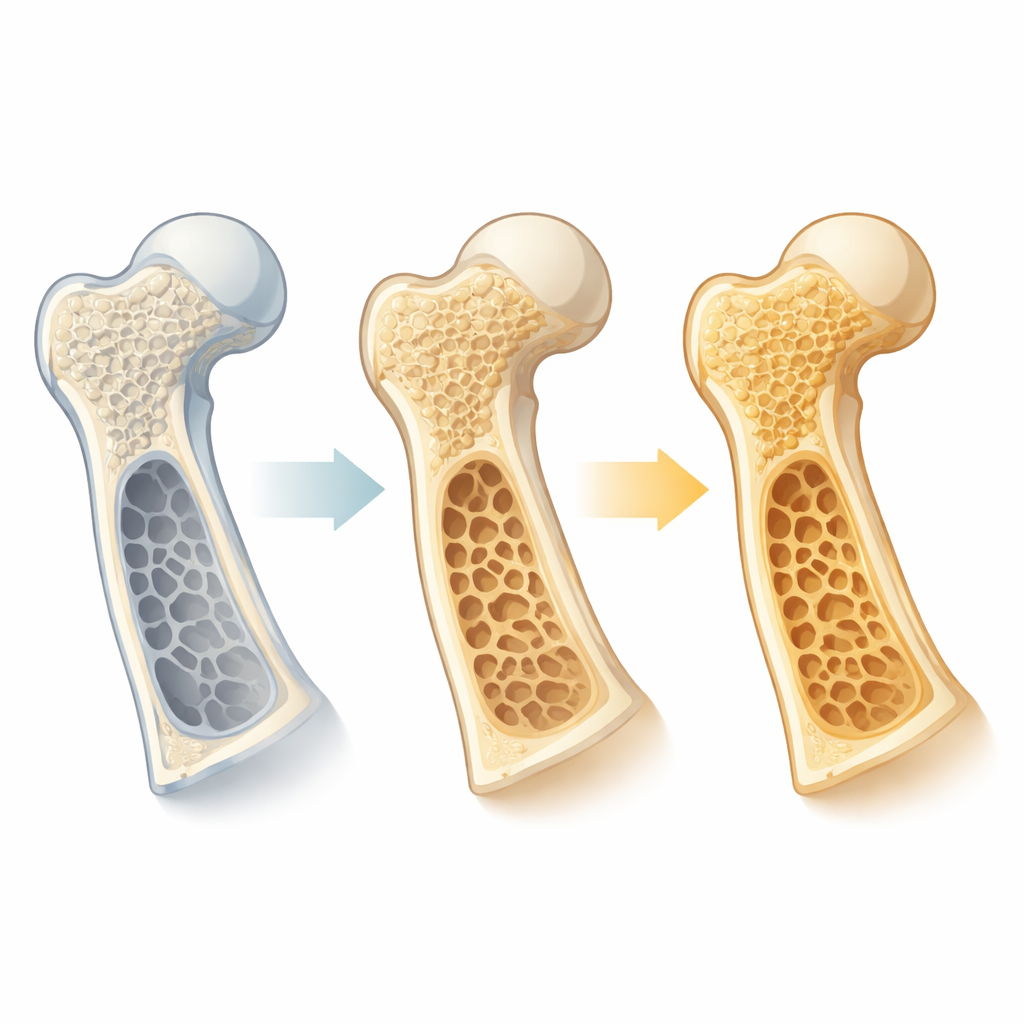
To see how vitamin D affects growth from the inside out, the scientists examined the growth plate—the region at the end of long bones where new bone is formed—and the spongy bone just beneath it. In vitamin D–deficient rats, parts of the growth plate were thickened and disorganized, a pattern reminiscent of early rickets, where cartilage fails to turn efficiently into bone. With the standard dose, these zones looked more streamlined, suggesting smoother progression from cartilage to hard bone. The spongy network beneath, especially in females, became richer: more tiny struts of bone filled the space without making each strut thicker, a pattern associated with resilient, fracture-resistant bone. At the highest dose, however, these improvements did not consistently continue, and in some female growth plates the zone of swollen cells widened again, hinting that too much vitamin D can subtly disturb the maturation process even when overall bone mass appears normal.
Beyond quantity: changes in mineral and signals
The study also probed what the bone was made of and how actively it was turning over. Moderate vitamin D shifted the balance of minerals like calcium, phosphorus, magnesium, copper, and iron and tweaked the arrangement of the tiny crystals that stiffen bone, changes that can influence how bone resists cracks. The response differed by sex: males tended to show larger changes in mineral content and mechanical strength, while females displayed more pronounced shifts in microscopic architecture and in the local activity of proteins that encourage or restrain bone breakdown. In females, supplementation generally reduced signals that promote bone resorption, while in males the same moderate dose sometimes heightened them, suggesting that hormones and sex-specific biology shape how vitamin D is put to use in the skeleton.
What this means for “how much is enough”
Overall, the work paints a nuanced picture: in growing rats, having too little vitamin D clearly harms bone development, undermining mineralization, growth plate function, and mechanical resilience. Providing a moderate, guideline-level dose restores and even improves several aspects of bone quality—from density to toughness and microstructure—relative to deficiency. Pushing the intake higher raises vitamin D levels in the blood but brings no clear, broad benefit to the skeleton and in some details looks no better than the low-dose condition. For lay readers, the take-home message is that vitamin D behaves more like a nutrient with an optimal window than a “more is always better” supplement: enough is crucial for healthy, durable bones during growth, but excess above that point offers diminishing returns and may subtly upset the finely tuned processes that keep our skeletons strong.
Citation: Osiak-Wicha, C., Muszyński, S., Kras, K. et al. Effects of dietary vitamin D supplementation on bone microarchitecture, mineralization, and mechanical properties in Wistar rat animal model. Sci Rep 16, 10181 (2026). https://doi.org/10.1038/s41598-026-41077-2
Keywords: vitamin D and bone health, adolescent bone development, bone microarchitecture, dietary supplementation in rats, sex differences in skeleton