Clear Sky Science · en
Adaptive routing protocol for large-scale power internet of things based on edge computing and federated learning
Smarter Power Grids for Everyday Life
Modern power grids are turning into giant digital systems filled with smart meters, sensors, electric cars, and rooftop solar panels. Keeping all these devices talking smoothly and using as little energy as possible is a huge challenge. This paper introduces a new way for these devices to decide how to send information across the grid so that data moves faster, uses less power, and still keeps sensitive information private.
The Challenge of Too Many Different Devices
Today’s power networks contain millions of different gadgets: home smart meters, temperature and voltage sensors along power lines, controllers in substations, and protection relays that must react in milliseconds. Each uses different communication technologies and has its own timing and power needs. Some are plugged into the grid and can use plenty of energy; others run on tiny batteries and must last for months or years. Traditional routing methods that simply look for the shortest path to send data ignore these differences. As a result, they waste energy, cause delays, and start to break down when the network grows beyond a few thousand devices.
Thinking Locally at the Edge
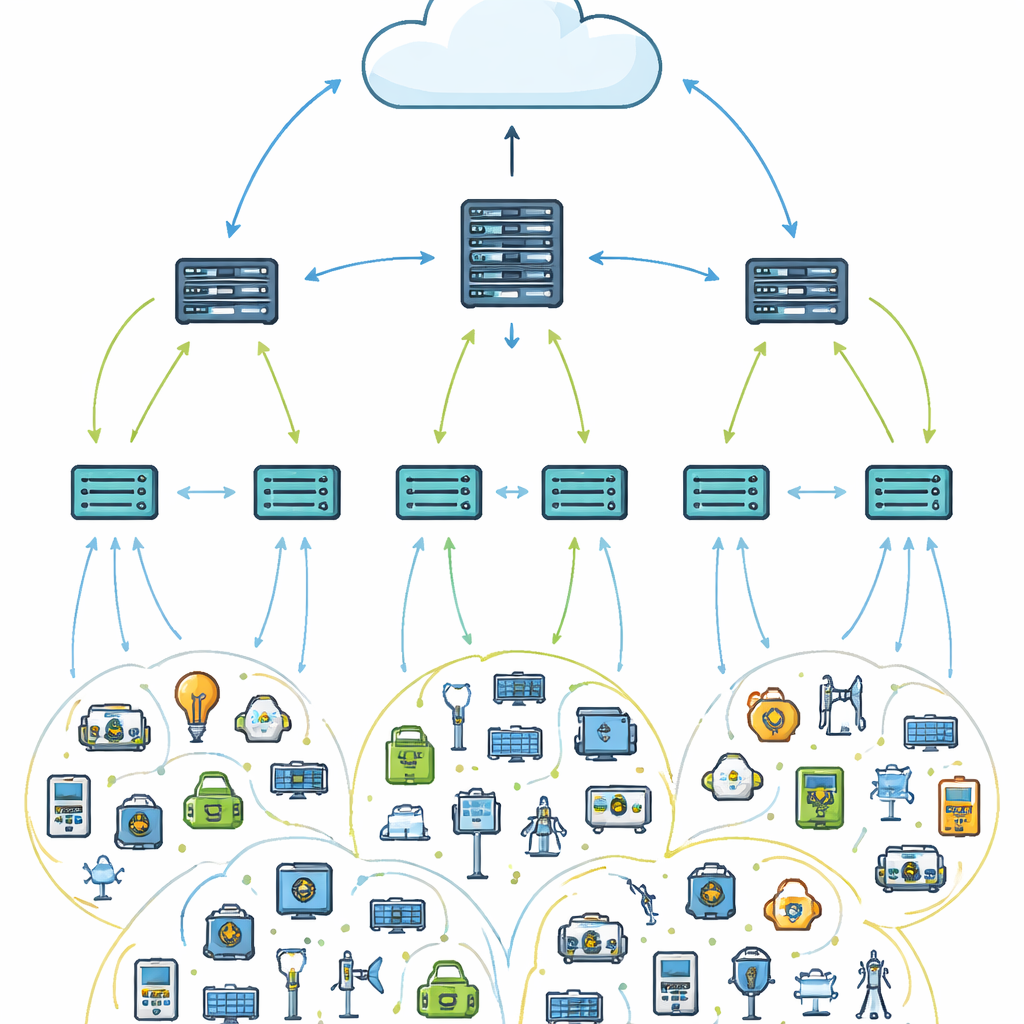
To cope with this complexity, the authors design a layered system that spreads intelligence throughout the grid. At the bottom are the many field devices; above them sit small computers called edge nodes, then regional “fog” nodes, and finally the cloud. Edge nodes sit close to where data is created and can quickly decide how nearby messages should travel, without waiting for a distant central server. They discover which devices are present, learn how busy or energy‑hungry each one is, and choose paths that balance speed, reliability, and battery life. This local decision‑making sharply cuts the time it takes to react to changes in the grid.
Learning Together Without Sharing Raw Data
A key idea in this work is using federated learning, a method that allows many edge nodes to train a shared prediction model without ever sending their raw data to a central place. Each node observes local traffic, link quality, and device energy levels, then trains its own copy of a machine‑learning model that predicts how the network will behave in the next moment. From time to time, the nodes send only the model parameters—not the underlying measurements—to higher‑level nodes, which average them and send back an improved model. Extra privacy techniques add noise to these updates so that information about any single device cannot be reconstructed, helping utilities meet strict data‑protection rules.
Routing That Adapts in Real Time
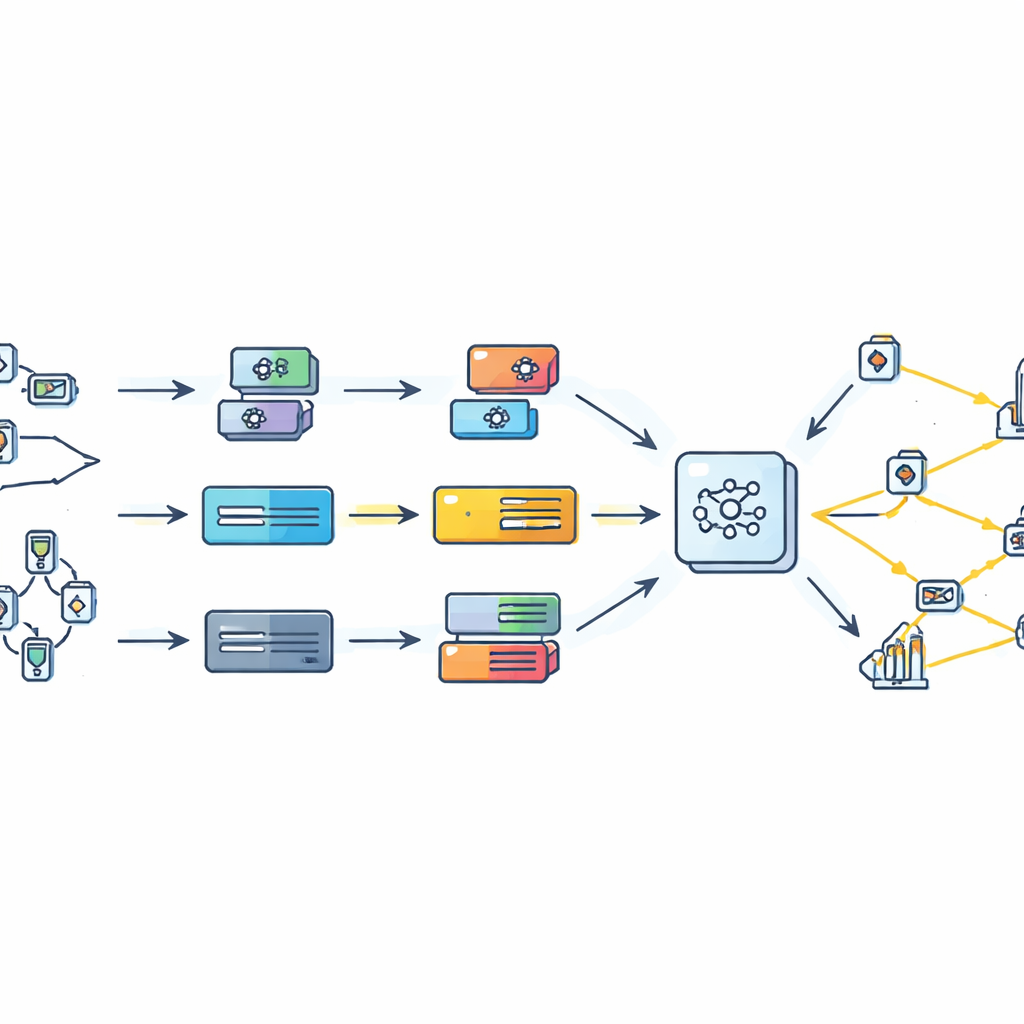
Armed with these predictions, the routing system can act before trouble appears. If the model foresees that a link will soon be overloaded, the protocol shifts traffic to alternate paths. If a device’s battery is running low, it is assigned lighter duties or put into a deeper sleep mode while other nodes take over. The routing choices are guided by several goals at once: keeping delays low for time‑critical messages, preserving battery life where needed, and avoiding unreliable links. Behind the scenes, a sophisticated learning algorithm keeps adjusting the importance of these goals based on how well the network is performing, allowing the system to steadily improve.
Proven Gains in Speed and Energy Savings
The researchers test their approach using detailed computer simulations of power‑grid networks containing up to 10,000 devices, realistic wireless channels, and strict timing requirements. Compared with well‑known routing methods and even a powerful centralized machine‑learning solution, their adaptive, federated design delivers 35–50% more data throughput, cuts end‑to‑end delays by 40–60%, and reduces total energy use by 45–65%. Battery‑powered sensors last two to almost four times longer, and the system remains stable even when devices fail or communication links are disrupted. Importantly, these benefits hold as the network grows, while traditional methods deteriorate rapidly beyond about 1,000 devices.
What This Means for Future Energy Systems
In everyday terms, this work shows how a power grid packed with smart devices can stay fast, reliable, and efficient without giving up privacy. By letting local edge computers learn from experience and share only what they have learned—not the raw data—they create a communication system that scales to city‑ or nation‑wide deployments. This makes it easier to integrate rooftop solar, electric vehicles, and other new technologies, all while lowering energy waste and extending the life of field equipment.
Citation: Zhang, Y., Zhang, S., Li, S. et al. Adaptive routing protocol for large-scale power internet of things based on edge computing and federated learning. Sci Rep 16, 12246 (2026). https://doi.org/10.1038/s41598-026-41074-5
Keywords: smart grid, internet of things, edge computing, federated learning, energy efficient routing