Clear Sky Science · en
Exploring the toxicological effects of Di-O-benzoyldiethylene glycol plasticizer on allergic rhinitis through network toxicology combined with molecular docking and molecular simulation
Why a "greener" plastic matters for your nose
Plastic is everywhere in modern life, and so are the chemical additives that keep it flexible and durable. One such additive, Di-O-benzoyldiethylene glycol, has been promoted as a safer, eco-friendly replacement for older plasticizers that are known to harm health. Yet we still know very little about what this “greener” option does inside the human body, especially to the nose and airways, where allergic rhinitis—better known as hay fever—begins. This study uses powerful computer-based methods to ask a simple but urgent question: could this new plasticizer quietly contribute to allergies and inflammation in the nose?
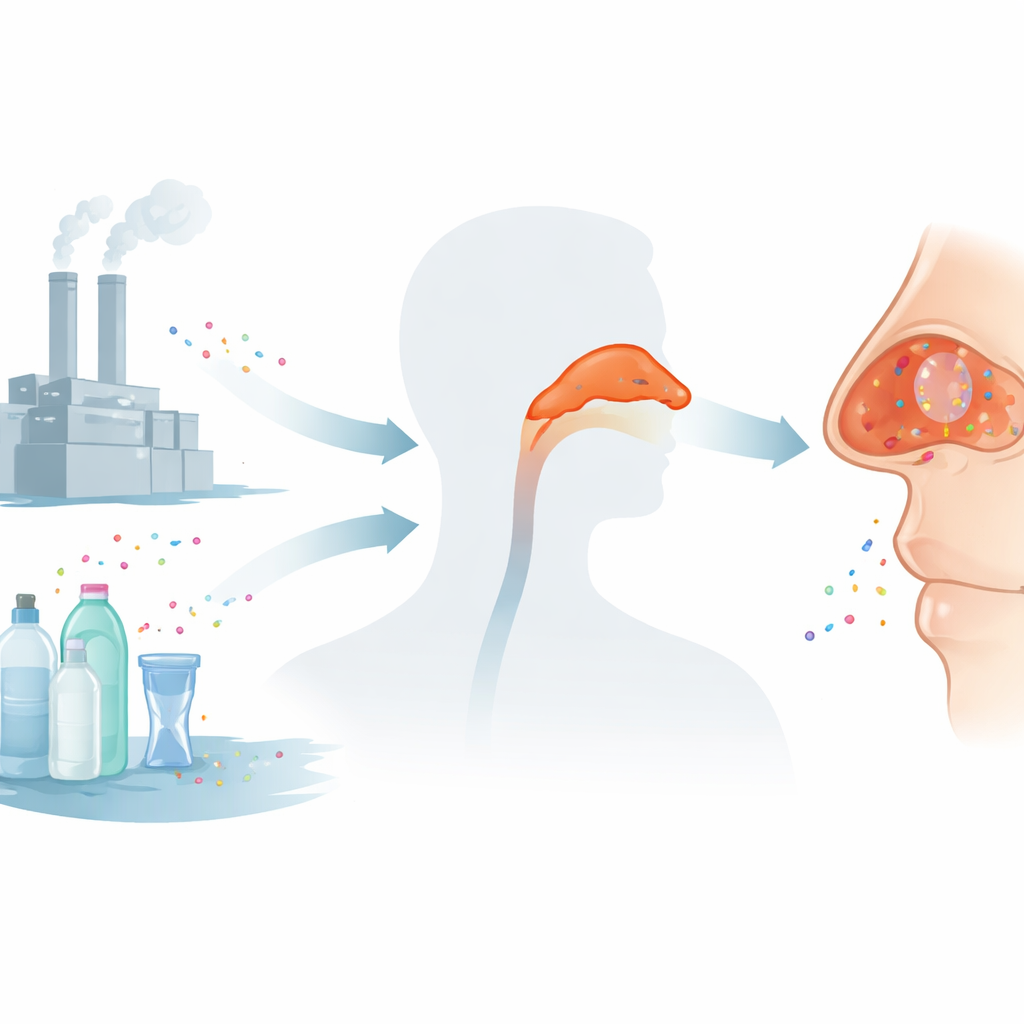
From everyday plastics to the human body
Di-O-benzoyldiethylene glycol is now widely used in floor coverings, sealants, synthetic leather, and many other products. As these materials age, tiny amounts of the plasticizer can leak into air, dust, water, and soil. People then take it in through breathing and food. The authors first used online toxicology tools to predict how this compound behaves in the body. The results suggest that it dissolves poorly in water but mixes well with fats, a combination that helps it cross cell membranes and even reach the brain. The same tools flagged high chances of damage to the liver, nerves, immune system, and lungs, hinting that a supposedly “low-toxicity” plasticizer may not be as harmless as hoped.
Connecting a single chemical to a web of body targets
Instead of looking at one organ at a time, the team used “network toxicology” to map all the proteins in the human body that this plasticizer is likely to touch. By mining several large databases, they predicted 695 possible protein targets for the compound. Then they pulled together thousands of genes already linked with allergic rhinitis. The overlap—241 shared targets—forms a crossroad where this plasticizer and the biology of hay fever meet. When the researchers examined how these shared proteins interact with each other, they found a tightly connected cluster centered on five key players that help control cell survival and inflammation: AKT1, BCL2, EGFR, ESR1, and TNF.
How the plasticizer may stir up immune and allergy pathways
To learn what this network actually does, the authors examined which biological pathways these targets belong to. Many fell into well-known routes that drive inflammation and immune reactions, including the PI3K–AKT pathway, NF-κB signaling, Toll-like receptor signaling, and pathways that guide the behavior of a subset of immune cells called Th17 cells. All of these are strongly implicated in allergic diseases and airway irritation. In simple terms, the predicted targets of Di-O-benzoyldiethylene glycol sit right in the middle of the body’s control knobs for swelling, mucus production, and sensitivity to allergens—exactly the processes that make life miserable for people with allergic rhinitis.
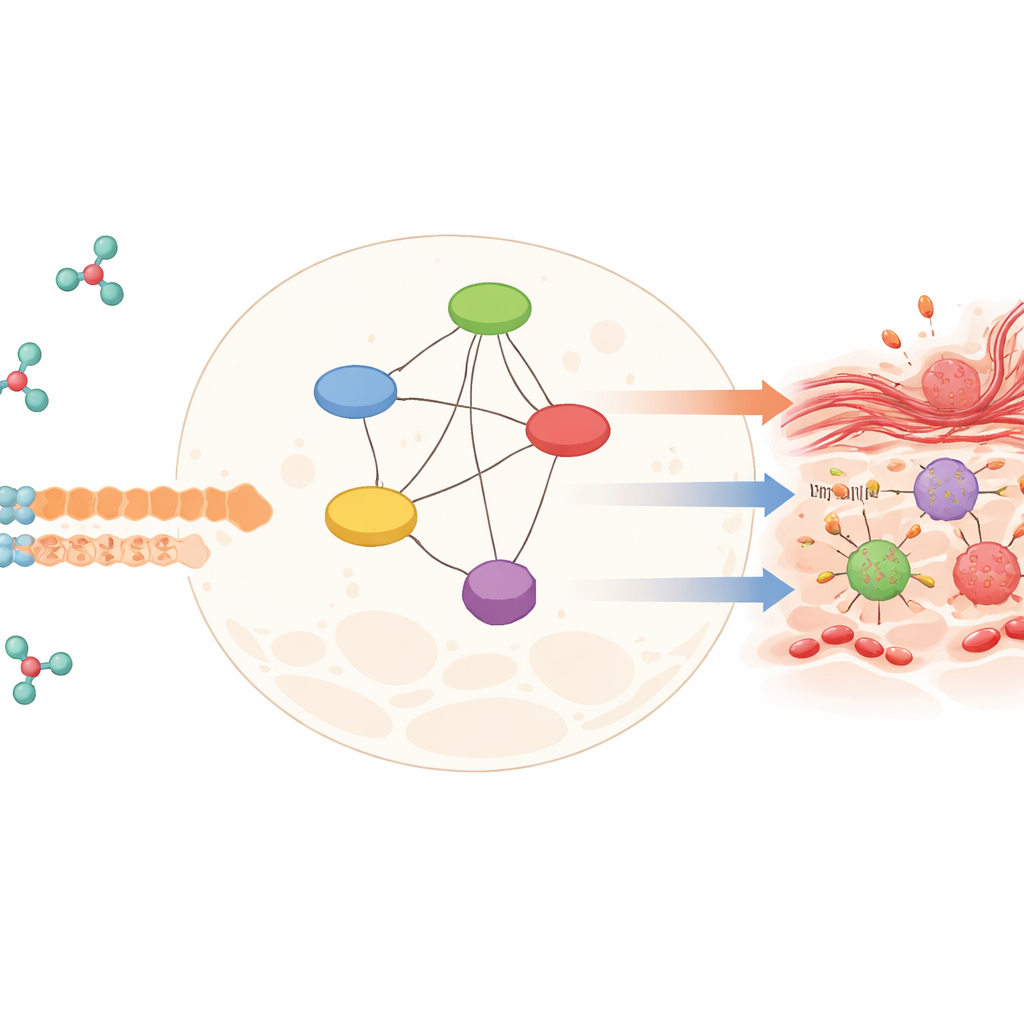
Zooming in on molecular handshakes
The researchers then used detailed three-dimensional models to see whether the plasticizer could physically “dock” onto the five core proteins. Their simulations showed snug, energetically favorable fits with AKT1, BCL2, EGFR, and especially ESR1, suggesting that the chemical could meaningfully alter how these proteins behave. They went a step further with tumor necrosis factor (TNF), a master switch for inflammation. Using molecular dynamics, which mimics the constant motion of molecules in living cells, they observed that the plasticizer and TNF formed a stable complex over time, held together mainly by close-range attractive forces. This stable binding implies that Di-O-benzoyldiethylene glycol could directly influence one of the body’s primary drivers of allergic inflammation.
What it all means for allergies and everyday exposure
Taken together, the findings paint a cautionary picture. A plasticizer marketed as eco-friendly appears capable, at least in silico, of entering the body, latching onto crucial immune and signaling proteins, and nudging networks that control inflammation and allergy toward an overactive state. In everyday terms, the compound may help set the stage for the nose to become more reactive, more inflamed, and more prone to allergic rhinitis. While these results come from computer-based analyses rather than human or animal exposures, they underline the need to test new “greener” plasticizers just as rigorously as the chemicals they replace. The study offers an early warning and a scientific roadmap for future experiments, helping regulators and clinicians better gauge the hidden allergy risks that may come packaged with modern plastics.
Citation: Liu, P., Zhang, Y., Niu, X. et al. Exploring the toxicological effects of Di-O-benzoyldiethylene glycol plasticizer on allergic rhinitis through network toxicology combined with molecular docking and molecular simulation. Sci Rep 16, 11209 (2026). https://doi.org/10.1038/s41598-026-41067-4
Keywords: plasticizers, allergic rhinitis, environmental pollutants, immune inflammation, molecular docking