Clear Sky Science · en
Enhanced glucose forecasting using recurrent neural network and advanced feature engineering
Why predicting sugar swings matters
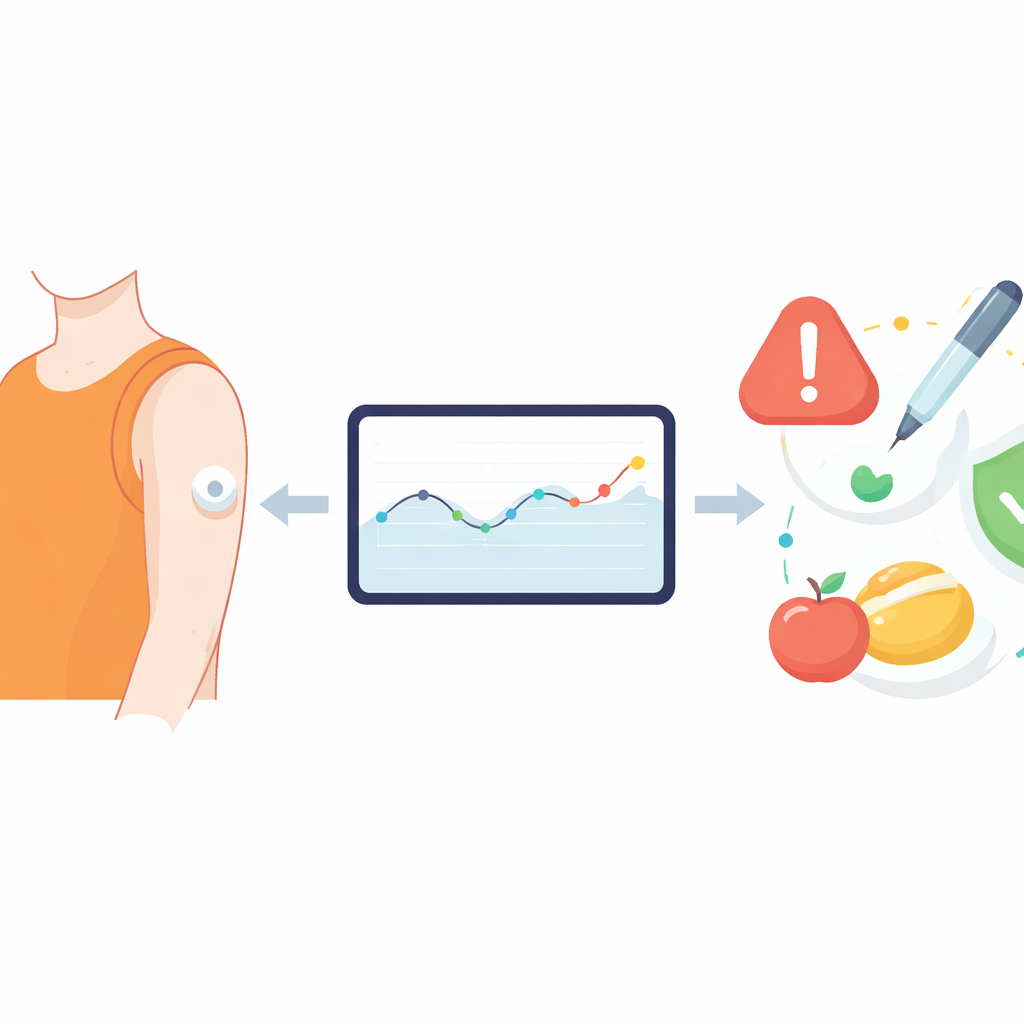
For people living with diabetes, dangerous drops or spikes in blood sugar can arrive with little warning, leading to confusion, fainting, or long-term damage to the heart, eyes, and nerves. Modern sensors can track sugar in the blood every few minutes, but they mostly show what is happening right now, not what will happen soon. This study explores how artificial intelligence can turn streams of sensor data into short-term forecasts, giving patients and caregivers about half an hour’s warning before trouble hits.
From tiny sensors to early warnings
The research centers on continuous glucose monitors—small wearable devices that measure sugar levels in the fluid under the skin roughly every five minutes. Instead of just displaying these readings, the authors build a digital pipeline that takes the sensor data in, cleans it, and then predicts where glucose levels will be 30 minutes in the future. The goal is simple but powerful: alert someone in time to drink juice before a dangerous low, or adjust insulin before a looming high, improving day-to-day safety and long-term health.
Cleaning up messy real-world data
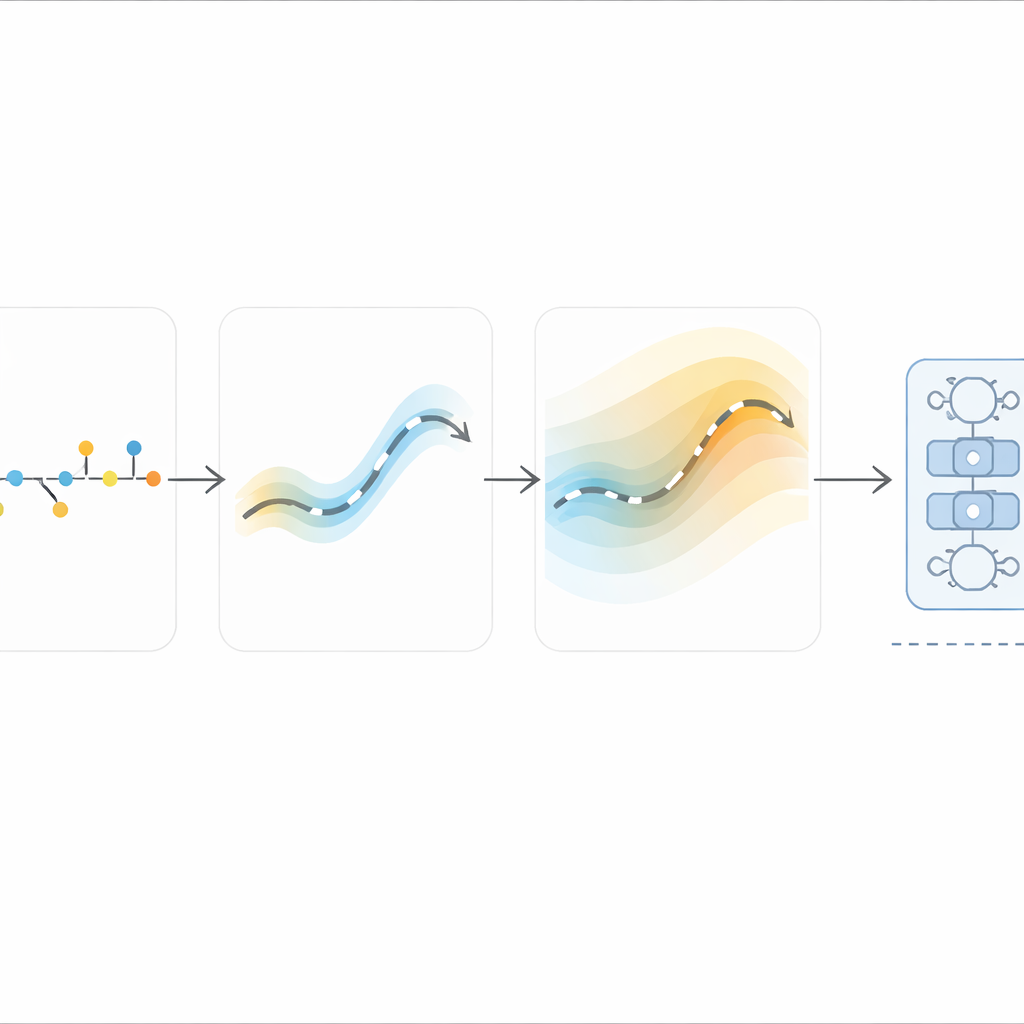
Real sensor data are far from perfect. Signals can be lost when a person removes the device, when wireless links fail, or when the sensor misfires. Instead of discarding these stretches, the team designs a “hybrid” repair strategy that depends on how long a gap lasts. Tiny gaps are smoothed over by drawing curves between nearby points; medium gaps are filled using a time-series model that guesses likely values based on past patterns; very long gaps are treated as breaks where the data are split into separate segments. This careful handling of missing information keeps the forecasts from being misled by sudden jumps or flat lines that are not real.
Teaching the model to understand sugar behavior
Rather than feeding only the raw readings into their system, the researchers build extra signals from each person’s glucose history. They calculate how much the sugar level has just changed, how it is trending over the past hour, its average and ups-and-downs over that period, and what time of day and day of the week it is. These added clues capture daily rhythms—such as morning rises or nighttime lows—that raw numbers alone might hide. Tests show that the hour-long average and recent trend are especially important for spotting whether someone is drifting toward low, normal, or high ranges.
A lean brain-inspired model for fast forecasts
Once the data are repaired and enriched, they are passed to a recurrent neural network, a type of AI model well-suited to sequences, much like language or music. Here, the model looks back over the previous hour of readings and derived signals and then predicts the glucose level six steps (30 minutes) ahead. The authors deliberately choose a relatively simple version of this model to keep it light enough for real-time use, for instance in a phone app connected to a cloud service. They train a separate model for each of 12 adults with type 1 diabetes, allowing the system to adapt to each person’s unique glucose patterns.
How well does the digital lookout perform?
Across all 12 participants, the forecasts track real glucose values closely, explaining nearly 90% of the ups and downs in the data. When judged with a safety tool widely used in diabetes care, more than 98% of predictions fall in zones considered either accurate or harmless for medical decisions, and none land in zones where errors could be life-threatening. The system is especially strong at foreseeing low-sugar episodes, which are among the most feared events for patients. Importantly, the model matches or beats results from more complex approaches in earlier studies while using only the sensor readings, making it more practical for everyday life where detailed meal and insulin logs are often missing or unreliable.
What this means for daily life with diabetes
To a non-specialist, the takeaway is that smart software can act as an early-warning lookout built on the same sensors many people with diabetes already wear. By intelligently repairing gaps in the data and teaching a streamlined AI model to recognize personal patterns, the system can offer half an hour of advance notice before sugar levels drift into risky territory. While the study is based on a modest number of participants and needs to be tested in larger, more varied groups, it points toward a future in which phone or watch alerts not only report current glucose but also quietly watch ahead, helping people steer around danger rather than reacting after it strikes.
Citation: Osman, M.H., Mahmoud, M., Zakzouk, S. et al. Enhanced glucose forecasting using recurrent neural network and advanced feature engineering. Sci Rep 16, 12036 (2026). https://doi.org/10.1038/s41598-026-41066-5
Keywords: diabetes, blood glucose forecasting, continuous glucose monitoring, artificial intelligence, recurrent neural networks