Clear Sky Science · en
Estrous cycle modulates fasting-induced torpor propensity via hypothalamic estrogen signalling
A Hidden Survival Trick in Small Warm-Blooded Animals
When food is scarce, many small mammals can briefly dial down their metabolism and body temperature, slipping into a low-energy state called torpor. This study uncovers how a common female hormone, estrogen, helps decide when female mice use this survival trick during fasting. Understanding this built-in “energy saver mode” could one day help doctors protect patients’ organs, guide space travel strategies, or shed light on how reproduction and energy balance are tightly linked in mammals, including humans.
Turning Down the Body’s Furnace
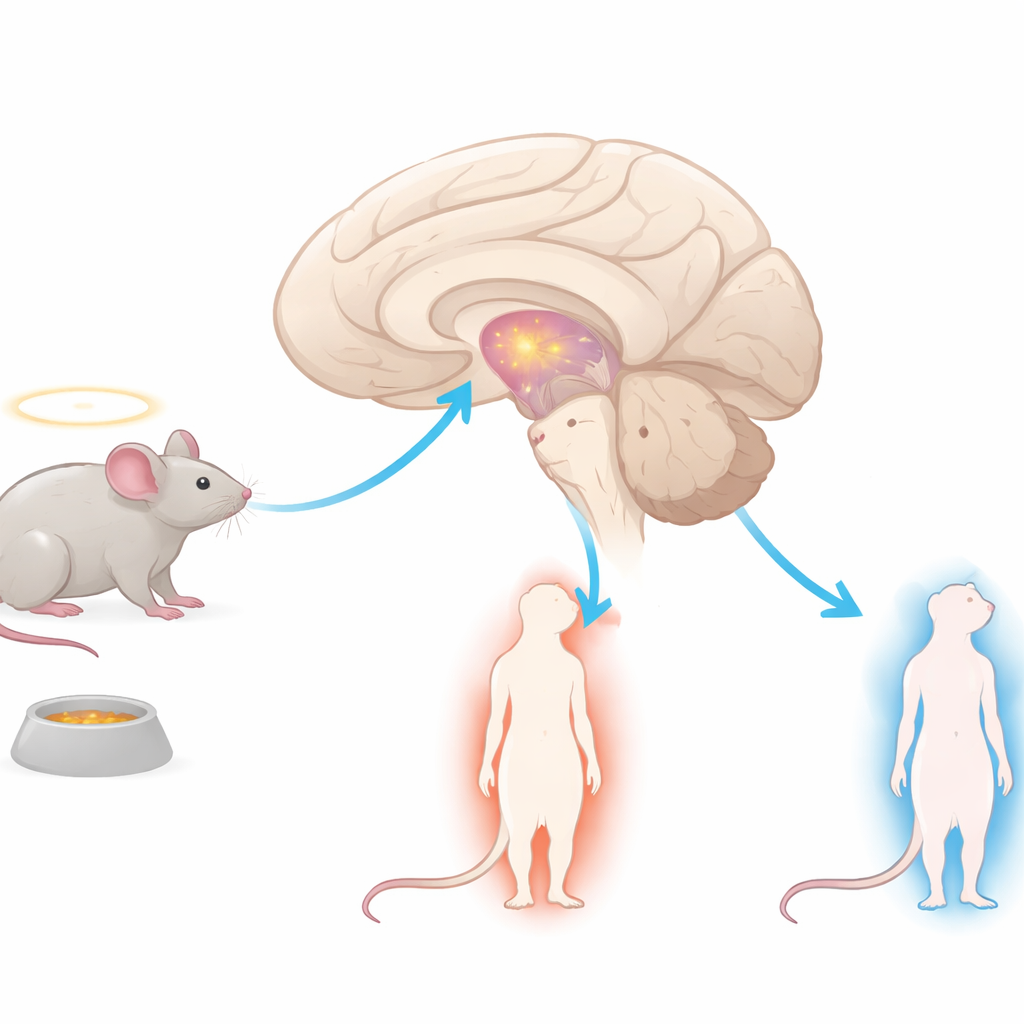
Keeping a warm, stable body temperature is costly, especially for tiny animals that lose heat quickly. Mice may spend about half of their daily energy just staying warm at typical room temperatures. When food runs short, this cost becomes dangerous. Torpor offers a clever solution: the animal lets its metabolism crash to a small fraction of normal, and its body temperature drops to a much lower level, sometimes close to the temperature of the surrounding air. This shift is not like freezing or collapse; it is a controlled, reversible state governed by specific brain circuits, particularly in a region called the preoptic area, which helps regulate body heat and energy use.
The Role of Female Hormones Across the Cycle
The researchers focused on female mice because many earlier torpor studies noticed that females seemed more likely to enter this energy-saving state than males. Female mice go through a repeating estrous cycle, similar in concept to the human menstrual cycle, with hormone levels rising and falling over a few days. The team tracked the stage of this cycle and then fasted the same mice for 24 hours while recording their surface body temperature with thermal cameras. They found that torpor was not constant: it was deepest, lasted the longest, and began the earliest during a stage called diestrus, when the hormone estradiol (a form of estrogen) is naturally at its highest. During estrus, when estradiol is lowest, torpor was shallower, shorter, and took longer to begin.
Females, Males, and the Power of Estradiol
To see whether hormone levels themselves were driving these differences, the scientists compared fasting-induced torpor in male and female mice. Females in the high-estrogen diestrus stage showed stronger torpor than males: their body temperature fell further and they stayed in torpor longer. But males also tended to be heavier, and when the researchers adjusted for body weight, the apparent sex difference largely disappeared, suggesting that smaller body size, not sex alone, helps explain deeper torpor. The key test came next: giving extra estradiol to both males and females. In females, adding estradiol during a naturally low-hormone stage made torpor bouts longer and tended to deepen the temperature drop. In males, the same treatment did not change torpor meaningfully, hinting that female brains are especially tuned to respond to this hormone for energy saving.
Zooming In on a Small Brain Hub
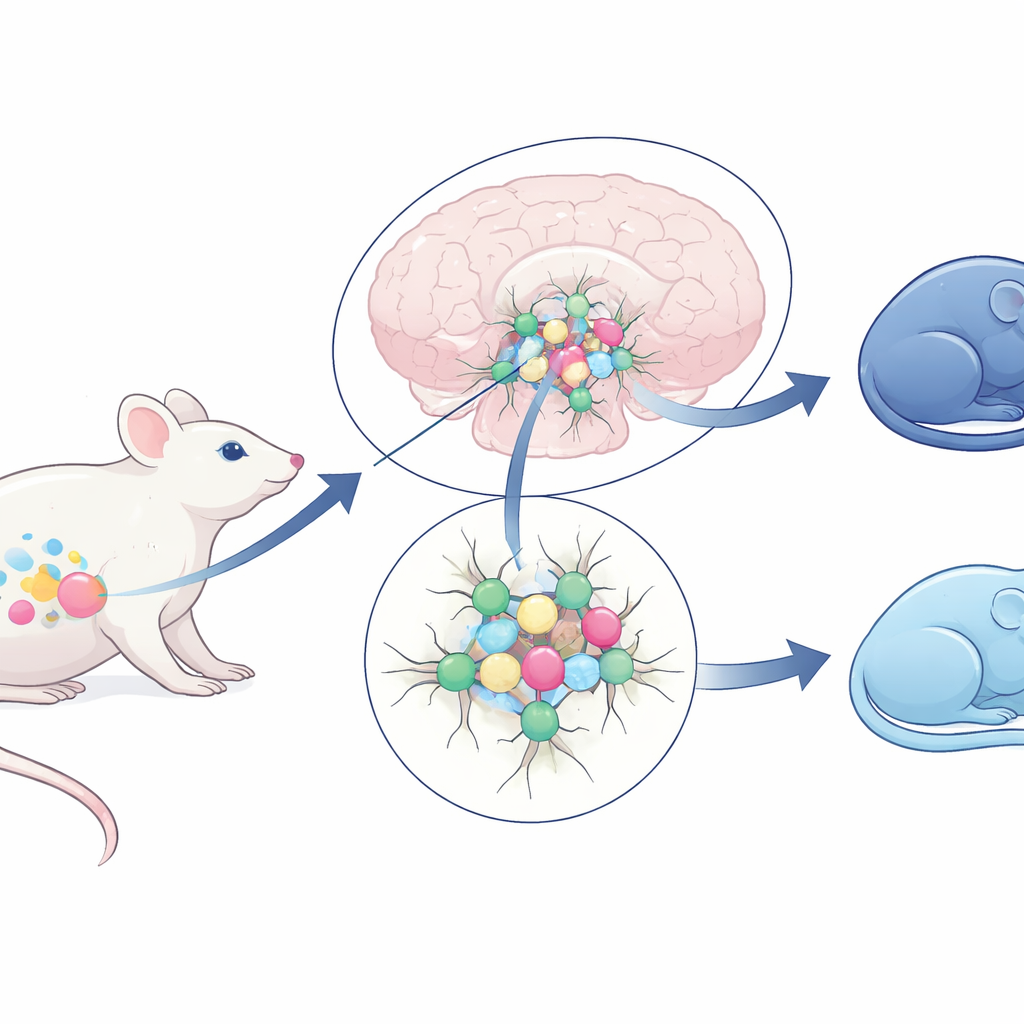
The team then asked where in the brain estradiol was acting. Prior work had identified a small set of neurons in the preoptic area that can actively drive torpor when artificially stimulated, and these neurons carry a particular estrogen receptor called ERα. To test its importance, the researchers used viral tools to reduce ERα in the preoptic region of female mice. After this targeted knockdown, fasting-induced torpor became weaker: mice spent less time in the torpor state and their body temperature did not fall as far, even though the timing of torpor onset was unchanged. This showed that normal signaling through ERα in this brain hub helps maintain deep, prolonged torpor during food shortage, rather than simply deciding whether torpor starts at all.
Why This Matters for Reproduction and Energy Use
Taken together, the results reveal that estradiol makes female mice more willing and able to enter strong torpor during fasting, mainly by acting on estrogen-sensitive neurons in the preoptic area of the hypothalamus. Torpor propensity rises and falls across the estrous cycle, peaking when estradiol is highest and dropping when females are most likely to be fertile. The authors suggest this rhythmic pattern may be an evolutionary compromise: during times when pregnancy is most likely, deep torpor could be risky for embryos, so the body holds back; when fertility is lower, energy-saving torpor can be used more freely. By linking hormone cycles, energy balance, and brain control of body temperature, this work helps explain how female physiology intelligently balances the demands of survival and reproduction.
Citation: Marshall, C.J., Pickering, A.E. & Ambler, M.T. Estrous cycle modulates fasting-induced torpor propensity via hypothalamic estrogen signalling. Sci Rep 16, 11214 (2026). https://doi.org/10.1038/s41598-026-41051-y
Keywords: torpor, estradiol, hypothalamus, energy balance, female reproduction