Clear Sky Science · en
Machine learning-driven discovery of STAT1 and TRIM22 as immune biomarkers for lupus nephritis: translational insights into diagnosis and pathogenesis
Why this matters for people with lupus
Lupus can quietly damage the kidneys, sometimes long before symptoms become obvious. Today, doctors often need a kidney biopsy—an invasive procedure—to confirm this kind of damage, called lupus nephritis. This study asks a simple but powerful question: could a regular blood test, guided by modern data science, reveal early, reliable signals of kidney involvement and spare some patients from biopsy?
Looking for clues in the blood
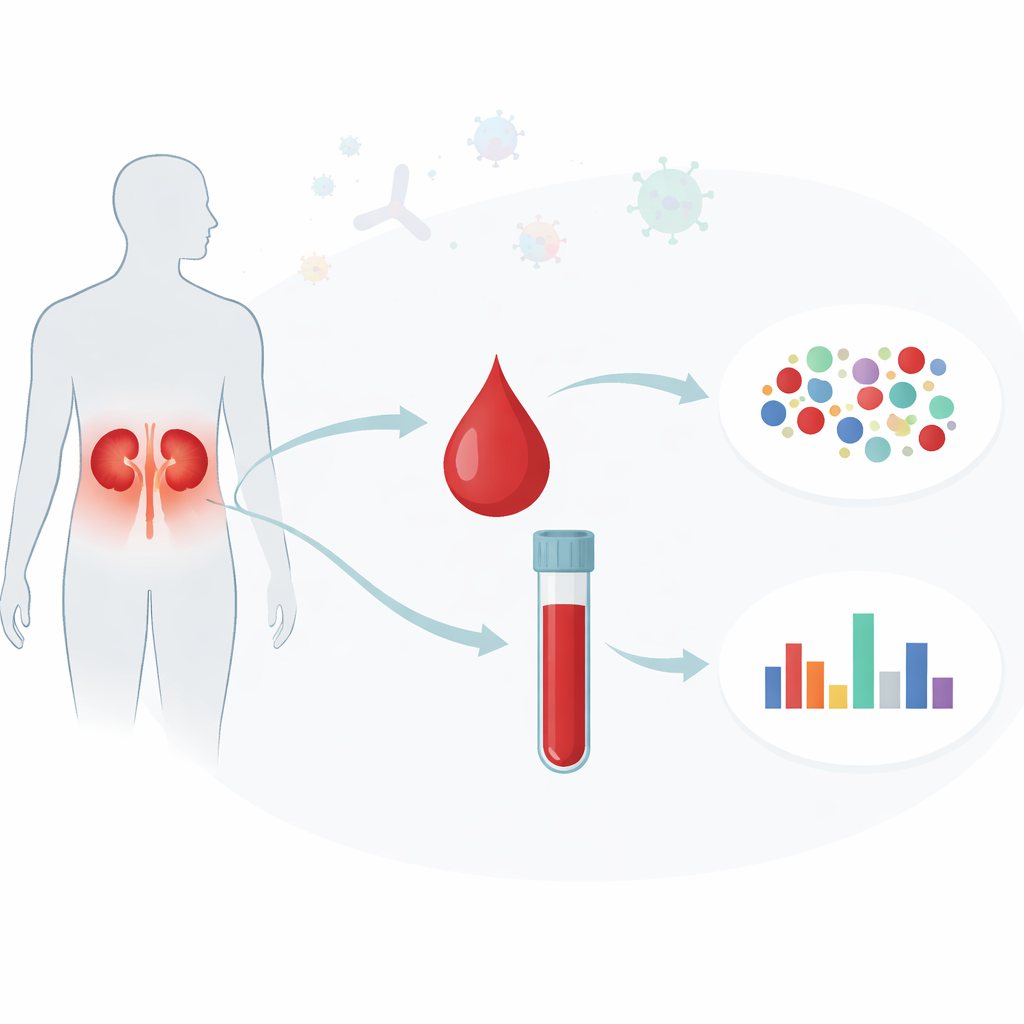
The researchers focused on people with lupus nephritis and healthy volunteers, but instead of starting in the clinic, they started in big public gene-expression databases. These databases record which genes are turned “up” or “down” in different diseases. By combining data from three separate groups of patients, they searched thousands of genes measured in blood cells to find those that consistently behaved differently in people with kidney involvement compared with healthy individuals.
Using smart algorithms to narrow the field
From this broad search, the team first identified 320 genes that changed their activity in lupus nephritis, and then zeroed in on 53 that were known to be related to the immune system. To avoid chasing false leads, they used several independent machine-learning methods—computer programs that can spot subtle patterns in large datasets—to rank these genes by how well they separated patients from healthy controls. Only genes that repeatedly scored highly across all methods were kept, yielding four strong candidates: CD40LG, RETN, TRIM22, and STAT1.
Testing the best candidates in real patients
Statistical models based on these four genes showed good power to distinguish lupus nephritis from health in the public datasets. But databases are only the first step. To see which markers held up in real-world samples, the team collected blood from 13 patients with lupus nephritis and 10 matched healthy volunteers. They directly measured the activity of each candidate gene using a sensitive laboratory technique. In these fresh samples, only two genes—STAT1 and TRIM22—were clearly and consistently higher in patients than in healthy people. The other two genes did not differ enough to be useful as routine blood markers.
How the new markers fit the immune puzzle
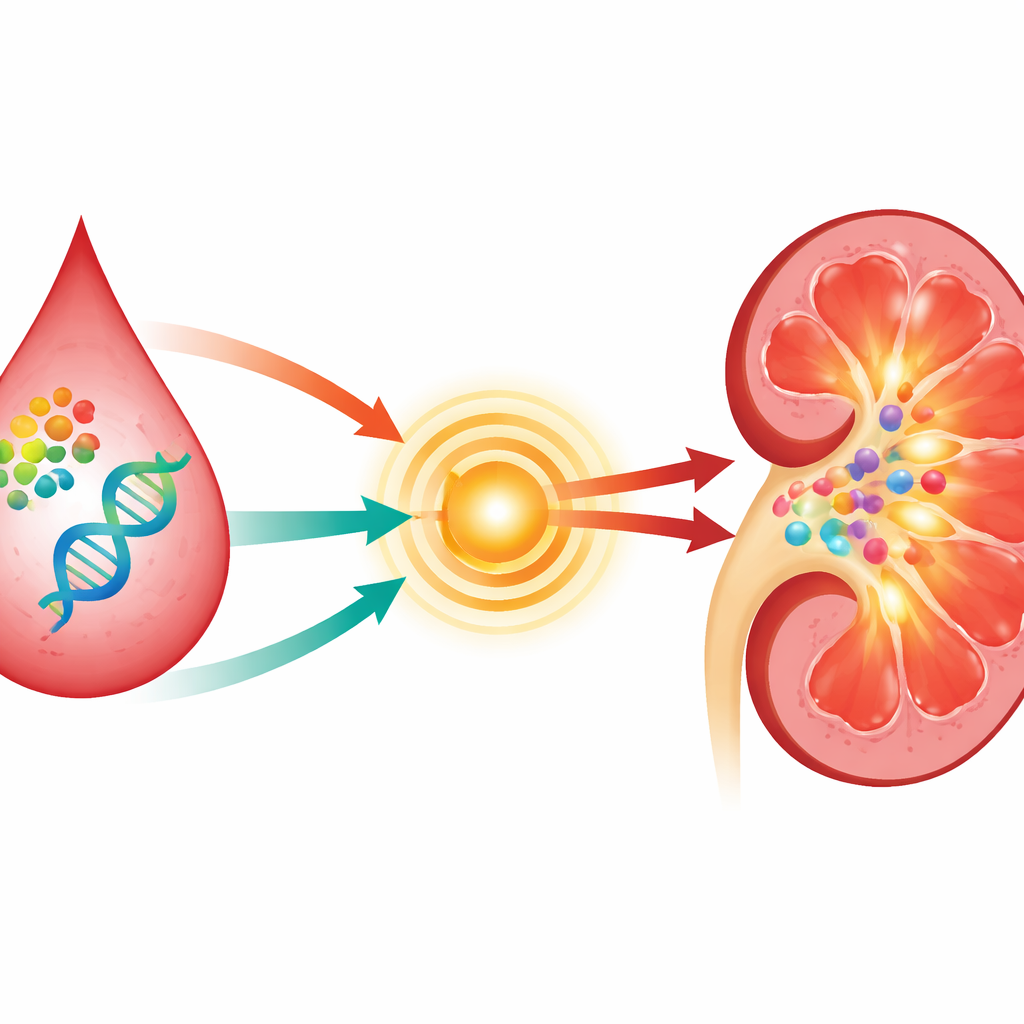
STAT1 and TRIM22 are both switched on by interferons, immune messenger molecules that are already known to play a central role in lupus. When the researchers looked back into the large gene datasets, they saw that higher levels of these two genes went hand-in-hand with stronger signatures of inflammation and with shifts in specific immune cell types, including T cells and natural killer cells. Yet, in their clinical cohort, the levels of STAT1 and TRIM22 did not track with short-term measures of disease severity, such as protein in the urine or standard lupus activity scores. The authors suggest that these genes may reflect a more stable, underlying “interferon imprint” of lupus nephritis that persists even when symptoms rise and fall under treatment.
Building a simple blood-based risk score
Using just STAT1 and TRIM22, the team built a compact diagnostic model—a kind of scoring system based on gene activity in blood cells. In both the public datasets and their own patient group, this two-gene panel separated lupus nephritis patients from healthy individuals with high accuracy, with performance better than many traditional blood markers alone. The model also remained stable when tested across different patient cohorts, hinting that it could be robust to differences in how samples are collected or processed.
What this could mean for patients
In plain terms, the study suggests that two immune “switch” genes in the blood, STAT1 and TRIM22, together form a promising molecular fingerprint of lupus-related kidney disease. While this test is not yet ready to replace kidney biopsy or to monitor day-to-day disease ups and downs, it may eventually help doctors confirm that the immune system is attacking the kidneys—especially when biopsy is risky or unclear. Larger studies, including patients with other kidney conditions, and tests that measure the corresponding proteins will be needed before this approach can be used in routine care.
Citation: Deng, J., Zhang, Z., Lai, Y. et al. Machine learning-driven discovery of STAT1 and TRIM22 as immune biomarkers for lupus nephritis: translational insights into diagnosis and pathogenesis. Sci Rep 16, 10025 (2026). https://doi.org/10.1038/s41598-026-41028-x
Keywords: lupus nephritis, immune biomarkers, STAT1, TRIM22, machine learning in medicine