Clear Sky Science · en
Timeliness of blood transfusion among children admitted with severe anaemia in a tertiary hospital in Eastern Uganda: a prospective cohort study
Why the Speed of a Life-Saving Drip Matters
For many children in Eastern Uganda, a bag of donated blood can mean the difference between life and death. Severe anaemia, often driven by malaria and other infections, leaves children dangerously short of oxygen-carrying red blood cells. This study asks a deceptively simple question with enormous consequences: when a child arrives at a major public hospital needing an urgent transfusion, how long does it actually take before blood starts to flow — and what slows that process down?
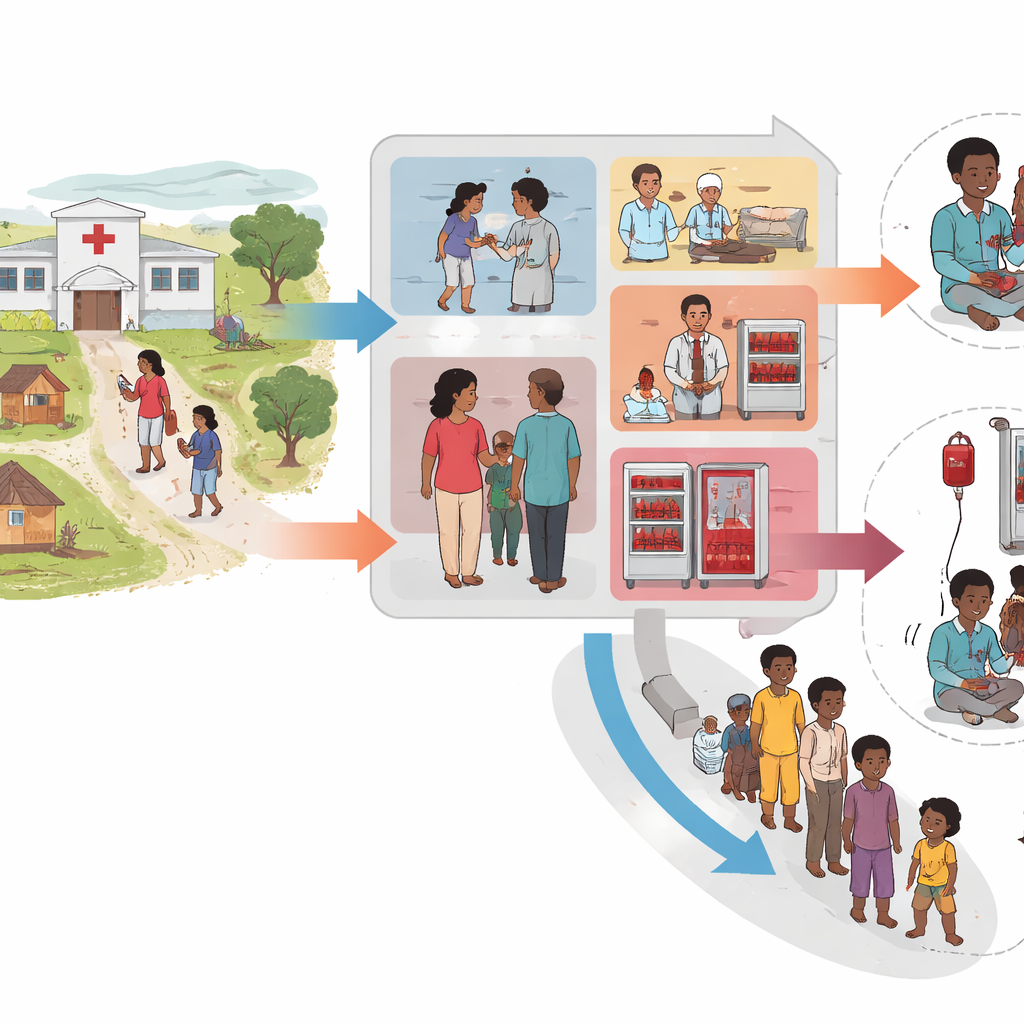
A Closer Look Inside One Busy Children’s Ward
The research was carried out at Mbale Regional Referral Hospital, a large public facility serving roughly four and a half million people in Eastern Uganda. Over seven months, the team followed 323 children up to 12 years old who were admitted with severe anaemia serious enough to warrant a blood transfusion. Most of these children were battling malaria, and many had been transfused before, reflecting how common and recurring anaemia is. Using a structured questionnaire, the researchers tracked each child’s journey: when they arrived, when a clinician decided they needed blood, when blood samples reached the laboratory, when blood was issued from the blood bank, and when the transfusion finally began.
Measuring the Wait for a Critical Treatment
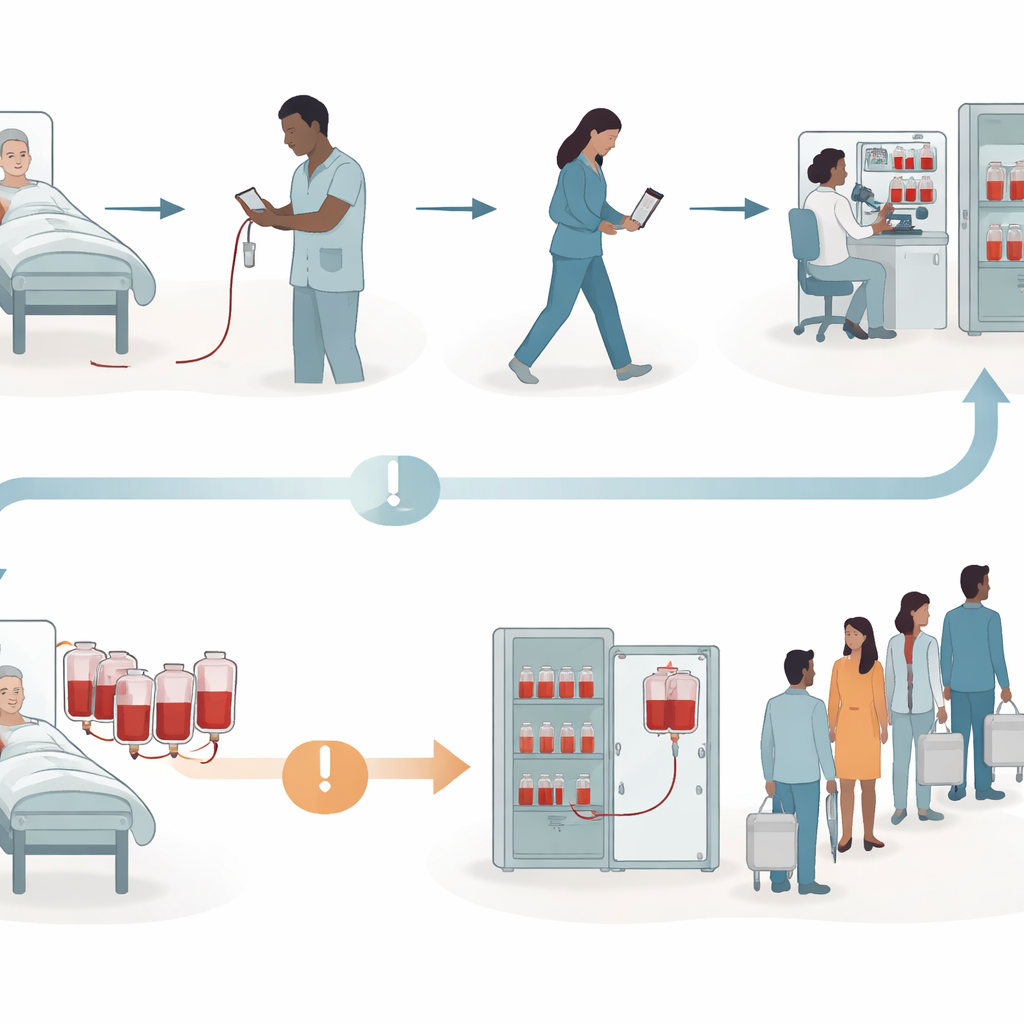
The key measure was the “door-to-transfusion” time — the total time from arrival at the hospital to the start of the transfusion. The median wait was 3.6 hours, meaning half of the children waited longer than this. Alarmingly, about one in four children waited more than eight hours before receiving blood, even though they were severely anaemic and at high risk of serious complications. Delays occurred at several points along the way: some children waited an hour or more to be seen at triage, many caregivers took longer than 30 minutes to get blood samples to the lab, and over a third of children waited more than five hours after the lab received the request before blood was issued.
Where the System Breaks Down
Caregivers’ experiences shed light on why the process moved so slowly. Nearly 70% of families spent their own money in what is meant to be a free public hospital, mostly to buy transfusion supplies such as blood-giving sets or to pay for tests at private laboratories when hospital services were unavailable. More than three-quarters of caregivers felt there had been a delay in getting blood, and they overwhelmingly pointed to the hospital blood bank and laboratory as the main sources of holdup. The most commonly reported problems were blood stockouts — simply not having enough suitable blood on hand — a lack of essential transfusion materials, and too few health workers to manage the workload efficiently.
Money, Caregivers, and Unequal Access
When the researchers looked for factors linked to longer waits, most child and illness characteristics did not strongly predict delay. Instead, social and financial factors stood out. Children whose caregivers had to spend more than the equivalent of 5.6 US dollars waited, on average, about 40% longer for transfusion than those whose families spent less. This suggests that scrambling for money to buy supplies or pay for tests can slow access to care. Interestingly, children accompanied by their fathers tended to receive blood somewhat faster than those accompanied by mothers or other caregivers. The authors suggest this may reflect local patterns in decision-making and control over household finances, but they caution that more research is needed to understand these dynamics.
What These Findings Mean for Children’s Lives
The study concludes that delayed blood transfusions are common for severely anaemic children at this major Ugandan hospital, and that the chief culprits are system-level problems rather than individual failings. Shortages of blood and basic supplies, long waits in the laboratory, and the need for families to pay out of pocket all contribute to dangerous lags in a treatment that should be rapid and routine. The authors argue that improving blood collection and storage, guaranteeing essential transfusion materials, streamlining the path from triage to laboratory to ward, and offering better support to caregivers could significantly shorten these delays. In plain terms, making sure blood and supplies are available when needed — and that families are not left to navigate the system alone — could save many children’s lives.
Citation: Koriang, M., Epuitai, J., Omulepu, I. et al. Timeliness of blood transfusion among children admitted with severe anaemia in a tertiary hospital in Eastern Uganda: a prospective cohort study. Sci Rep 16, 10189 (2026). https://doi.org/10.1038/s41598-026-41009-0
Keywords: severe anaemia, paediatric blood transfusion, health system delays, Eastern Uganda, hospital blood shortages