Clear Sky Science · en
Carvacrol from Moringa oleifera as a potential antidiabetic agent using integrated in-silico approach inhibiting TCF7L2
Why a kitchen spice matters for blood sugar
Type 2 diabetes is rising worldwide, and many people already use plant-based remedies alongside standard medicines. This study explores whether a natural compound called carvacrol, found in the oil of the Moringa oleifera tree and in some culinary herbs, might help control blood sugar by acting on a key gene linked to diabetes. Using powerful computer simulations rather than animal or human testing, the researchers ask: could this small plant molecule safely tune a genetic switch that influences how the body makes and responds to insulin?
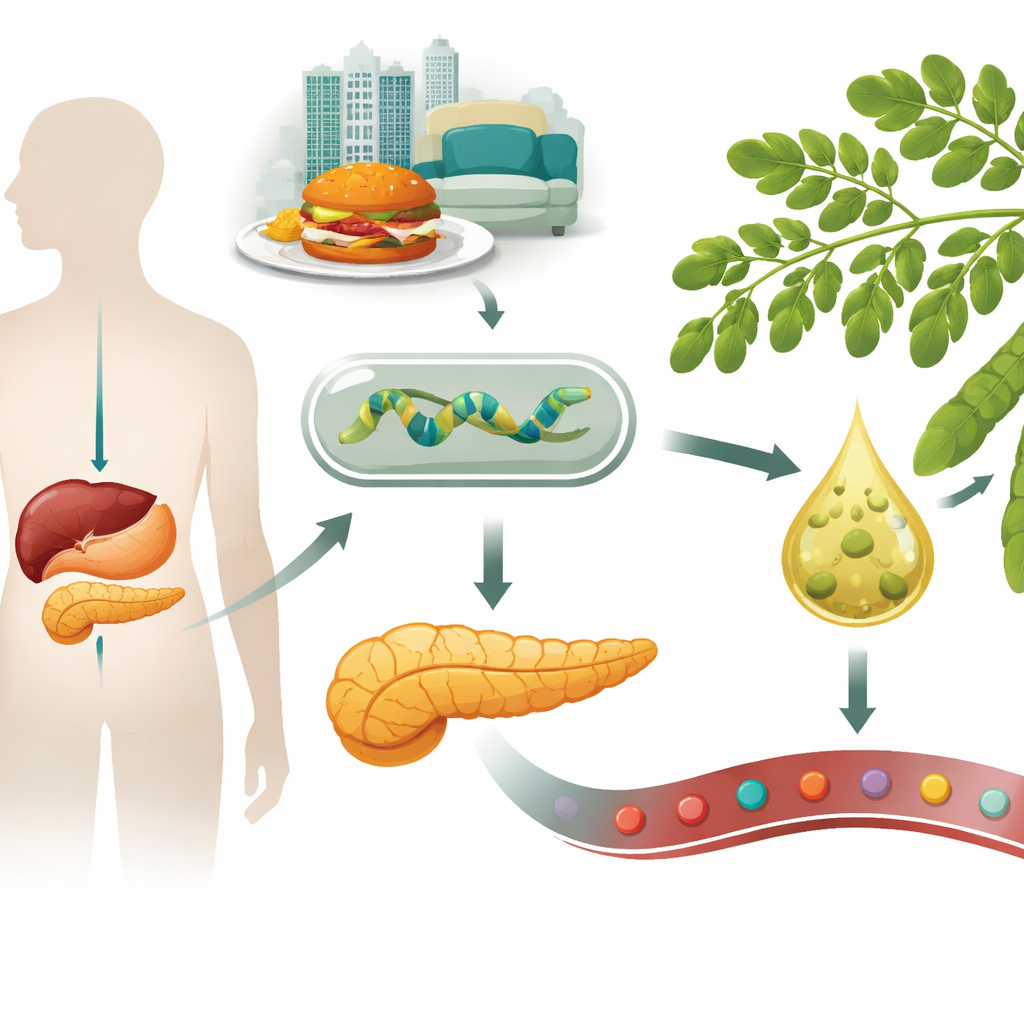
A genetic switch that tilts the odds toward diabetes
Not everyone has the same risk of developing type 2 diabetes. Changes in a gene called TCF7L2 strongly influence who is more likely to get the disease. This gene helps control how insulin-producing cells in the pancreas work and how the liver makes glucose. Certain versions of TCF7L2 are linked to weaker insulin release and higher sugar production by the liver, pushing blood sugar upward over time. Because TCF7L2 is more like a master switch for many downstream processes than a typical enzyme, it has been difficult to target with drugs, and no approved medicines currently act directly on it.
Turning to a familiar tree for new drug ideas
Moringa oleifera, often called the drumstick tree, has a long history in traditional medicine and cooking. Its oils and extracts contain many small natural chemicals, several of which have shown blood sugar–lowering and antioxidant effects in animal studies. The team gathered 25 known compounds from Moringa oil and used online chemistry databases to obtain their three-dimensional structures. They then ran a battery of computer tests to see which of these molecules looked most like realistic, swallowable drugs, focusing on how well they might dissolve, be absorbed in the gut, travel in the body, and avoid major toxicity.
Finding a lead compound inside the virtual cell
After this first screen, 11 candidates remained. The researchers built a three-dimensional model of the TCF7L2 protein, checking its quality with several standard tools, and then searched the protein surface for pockets where a small molecule could lodge. They used virtual docking software to let each plant molecule "try out" binding inside these pockets, scoring how snugly and stably it fit. Carvacrol rose to the top, showing stronger binding than the other Moringa compounds and forming a mixture of hydrogen and hydrophobic contacts with key protein regions that help TCF7L2 recognize DNA.
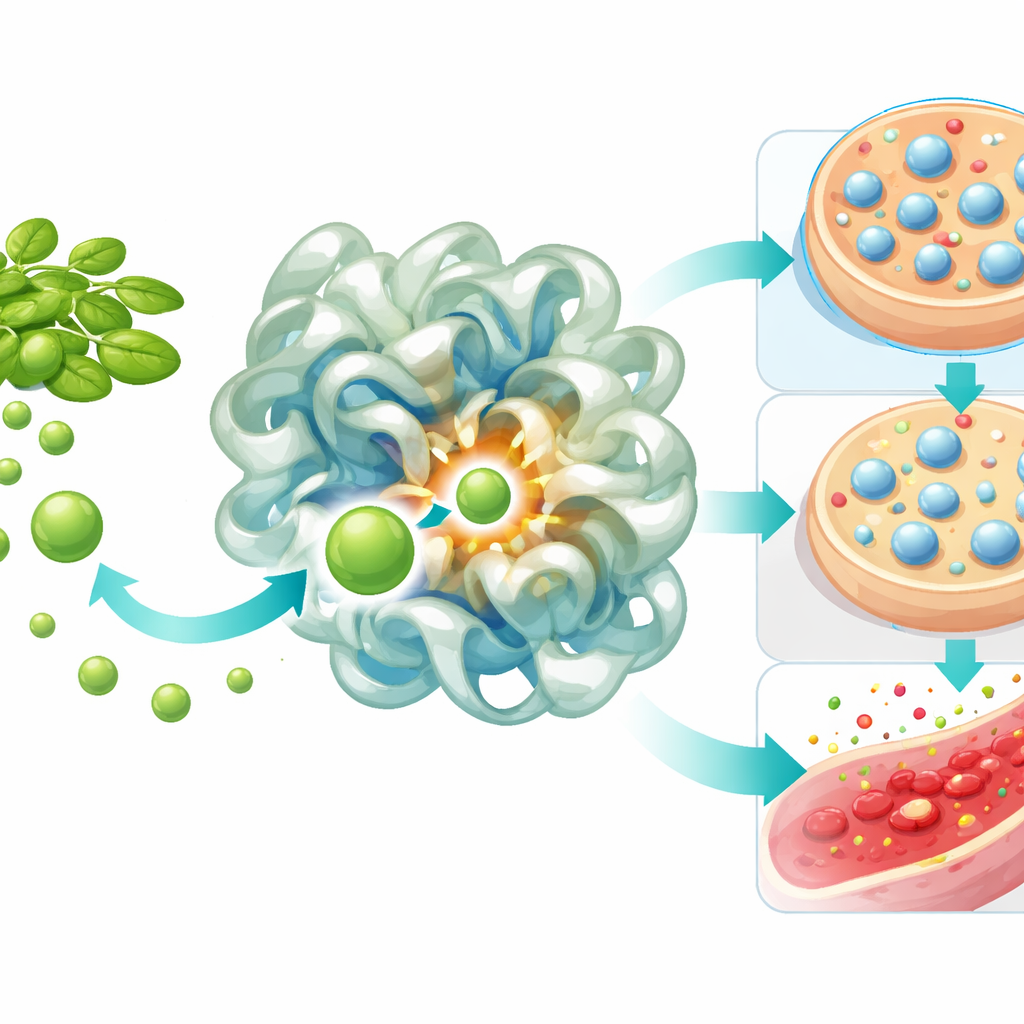
Stress-testing the match with long simulations
To move beyond a single frozen snapshot, the team ran long molecular dynamics simulations—essentially physics-based movies at the atomic scale—of TCF7L2 with carvacrol bound. Over 200 nanoseconds of simulated time, the overall protein structure stayed compact, and the carvacrol molecule barely wobbled inside its pocket, indicating a stable interaction. Measures of surface exposure, internal hydrogen bonds, and large-scale motions all suggested that the complex settled into a comfortable, long-lived state rather than falling apart. Additional quantum-level calculations showed that carvacrol has a balance of stability and reactivity consistent with engaging in meaningful biological interactions.
What this could mean for future diabetes care
While all of these results come from computer models rather than living systems, they collectively point to carvacrol as a promising starting point for a new class of diabetes treatments. Carvacrol appears likely to be well absorbed from the gut, has a relatively low predicted oral toxicity, and can form a stable partnership with TCF7L2, a major genetic driver of type 2 diabetes. If later lab and animal experiments confirm that carvacrol really can nudge this gene’s activity in the right direction—supporting healthier insulin release and glucose control—it could pave the way for drugs that work further upstream than current therapies. For now, the work highlights how everyday plant molecules, studied with modern computing, may help unlock more precise ways to manage chronic diseases like diabetes.
Citation: Saleem, A., Ali, N., Ali, A. et al. Carvacrol from Moringa oleifera as a potential antidiabetic agent using integrated in-silico approach inhibiting TCF7L2. Sci Rep 16, 10036 (2026). https://doi.org/10.1038/s41598-026-41006-3
Keywords: type 2 diabetes, Moringa oleifera, carvacrol, TCF7L2, computational drug discovery